
You ever walk into your favorite coffee shop and they start making your order before you even say a word? That’s the vibe online stores are chasing now. Except instead of remembering your triple-shot oat milk latte, they’re tracking everything from what you clicked last Tuesday to how long you hovered over that jacket you didn’t buy.
Welcome to artificial intelligence in e-commerce, where your shopping cart knows you better than your best friend does.
Look, I’m not gonna sugarcoat it—AI in ecommerce personalization has gone from “cool feature some brands have” to “if you don’t have this, you’re basically invisible.” And in 2025? We’re seeing stuff that would’ve sounded like straight-up science fiction just three years back.
Here’s what nobody tells you at those fancy marketing conferences: the future of ai in e commerce isn’t coming. It’s already here, already working, already deciding whether your business makes it or doesn’t.
I was talking to a store owner last month—decent traffic, solid products, couldn’t figure out why sales kept dropping. Took one look at his site and the problem smacked me in the face. Everyone who landed there saw the exact same homepage. Same banners. Same featured products. Meanwhile, his competitors were serving up completely different experiences to every single visitor.
That’s artificial intelligence ecommerce in action. And yeah, the gap between “we’ll get to that eventually” and “we did this last year” is getting scary wide.
Check the ai in e commerce statistics if you don’t believe me. Stores using proper AI-powered personalization are converting 20-40% better. But here’s the kicker—it’s not because they spent more money. It’s because they stopped treating every customer like they’re the same person.
Every January, someone declares it’s gonna be “the year of AI.” Usually, they’re full of it. But 2025? Yeah, this one’s actually living up to the hype.
The shift happening with ai ecommerce personalization isn’t just better recommendations. We’re watching entire shopping experiences rebuild themselves in real-time based on who’s looking. Generative ai ecommerce is creating product descriptions, answering questions, and even designing custom bundles on the fly.
Think about personalization and customization in e-commerce examples from two years ago—they look prehistoric now. Back then, you’d segment customers into buckets. “Women 25-34 who like shoes.” Cute. Useless, but cute.
Now? Machine learning in e-commerce reads the room every single second. It catches the tiny stuff—how fast you scroll, which images make you pause, whether you’re shopping on your phone at midnight or your laptop during lunch. Then it rebuilds the store around those signals before you even know what you want.
We’ve been building custom e-commerce solutions at Asapp Studio for years now. The difference between what worked in 2023 and what works today? Night and freaking day. The old playbook’s dead. Anyone still following it is bleeding money.
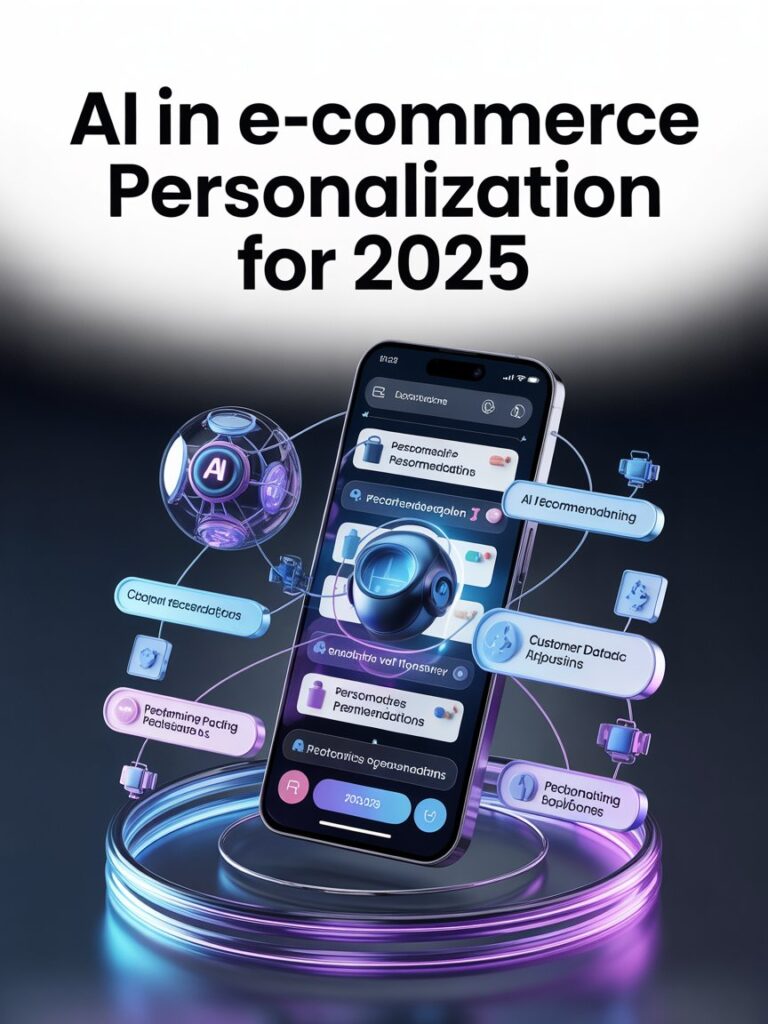
Forget the consultant-speak for a minute. Let’s talk about what makes ai for e commerce actually work when rubber meets road.
AI-powered product recommendations stopped being polite suggestions and turned into full-blown mindreaders. These systems don’t just look at what you bought before—they’re analyzing how you browse, what time you shop, what you almost bought but didn’t, even how weather in your zip code affects buying patterns. Creepy? Maybe. Effective? Absolutely.
Natural language processing in e-commerce means you can type “comfy sneakers for my weird-shaped feet and bad knees” and get actual helpful results instead of just any sneaker with those words in the description. The AI understands you’re asking for help, not just throwing keywords around.
Then there’s predictive analytics in e-commerce, which is where things get really interesting. Smart stores aren’t just reacting to what customers do—they’re predicting what comes next. When someone’s about to ghost your site forever, the system knows before they do and can jump in with exactly the right offer to keep them around.
One client we worked with implemented this stuff properly. They were losing customers left and right, couldn’t figure out why. Turns out the AI flagged patterns in browsing behavior that screamed “I’m about to leave and never come back.” They started intervening with targeted offers right at that moment. Churn dropped by a third. Just like that.
Real talk: the market’s drowning in e commerce ai tools that promise everything and deliver squat. After building systems for actual stores making actual money, here’s what moves the needle versus what’s just shiny garbage.
AI-powered search engines that get what people mean, not just what they type—these are non-negotiable now. Your customers expect Google-level search on every site. Give them anything less and they’re gone before you can say “keyword matching.”
Dynamic pricing algorithms adjust prices based on who’s looking, what time it is, how much inventory you’ve got, and a hundred other factors. Used right, everybody wins. Used wrong, you look like a sleazy carnival barker charging different people different prices for no good reason.
AI chatbots for customer support have gone from joke to genuinely useful. The good ones handle three-quarters of customer questions without bothering a human. And honestly? Most customers can’t tell they’re talking to a bot. The bad ones though? They’ll make customers angrier than if you’d just said “our support team’s busy, we’ll get back to you.”
Real-time product recommendations that shift based on what someone’s doing right now create that feeling of “whoa, they get me.” These systems watch the current session and historical data at the same time, serving up suggestions that feel helpful instead of pushy.
Our AI development services focus on tools that actually make you money, not just look impressive in demos. Because honestly, who cares if the tech’s cutting-edge if it doesn’t pay the bills?
Remember when customer segmentation meant dividing people by age and gender like we’re still living in 1995? Yeah, that’s dead and buried.
Automated customer segmentation now finds patterns you’d never spot manually. Maybe you’ve got customers who browse forever but need social proof before buying. Or price-sensitive folks who only convert with time pressure. These behavioral segments actually mean something, unlike “males 30-45 interested in electronics.”
The real magic of customer segmentation with AI shows up when you connect it to marketing. Instead of blasting everyone with the same email campaign and hoping for the best, you’re using ai-driven marketing automation to send the exact right message at the precise moment it’ll land.
We’re talking messages that show up right when someone’s thinking about that product, with exactly the nudge they need to actually buy it. That’s not luck—that’s ai in user behavior analysis doing its job.
Here’s where 2025 really separates itself from “the good old days” of online shopping—customers won’t wait for anything anymore. Not for pages to load. Not for search results. And definitely not for personalization that updates overnight.
Real-time inventory management with AI makes sure you’re never pushing products that are out of stock while simultaneously catching slow-sellers before they become dead weight eating up warehouse space. The system balances availability against profitability in ways that’ll make your head spin if you tried doing it manually.
Real-time product recommendations change as fast as customers click. Three blue items in a row? System instantly gets that color preference matters right now. Spending extra time reading reviews? It knows you need validation from other buyers and surfaces products with strong social proof.
The hard part isn’t processing data fast—it’s doing it without making your site lag like it’s running on dial-up. That’s why technical architecture matters, and why we hammer on performance in every custom software development project we touch.
Traditional customer journey maps showed nice neat funnels where people moved logically from awareness to consideration to purchase. Reality? Looks more like a toddler drew it with spaghetti.
That’s where AI in customer journey mapping comes in clutch. Modern systems track these messy paths across devices, sessions, time zones, you name it. They find patterns in the chaos and predict where each person’s heading next.
This lets you jump in before problems happen. Customer getting frustrated? Serve up help content. Price becoming the sticking point? Offer financing options. Need technical specs? Drop detailed comparisons right when they matter.
We had a retail client watching carts abandoned left and right. Couldn’t crack why. AI mapped out the journeys and found different reasons for different people. Price-sensitive folks needed discounts. Uncertain buyers needed more info and reviews. Started responding to each type differently—abandoned cart recovery jumped 35%. Sometimes the answer’s been sitting there the whole time, you just needed AI to spot it.
Let me break down the e-commerce personalization strategies crushing it right now, minus the consultant nonsense.
AI-powered content personalization goes way beyond product recommendations. We’re talking about changing the actual words on the page based on who’s reading. Technical buyer? Here’s specs and comparisons. Emotional buyer? Check out these lifestyle shots and testimonials. Same product, completely different pitch—automatically adjusted based on behavioral cues.
AI-powered email marketing stopped being broadcast and became conversation. Subject lines change per person. Send times optimize for each recipient. Even the tone shifts—formal for some, casual for others. It’s borderline creepy except it works too well to ignore.
Personalized product suggestions now factor in context that old systems completely missed. What’s the weather where you are? What time is it? What’s trending in your social circles? (With permission, obviously.) It’s almost mind-reading, except it’s just pattern recognition on steroids.
The trick is layering these strategies together instead of treating them like disconnected point solutions. When your mobile app development and web experience share the same AI backend, personalization follows people seamlessly. No jarring shifts when they switch devices.
Theory’s great. Let’s look at e commerce ai examples showing real numbers from real businesses.
Fashion retailer added virtual try-on powered by AI. Return rates dropped 22% because customers knew stuff would fit before ordering. The AI analyzed body measurements from photos (with consent, not being creepy about it) and matched against product specs. Simple. Effective. Profitable.
Electronics vendor built dynamic product comparison tools that automatically highlighted features each specific customer actually cared about based on their browsing. Conversion on expensive items jumped 31% because people could finally see why one option beat another for their situation specifically.
Cosmetics brand deployed an AI shade matcher analyzing skin tone from selfies. Recommended products with 94% accuracy—better than plenty of in-store consultations, honestly. Customer satisfaction went up. Service costs went down. Win-win.
These aren’t hypothetical case studies from vendor whitepapers. These are actual implementations delivering actual results you can actually measure.
Okay, so you’re sold on using ai in ecommerce. Great. Now where do you actually start without wasting six months and a pile of money?
Get Your Data House in Order First – You can’t run smart AI on messy, inconsistent, or siloed data. This step’s boring. It’s unglamorous. It’s also absolutely critical. Skip it and everything else falls apart.
Start Small, Win Fast – Don’t begin by building a custom recommendation engine from scratch. Start with AI chatbots or automated email personalization. Get some wins on the board that prove value and fund bigger initiatives.
Measure Like Your Life Depends On It – AI isn’t magic. It’s math. If something doesn’t deliver measurable ROI, kill it fast and try something else. Keep what works and iterate constantly.
Work with People Who’ve Actually Done This – Whether you’re exploring blockchain development services or AI implementation, experience counts for way more than most people realize. The best ai for ecommerce comes from teams who understand both technology and actual business reality.
Build Ethics In From Day One – Personalization slides into creepy surveillance real quick if you’re not careful. Be transparent about data usage. Give customers control. Build trust instead of exploiting it.
Let’s talk about disadvantages of ai in e commerce honestly, because pretending they don’t exist helps nobody.
Costs Can Hurt – Implementation isn’t cheap, especially for smaller operations. ROI usually justifies it eventually, but you need runway to get there. If you’re bootstrapping, timing matters a lot.
Privacy Concerns Are Legit – Customers are getting smarter about how their data gets used and increasingly protective of it. Screw this up and you’ll face both regulatory fines and customer backlash that tanks your brand.
Over-Automation Kills Relationships – Some interactions absolutely need human empathy and judgment. AI should make humans better at their jobs, not replace them completely. Get this balance wrong and you’ll lose the personal touch that builds loyalty.
Algorithm Bias Is Real – If your training data reflects biased patterns, your AI will amplify those prejudices. Responsible implementation requires constant monitoring and correction to keep things fair.
Technical Complexity Creates Dependencies – When AI systems break or act weird, you need people who can diagnose and fix problems fast. That specialized expertise doesn’t come cheap and isn’t easy to find.
These challenges aren’t reasons to avoid AI—they’re stuff you need to plan for. The businesses winning with ai in ecommerce 2025 acknowledge these limitations upfront and build strategies that account for them.
Looking at current ai in ecommerce trends, several patterns are becoming impossible to miss if you’re paying attention.
Voice Commerce Gets Real – Moving past Alexa shopping lists into sophisticated AI understanding context, preferences, and intent through actual conversation. Not typing. Not clicking. Just talking.
Visual Search Takes Over – Snap a photo of something you like and find similar or identical products instantly. The AI understands style, color, pattern, mood—not just exact matches.
Predictive Inventory Optimization – Using AI to forecast demand with scary accuracy, cutting both stockouts and overstock situations that murder profitability. The system learns patterns you’d never spot manually.
Hyper-Local Personalization – Factoring in everything from weather in your specific area to regional preferences to nearby events happening right now. Makes experiences feel surprisingly relevant instead of generic.
AR Integration – Augmented reality combined with AI creates try-before-you-buy experiences bridging digital and physical shopping. Works especially well for furniture, home decor, fashion, makeup.
The question isn’t whether these trends matter. It’s how fast they become baseline expectations every competitor needs to match just to stay in the game.
The e-commerce personalization trends 2025 is revealing point toward even more sophisticated integration of AI touching every customer interaction.
Emotional AI detecting frustration, excitement, or confusion from micro-behaviors and responding appropriately is moving from research labs into production systems. Your site will know when you’re annoyed before you do.
Multi-Modal AI combining text, voice, visual, and behavioral data into unified customer understanding creates personalization that actually feels intelligent instead of just algorithmic.
Decentralized Personalization using privacy-preserving techniques like federated learning delivers customized experiences without centralizing sensitive customer data. Privacy and personalization stop being opposites.
AI-Human Collaboration where AI handles routine personalization while humans focus on relationships and complex problems represents the balanced approach winning right now. Not humans versus AI. Humans plus AI.
Is ecommerce worth it 2025? Yeah, absolutely—but only if you evolve with these changes instead of clinging to what worked three years ago and wondering why conversions keep dropping.
You might be wondering: how many ai companies are there actually solving real problems versus riding the hype wave and cashing checks?
Thousands claim AI capabilities. Far fewer deliver production-ready solutions working at scale in real retail environments. The gap between “we have an AI feature” and “we can deploy this for a million daily transactions reliably” is absolutely massive.
When evaluating partners for ai personalization ecommerce, look for actual proof:
At Asapp Studio, we combine cutting-edge AI development with practical e-commerce experience. Impressive demos don’t mean squat if the system can’t handle Black Friday traffic or integrate with your legacy ERP. We learned that lesson the hard way so our clients don’t have to.
If this all feels overwhelming, here’s your introduction to ai in e commerce that cuts through the complexity.
AI in e-commerce boils down to three things: prediction (what will customers want?), automation (how do we deliver it efficiently?), and optimization (how do we keep improving?).
Everything else—recommendation engines, chatbots, dynamic pricing, personalized search—is just applying these three capabilities to specific problems in your business.
Start by finding your biggest pain points. Where are customers bailing? What questions flood your support team? Which products get returned constantly? Those friction points are your AI opportunities.
You don’t need a complete overhaul. Pick one high-impact area, nail it, prove ROI, then expand. That’s how successful AI transformations actually happen—incrementally, measurably, with constant learning.
Creating a winning strategy for artificial intelligence in e-commerce requires balancing big vision with practical execution. Here’s what actually works.
Assess Where You Are Now – Be brutally honest about current capabilities and gaps. Lying to yourself only wastes time and money.
Define Clear Objectives – “Implement AI” isn’t a goal. “Reduce cart abandonment by 15% through personalized interventions” is. Make it specific and measurable.
Prioritize Quick Wins – Build momentum with achievable early successes that fund larger initiatives. Nothing kills AI projects faster than starting too big and failing publicly.
Invest in Infrastructure – Data pipelines, analytics capabilities, integration layers aren’t sexy but they’re essential. Skip this and everything breaks eventually.
Build or Partner Strategically – Some capabilities you’ll develop in-house. Others you’ll license or partner for. Choose based on core competencies and strategic value, not ego.
Plan for Continuous Evolution – AI in e-commerce isn’t a project with an end date. It’s an ongoing capability needing constant attention and improvement.
Whether you’re exploring IoT integration for connected shopping experiences or building sophisticated recommendation engines, success requires both vision and execution discipline.
We’re at a turning point where artificial intelligence in e-commerce stopped being competitive advantage and became competitive necessity. Customers who’ve experienced truly personalized shopping won’t tolerate generic one-size-fits-all experiences anymore.
The gap between leaders and laggards is widening fast. Companies that embraced AI early are now so far ahead in data, capabilities, and customer expectations that catching up becomes exponentially harder over time.
But here’s some actually good news: it’s not too late. The tools, platforms, and expertise needed for effective ai ecommerce personalization are more accessible now than ever. What was cutting-edge research two years ago is productized solutions mid-sized businesses can actually deploy today.
The question isn’t whether you’ll adopt AI in e-commerce. It’s whether you’ll do it proactively on your own terms, or reactively when falling metrics force your hand and you’re scrambling to catch up.
Strip away the technology jargon and what is e-commerce actually becoming? It’s evolving from digital catalog shopping into something closer to having a personal shopper who knows you intimately and works tirelessly serving your needs.
The best e-commerce experiences in 2025 don’t feel like shopping at all. They feel like discovery, exploration, sometimes even entertainment. The transaction happens almost as an afterthought because everything else aligned so seamlessly with what the customer wanted.
That’s the real promise of AI in E-Commerce Personalization for 2025—not just more efficient selling, but genuinely better buying experiences leaving customers feeling understood rather than targeted.
If you made it this far, you get that AI-powered personalization isn’t optional anymore. Question is what happens next.
Start by honestly auditing your current personalization capabilities. Where are the gaps? What’s working? What’s failing? Get baseline metrics so you can actually measure improvement.
Then identify the single highest-impact opportunity for AI implementation in your specific business. Don’t try doing everything at once. Focus on one area, crush it, prove the value, then expand from there.
Whether you need custom mobile applications, sophisticated AI implementations, or complete digital commerce platforms, success comes from working with partners understanding both technology and business objectives.
At Asapp Studio, we’ve spent years helping businesses navigate exactly these challenges. We’ve seen what works, what doesn’t, and what separates successful AI implementations from expensive experiments going nowhere.
The future of e-commerce is personal, predictive, and powered by artificial intelligence. Businesses that thrive will embrace these changes while keeping customer value at the center of every decision.
Your competitors are already moving this direction. Only question is whether you’ll lead, follow, or fall behind.
What is AI in e-commerce personalization?
AI in e-commerce personalization uses machine learning algorithms to analyze customer behavior, preferences, and data to deliver tailored shopping experiences, recommendations, and content in real-time.
How does AI improve customer experience in e-commerce?
AI enhances customer experience by providing personalized product recommendations, intelligent search results, 24/7 chatbot support, dynamic pricing, and anticipating customer needs before they’re expressed.
What are the best AI tools for e-commerce in 2025?
Top AI tools include recommendation engines, predictive analytics platforms, AI chatbots, dynamic pricing software, visual search tools, and automated email marketing systems integrated with customer data.
Is AI in e-commerce expensive to implement?
Implementation costs vary widely based on scale and complexity. Small businesses can start with affordable SaaS solutions while enterprises may invest heavily in custom AI systems, with ROI typically justifying costs.
What are the risks of using AI in e-commerce?
Main risks include data privacy concerns, algorithm bias, over-automation reducing human touch, high initial costs, technical complexity, and potential customer distrust if personalization feels invasive.