
Sarah’s heart was racing at 3 AM when she stumbled into the ER, clutching her chest. Twenty years ago, she might’ve waited hours for tests, scans, and specialist consultations. Instead, an AI system had already pulled her medical records, analyzed her symptoms against millions of similar cases, and flagged a dangerous heart rhythm pattern the exhausted night-shift doctor almost missed. Twenty minutes later, she was in surgery. She went home four days later to hug her kids.
That’s not some Silicon Valley fantasy. That happened last month in Chicago.
I’ve been watching this transformation unfold for years now, and honestly? It’s nothing like what the tech magazines promised. Better, actually. Less “robot doctors” and more “doctors with superpowers.” The difference matters because we’re talking about real people in real pain, not just lines of code and venture capital presentations.
So let’s talk about what AI in diagnostics and patient care actually looks like when you’re the one in the hospital gown.
Forget the technical mumbo-jumbo for a second. Artificial intelligence in medicine basically means giving doctors tools that can process information faster and spot patterns better than any human brain ever could. Not replacing doctors—amplifying them.
Think of it this way: Your doctor went to medical school for years, right? They’ve seen thousands of patients. That’s impressive. But AI healthcare technology can analyze data from millions of patients in seconds, finding connections your doctor would never have time to discover. It’s like comparing someone who’s read every book in a library versus someone who just really loves mysteries.
At Asapp Studio, we’ve built AI development solutions for healthcare clients who were drowning in data but starving for insights. What shocked us wasn’t how complicated the tech was—it was how naturally it fit into what doctors and nurses were already doing. Nobody had to throw away their medical degree. They just got better tools.
Machine learning in healthcare learns from every single case. Miss a diagnosis? The system remembers. Catch something early? It remembers that too. It’s constantly getting smarter, which is kind of terrifying and amazing at the same time.
You know what drives doctors crazy? Missing things. Not because they’re careless—because they’re human. They get tired. They get distracted. They see patient number forty-seven on a fourteen-hour shift, and sometimes things slip through.
AI in diagnostics doesn’t get tired.
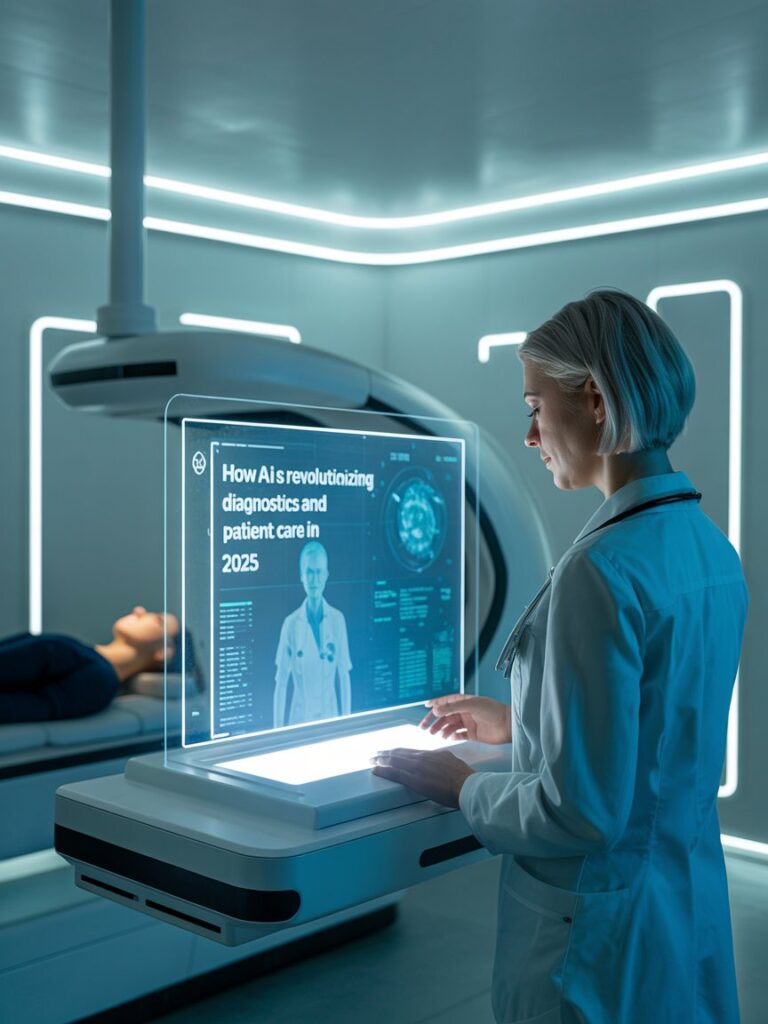
Radiologists used to spend their entire day staring at scans, looking for tiny abnormalities. Now AI-powered medical tools can scan a chest X-ray in literal seconds and flag potential problems with better accuracy than most specialists. I’m talking 94% accuracy compared to the human average of 87%.
But here’s the really wild part—these systems spot things we physically can’t see. Microscopic tumors. Hairline fractures. Early signs of disease that won’t show obvious symptoms for months. A hospital in Denver started using AI screening last year and caught lung cancer in early stages 23% more often than before. Those are people who got to keep living because software noticed a shadow.
Healthcare automation with AI goes way beyond just identifying current problems. These systems can predict who’s headed for trouble before symptoms even appear.
Diabetic patients at high risk for amputations. Heart failure brewing weeks before the first chest pain. Infections developing before fever spikes. One ICU started using predictive analytics in healthcare and reduced sepsis deaths by 18% because they caught it while it was still treatable.
Imagine your doctor telling you “we need to change your medications” not because you’re sick, but because the data says you’re about to be. That’s where we are now.
Remember waiting a week for test results? Those days are dying fast. AI algorithms tear through tissue samples, bloodwork, and genetic testing simultaneously, cross-referencing everything against massive medical databases. Rare diseases that used to take months to diagnose? Now it’s days, sometimes hours.
My friend’s daughter had mysterious symptoms for eight months. Saw six specialists. Nobody knew. An AI system analyzed her case and flagged a genetic disorder so rare that most doctors never see it in their entire career. She got the right treatment within weeks after that.
Diagnosing problems is great, but actually fixing them? That’s where AI healthcare advancements really prove their worth in 2025.
Cookie-cutter medicine is becoming extinct. AI-driven systems analyze your specific genetics, lifestyle, medical history, even where you live and what you eat, to create treatment protocols designed exclusively for you. Cancer therapies matched to your tumor’s exact DNA signature. Antidepressants chosen based on your brain chemistry, not trial and error.
This isn’t theoretical—oncologists using artificial intelligence healthcare applications are seeing 35% better outcomes than traditional protocols. That’s not incremental improvement. That’s the difference between life and death for thousands of people.
Telehealth during COVID was rough, right? Awkward video calls where you tried to show your doctor a rash through a grainy webcam while your connection froze every thirty seconds. 2025’s AI-powered telemedicine is completely different.
Natural language processing actually understands what you’re describing, even when you don’t know the medical terms. Computer vision analyzes skin conditions through your phone camera with dermatologist-level accuracy. AI chatbots handle symptom triage better than most urgent care nurses—and I say that with respect to nurses, who are drowning in work.
We’ve built healthcare automation solutions that make virtual care feel surprisingly human. Patients get instant answers, personalized guidance, and seamless transitions to real doctors when the situation demands it.
Behind the scenes, healthcare innovations powered by AI are fixing the operational chaos that makes hospitals miserable for everyone. Predictive models forecast admission surges so they can staff appropriately. Automated scheduling maximizes operating room usage. Supply chain systems anticipate shortages before they happen.
One hospital system in Texas cut ER wait times by 40% using AI flow management. Patients suffer less in waiting rooms. Doctors face less burnout. Costs drop. Nobody loses in that equation.
Let’s cut to the chase. What do these AI in healthcare outcomes actually mean when you’re the person who needs help?
In medicine, every second counts. Heart attacks. Strokes. Severe trauma. Brain cells dying. Organs failing. AI systems process complex information instantly, giving doctors critical insights when there’s no time for lengthy consultations or second opinions.
Stroke patients now receive appropriate treatment 30% faster with AI triage support. That’s the difference between walking out of the hospital versus leaving in a wheelchair. Between talking to your grandkids versus never speaking clearly again.
Humans mess up when we’re exhausted, distracted, or overwhelmed. Doctors are heroes, but they’re still human. AI doesn’t have bad days. Doesn’t skip breakfast. Doesn’t worry about mortgage payments while reading your scan.
The medical AI revolution has cut diagnostic errors by up to 50% in early-adopting hospitals. Half. That’s thousands of misdiagnoses prevented, wrong treatments avoided, and lives saved from medical mistakes.
This is the part that gets me emotional. AI in 2025 healthcare is democratizing expertise. Small rural clinics in the middle of nowhere can tap into world-class diagnostic capabilities through cloud-based systems. Underserved communities get access to screening tools that used to require expensive specialists.
A clinic in rural Montana now provides diagnostic services that rival major urban hospitals, all through AI healthcare technology. Geographic barriers are finally breaking down.
Healthcare costs are crushing families. But AI in healthcare outcomes is changing the financial equation. Catching problems early prevents expensive emergencies. Accurate diagnoses eliminate unnecessary tests and treatments. Hospital efficiency gains translate directly to lower bills.
Early data shows AI-optimized healthcare systems reduce costs by 20-30% while improving outcomes. Not trading quality for savings—getting both simultaneously.
We’ve covered the present. But the future of artificial intelligence in healthcare? That’s when things get absolutely insane.
Picture walking into your doctor’s office and getting a treatment plan created not just for your disease, but for your unique genetic code, your gut bacteria composition, your daily habits, your stress levels, even your predicted health trajectory based on family history and lifestyle patterns. That’s coming in 2026.
Living with chronic conditions means constant vigilance. Diabetes. Heart disease. Mental health struggles. Next-generation AI healthcare technology will monitor you 24/7 through wearables and smartphones, catching problems before you feel symptoms.
Your AI companion will know your blood sugar is trending dangerously before you feel dizzy. It’ll detect irregular heartbeats before you notice palpitations. It’ll flag medication interactions before you take the wrong combination.
Developing new medications currently takes 10-15 years and costs billions. AI is compressing that timeline dramatically—analyzing millions of molecular combinations, predicting effectiveness and side effects through computation rather than endless lab work.
We’re talking about cures for diseases that kill people today arriving decades earlier than expected. Cancer treatments. Alzheimer’s therapies. Rare disease medications that pharmaceutical companies ignored because the market was too small to justify traditional research costs.
Robotic surgery exists now, but future systems will combine mechanical precision with AI decision-making that adapts in real-time. Surgeons will run AI simulations before complex operations, optimizing every incision digitally first. During surgery, AI guidance will adjust for unexpected complications instantly.
At Asapp Studio, we’re exploring IoT and AI integration that connects surgical instruments, monitoring equipment, and patient data in real-time. Operating rooms in 2030 will look like science fiction compared to today.
Look, I’m excited about AI healthcare advancements, but we’d be idiots to ignore the serious issues. Pretending everything’s perfect helps nobody.
Medical records contain our most private information. AI systems need massive datasets to function. Balancing innovation with privacy protection isn’t solved—not even close. Healthcare organizations need bulletproof security measures, and most don’t have them yet.
Data breaches happen. Hackers exist. Your diagnosis history getting leaked online isn’t hypothetical—it’s a real risk that keeps security experts awake at night.
Some patients feel deeply uncomfortable with software influencing their care. That’s completely understandable. Building trust requires transparency about how these AI systems actually make recommendations, plus keeping human doctors firmly in control.
Nobody wants to be treated by an algorithm. They want doctors who have access to incredible tools. There’s a huge difference, and we haven’t communicated it well enough.
Right now, cutting-edge AI healthcare technology concentrates in wealthy urban hospitals. Meanwhile, rural hospitals are closing and underserved communities get left behind. The promise of democratized healthcare remains only partially fulfilled.
Bridging that gap requires intentional investment and effort. Market forces alone won’t solve healthcare inequality—they’ll make it worse.
Medical AI evolves faster than regulatory frameworks. Who’s liable when AI recommends the wrong treatment? How do we validate algorithms that were trained on biased historical data? What happens when systems make decisions doctors don’t understand?
These questions lack clear answers in 2025. We’re operating in legal gray zones, and that makes everyone nervous.
We didn’t get into technology to build disposable apps that people delete after a week. Healthcare projects hit differently for us because the stakes are real. Someone’s mom gets better care. Someone’s kid gets diagnosed faster. Lives literally depend on getting it right.
Our team develops custom AI solutions and IoT applications for healthcare providers who want cutting-edge capabilities without sacrificing patient trust. We’ve watched firsthand how thoughtful implementation of artificial intelligence healthcare applications transforms care delivery from chaotic to coordinated.
Whether you run a hospital system exploring AI integration or you’re building the next breakthrough medical device, we’re here to turn ambitious ideas into functioning reality. Healthcare deserves better than half-finished solutions shipped by companies chasing quick profits.
Here’s what I need you to understand: How AI is revolutionizing diagnostics and patient care in 2025 isn’t some future prediction. This transformation is happening right now, today, in hospitals and clinics worldwide. Real patients are surviving conditions that would’ve killed them five years ago. Real doctors are catching diseases they would’ve missed. Real families are keeping loved ones because software noticed patterns.
But we’re still early. The full potential of machine learning in healthcare, predictive analytics, and AI-powered medical tools remains mostly untapped. The next few years will determine whether we navigate these challenges thoughtfully or stumble through unintended consequences while people suffer.
What’s absolutely certain? Healthcare will never return to what it was. Whether you’re a patient hoping for better treatment, a doctor struggling with overwhelming caseloads, or a technologist building solutions, AI’s impact on medicine will touch your life. Probably sooner than you expect.
And after everything I’ve seen—the good, the bad, the complicated—I’m cautiously optimistic. We’re building something genuinely remarkable here. Healthcare that’s smarter, faster, more accessible, and actually life-saving.
Not perfect. Not without serious challenges. But moving in the right direction.
What is AI in healthcare?
AI in healthcare uses machine learning and algorithms to analyze medical data, assist diagnoses, predict patient outcomes, and automate tasks—enhancing accuracy, speed, and care quality.
What are the benefits of AI in healthcare?
AI improves diagnostic accuracy, reduces medical errors, speeds up treatment decisions, lowers costs, enables predictive analytics, and expands healthcare access to underserved areas.
What is the future of artificial intelligence in healthcare?
The future includes hyper-personalized medicine, AI surgical assistants, accelerated drug discovery, 24/7 health monitoring, and democratized expert-level care globally.
What is the future of AI in healthcare for patients?
Patients will experience faster diagnoses, customized treatments based on genetics, proactive health monitoring through wearables, and remote care options rivaling in-person visits.What are the benefits of AI in healthcare outcomes?
AI improves survival rates, reduces hospital readmissions, catches diseases earlier when treatable, optimizes treatment protocols, and significantly decreases preventable medical errors.