
Picture this: You’re standing in your grandfather’s old workshop. There’s a faded photo on the wall—workers lined up at an assembly line, each performing the same motion thousands of times daily. Now look at today’s factory floor. Robots glide past each other like they’re dancing. Machines adjust production speeds based on real-time demand. Quality checks happen faster than you can blink.
This isn’t some far-off dream. This is 2025.
But here’s what bugs me about most tech conversations—everyone’s obsessed with whether will robots take over the world in 2027 or if we’ll all be jobless by 2050. Nobody’s talking about what’s actually happening right under our noses. The advancements in autonomous robotics aren’t building toward some Hollywood apocalypse. They’re quietly rebuilding how we make everything.
And honestly? Once you see it, you can’t unsee it.
Walk into a modern manufacturing plant. The first thing that hits you isn’t the noise—it’s the silence. These autonomous systems move with purpose, not chaos. There’s no foreman screaming over machinery. Instead, you’ve got AI-driven robotics making split-second calls that would take humans hours to calculate.
Last month, I watched a production line completely reconfigure itself in under ten minutes. New product specifications came through. The robotic workforce didn’t need new programming or a team meeting. They just… adapted. Like watching someone switch from brewing coffee to making tea—same kitchen, different recipe, zero drama.
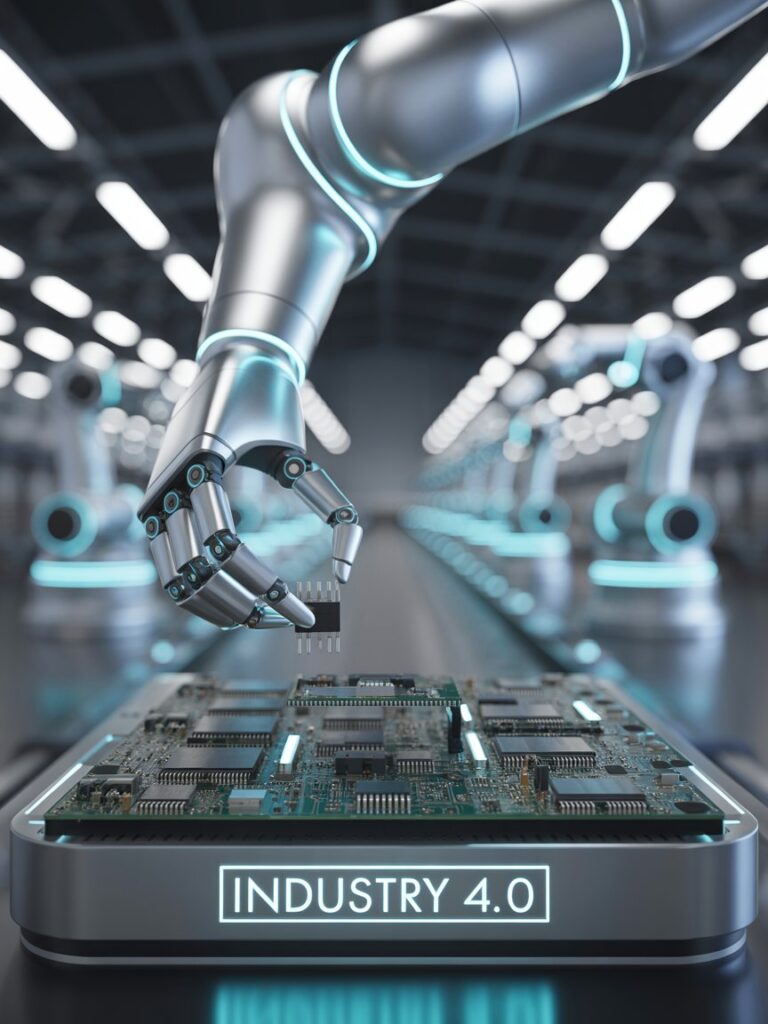
That’s Industry 4.0 in a nutshell. Not bigger machines. Smarter ones.
We’ve been helping companies make this shift at Asapp Studio, and the patterns are undeniable. Businesses clinging to old automation models are scrambling. Those embracing smart factories? They’re printing money while their competitors are stuck troubleshooting legacy systems.
Okay, slight exaggeration. But the truth isn’t far off.
Modern autonomous machines have… personalities. Not the sci-fi kind where they develop emotions and plot world domination. More like how your old car had quirks. This robot arm prefers working at 67% capacity for optimal precision. That quality scanner works best with a seven-second warm-up. The conveyor system gets cranky when humidity spikes above 60%.
The future of robotics and artificial intelligence isn’t about making things that think exactly like humans. It’s about creating systems that complement how we think. Your brain’s terrible at repeating the same action 10,000 times without errors. Robots excel at that. But ask a robot to improvise when a supplier ships the wrong parts? That’s still your department.
This partnership—humans and AI and robotics working as a team—is reshaping manufacturing transformation faster than anyone predicted three years ago. The companies winning right now aren’t replacing workers with machines. They’re giving workers better tools.
Our AI development services connect these dots daily. We’re not building Terminator. We’re building systems that let a single operator manage thirty production lines from a tablet while sipping coffee.
Here’s where things get weird in the best way possible.
Industrial robots used to work in isolation. Robot A assembled widgets. Robot B packaged them. Robot C shipped them. Each minding its own business like strangers on a subway.
Now? They’re texting each other constantly. IoT in robotics means every sensor, every actuator, every camera feeds into one massive conversation. Robot A notices a defect pattern. Robot B adjusts its packaging parameters. Robot C reroutes to a different loading dock because it predicts the usual bay will be congested in fourteen minutes.
Nobody programmed these specific responses. The autonomous systems learned them by processing millions of operational hours. They’re not following instructions—they’re collaborating.
I saw this play out last quarter. A client’s factory had a cooling system glitch. Twenty years ago, that would’ve shut down the entire production line for hours while technicians scrambled. In 2025? The smart factory detected the temperature variance, automatically reduced speed on heat-sensitive processes, diverted products to alternate stations, and flagged maintenance—all before human managers even noticed something was off.
Three hours later, the cooling system was fixed and production was back at full capacity. Total products lost: zero.
That’s the power of digital transformation in manufacturing. Not louder alarms when things break. Systems that prevent the break or work around it seamlessly.
Everyone expects future robots 2050 to look like humanoids with glowing eyes. Sorry to disappoint—most will look like really sophisticated toolboxes.
The coolest developments in autonomous robotics aren’t about making machines look human. They’re about making machines so specialized and efficient that appearance becomes irrelevant. Soft robotics that squeeze through tight spaces like octopuses. Microscopic robots that assemble electronics at the cellular level. Swarm robots the size of insects that work in thousands to build structures.
What will robots look like in the future? Honestly, you probably won’t even recognize them as robots. They’ll blend into infrastructure like electrical wiring—invisible but essential.
The future of robots in daily life won’t announce itself with dramatic reveals. It’ll creep in through convenience. Your building maintenance handled by autonomous systems you never see. Packages delivered by coordination networks that reroute around traffic before jams form. Healthcare diagnostics from surgical robots with precision measured in micrometers.
You won’t wake up one morning surrounded by androids. You’ll just gradually notice things work smoother.
Here’s what frustrates me about buzzwords: they make complex ideas sound simple. “Just implement Industry 4.0!” Right. Like saying “just get fit” to someone who hasn’t exercised in twenty years.
Industrial automation in 2025 requires rethinking everything. Your supply chain. Your hiring practices. Your maintenance schedules. Your business model. Automation technologies aren’t plug-ins you add to existing operations. They’re foundations you rebuild operations around.
The companies succeeding right now started small. One production line. One warehouse section. One process bottleneck. They learned, adjusted, failed a few times, then scaled what worked.
Smart factories don’t emerge from purchasing expensive robotic equipment. They grow from connecting existing systems, gathering operational data, identifying inefficiency patterns, then deploying targeted solutions. Sometimes that’s advanced industrial robots. Sometimes it’s better sensors. Sometimes it’s just software coordinating what you already own.
We’ve guided dozens of businesses through this at Asapp Studio, and the pattern’s consistent. Companies that treat robotic process automation as a marathon outperform those approaching it like a sprint every single time.
Let’s address the anxiety directly.
Will robots take over the world in 2026? No. 2027? Nope. Will robots take over the world in 2050? Still no, but not for the reasons you think.
Here’s the thing people miss: autonomous systems are phenomenal specialists and terrible generalists. Your factory robot can assemble components with inhuman precision. Ask it to do literally anything else? Useless. Even advanced AI struggles with tasks any five-year-old handles effortlessly—like figuring out whether that weird noise means something’s broken or just Tuesday.
The real question isn’t about takeover. It’s about transition.
Will we have robots in the future? Absolutely. Tons of them. More than we can probably imagine right now. But they’ll be tools, not overlords. Extremely capable, occasionally frustrating, fundamentally limited tools.
What excites me about the future of robotics isn’t the technology itself. It’s watching humans freed from mind-numbing repetitive work. Imagine manufacturing jobs focused entirely on problem-solving, creativity, and optimization—with robots handling the grunt work. That’s where we’re headed.
This one keeps people up at night, so let’s unpack it honestly.
Yes, some jobs will disappear. That’s uncomfortable but true. Roles centered entirely on repetitive manual tasks are already vanishing. But here’s what the doom-and-gloom predictions miss: automation doesn’t eliminate work. It transforms it.
A factory that once employed 200 assembly line workers might now employ 50. Sounds bad, right? Except those 50 jobs include robot fleet managers, AI trainers, predictive maintenance specialists, data analysts, and automation engineers—roles that didn’t exist ten years ago and pay significantly better.
What jobs will be left after AI? Anything requiring creativity, empathy, complex problem-solving, or ethical judgment. Robots can’t design products. They can’t negotiate with difficult clients. They can’t mentor junior employees. They can’t make moral calls when procedures conflict with circumstances.
The robotic workforce handles what’s predictable. Humans handle what’s novel.
Here’s my honest take: if your job can be fully described in a flowchart, automation’s coming for it. If your job requires reading the room, thinking outside boxes, or dealing with messy human emotions? You’re fine. Probably more than fine—you’ll have better tools to work with.
Let’s skip the theoretical stuff and talk real applications of artificial intelligence transforming factories right now:
Predictive Maintenance: Machines that tell you they’re about to break before they break. Sensors analyze vibration patterns, temperature fluctuations, acoustic signatures. An algorithm spots anomalies humans would miss and schedules repairs during planned downtime. Result? Equipment failures drop by 70%, unplanned downtime nearly disappears.
Adaptive Manufacturing: Production lines that adjust themselves when switching products. No downtime. No reprogramming. The line just reconfigures. I watched a facility switch from making phone cases to tablet stands in under six minutes. The operators basically pressed a button and walked away.
Quality Inspection on Steroids: Computer vision systems examining products at speeds and precision levels humans can’t match. They catch microscopic defects, ensure component tolerances within micrometers, and never get tired or distracted. One client reported finding defects they didn’t even know were possible—because human inspectors couldn’t see them.
Supply Chain Orchestration: AI systems coordinating thousands of shipments, predicting delays, automatically rerouting to avoid disruptions. Remember those port congestion nightmares from 2021? Modern autonomous systems predict and circumvent those problems weeks in advance.
These aren’t future possibilities. They’re current realities. The companies not using them are competing with one hand tied behind their backs.
You want to know what actually powers autonomous robotics in 2025? It’s not one breakthrough. It’s five converging simultaneously:
Edge Computing: Processing decisions locally instead of bouncing everything to the cloud. This cuts response times from seconds to milliseconds. Critical when a robot arm moving at high speed needs to avoid a sudden obstacle.
5G Infrastructure: Communication so fast and reliable that remote operation feels local. Robots coordinate in real-time across entire facilities. Latency drops to imperceptible levels.
Advanced Sensors: LIDAR that maps environments in 3D. Thermal cameras that see through smoke. Pressure sensors detecting microscopic variations. Robots perceive their environment better than humans do now.
Reinforcement Learning: AI that learns through trial and error, not just programming. These systems genuinely improve from experience. They make mistakes, adjust, and get better—just like people, except faster.
Digital Twins: Virtual replicas where algorithms test scenarios billions of times before implementing anything in reality. You can experiment with new production workflows, identify problems, optimize solutions—all without risking actual equipment or products.
None of these innovations create magic alone. Combined? They enable capabilities that seemed impossible five years ago.
Our blockchain programming services add another layer—tamper-proof operational logs, transparent supply chains, automated quality certifications. When you combine autonomous systems with verifiable records, you get accountability at scales previously unimaginable.
Look, I’m bullish on autonomous robotics. But let’s not pretend everything’s perfect. There are genuine challenges that need addressing:
Cybersecurity Nightmares: More connected systems equal more attack surfaces. A hacked database is bad. A hacked robotic system operating near humans? Potentially lethal. Security needs to be fundamental, not an afterthought.
Workforce Displacement: Some people will lose jobs. That’s reality. The ethical response isn’t denying it or pretending everyone can just “learn to code.” We need massive investment in retraining programs, transition support, and creating new opportunities.
Integration Chaos: Different manufacturers use incompatible systems. Connecting them feels like forcing puzzle pieces that don’t fit. Industry standards exist but adoption’s inconsistent. This slows deployment and increases costs.
Energy Consumption: Smart factories running 24/7 with compute-intensive AI consume massive power. If we’re automating everything while ignoring environmental impact, we’re just trading one problem for another.
Ethical Frameworks: When autonomous systems make decisions affecting humans, who’s accountable? The programmer? The company? The AI itself? These aren’t philosophical thought experiments—they’re urgent practical questions requiring clear legal and ethical frameworks.
Solving these challenges requires collaboration across industries, governments, and research institutions. No company fixes them alone. But ignoring them guarantees problems down the road.
Here’s the uncomfortable truth: whether you’re manufacturing physical products or running a software company, Industry 4.0 and autonomous robotics will impact your operations. Pretending otherwise is like ignoring the internet in 1995.
The competitive advantage isn’t early adoption for its own sake. It’s strategic deployment where automation creates genuine value. Sometimes that’s replacing repetitive manual work. Sometimes it’s gathering operational data you’re currently blind to. Sometimes it’s just coordinating existing systems more effectively.
At Asapp Studio, we’ve watched businesses transform by identifying their specific bottlenecks, then deploying targeted solutions—not by chasing every shiny technology trend. That might mean mobile app development for controlling robotic systems, IoT solutions for sensor networks, or custom software connecting legacy equipment with modern AI.
The key? Start with business problems, not technology solutions. “We need to reduce defect rates” is a business problem. “We need more robots” is tech fetishism. One leads to meaningful transformation. The other leads to expensive equipment sitting unused.
Here’s what gets lost in technical discussions: the future isn’t humans versus robots. It’s humans with robots versus humans without them.
Every successful automation implementation I’ve seen has one thing in common—they elevate workers instead of replacing them. Factory operators become fleet managers coordinating dozens of autonomous systems. Quality inspectors become data analysts identifying systemic improvement opportunities. Maintenance technicians become AI trainers teaching systems to recognize problems.
This transition requires investment in people alongside technology. Training programs, educational partnerships, cultural change management. These aren’t optional extras—they’re absolute requirements for successful digital transformation in manufacturing.
The companies getting this right see productivity gains while improving worker satisfaction. Turns out, most people prefer strategic thinking over repetitive manual tasks. Shocking, I know.
You want to know what excites me about the future of robotics? Not the tech specs or performance metrics. It’s the potential for human flourishing.
Imagine manufacturing so efficient and localized that global supply chains shrink from months to days. Custom products built specifically for individual needs become economically viable. Medical devices manufactured on-demand in local clinics. Sustainable production minimizing waste to nearly zero.
Picture robots handling every dangerous job—mining, toxic cleanup, disaster response. Eliminating human exposure to hazardous environments entirely. Autonomous systems working in conditions that would kill humans, while we safely coordinate from remote locations.
Visualize precision agriculture where autonomous machines optimize every plant’s growth individually. Feeding more people with less water, less pesticide, less environmental damage. Food production that’s sustainable and scalable simultaneously.
That’s the promise of autonomous robotics done right. Not replacing humans but handling what we shouldn’t have to do, freeing us for what only we can accomplish.
We’re at a turning point. The advancements in autonomous robotics shaping Industry 4.0 in 2025 aren’t slowing down. Each breakthrough enables ten more innovations. Each solved problem reveals new possibilities.
Will robots take over the world in the future? Only if we design them poorly and ignore ethical considerations. But will they fundamentally transform how we work, manufacture, and live? Already happening. Right now. As you’re reading this.
The question for businesses, leaders, and individuals isn’t whether to engage with this change but how to do it thoughtfully, strategically, and ethically. The companies and countries figuring this out will define the next industrial era.
The future of robotics and automation isn’t predetermined. It’s being written by the choices we make—about what we automate, how we integrate technology, and what human values we prioritize.
Let’s make sure we write it well.
Q: Will robots take over the world in 2027 or 2050?
No. Autonomous robots excel at specific tasks but lack general intelligence, creativity, and ethical reasoning. They’re sophisticated tools amplifying human capability, not replacements.
Q: What is Industry 4.0 and why does it matter?
Industry 4.0 represents the fourth industrial revolution—smart factories using AI-driven robotics, IoT, and data analytics. It transforms manufacturing efficiency, quality, and sustainability.
Q: How do AI and robotics work together in automation?
AI provides decision-making intelligence analyzing data in real-time. Robotics provides physical execution. Together they create systems that sense, analyze, adapt, and act autonomously.
Q: What jobs will remain after automation advances?
Creative roles, technical positions, healthcare, education, strategic leadership thrive. Jobs requiring empathy, innovation, complex problem-solving, and ethical judgment remain distinctly human.
Q: What are the main applications of robotics in manufacturing today?
Assembly automation, quality inspection, predictive maintenance, material handling, and collaborative work. These applications improve efficiency, reduce errors, and enhance workplace safety significantly.