Your team shows up for the daily standup. Everyone recites their updates, but the room feels flat. Retrospectives generate ideas that vanish into the ether. Sprints end with a scramble to mark stories “done”—even when they’re not quite done-done. If this feels familiar, you’re not failing Agile. You’re facing the very human challenges of making it thrive.
At ASAPP Studio, we’ve seen brilliant teams stuck in this loop. One financial client admitted: “We mark items as done, even if we didn’t act on them.” The fallout? Recurring issues, eroding trust, and burnout. Let’s rebuild Agile as it was meant to be: a dynamic, human-centered engine for innovation.
🔄 1. Agile’s Beating Heart: Core Principles That Actually Stick
Agile isn’t a process—it’s a mindset. The Agile Manifesto values (individuals, collaboration, responsiveness) only come alive through practice:
Iterate to Learn, Not Just Deliver Break work into 2-4 week sprints, but use them. One healthcare tech team slashed rework 40% by testing prototypes with real nurses during sprints—not after.
Make Feedback Loops Unavoidable A logistics client embedded their product owner physically with developers. Daily face-to-face chats cut misalignment by 60%.
Prioritize Flow Over Velocity Stop worshiping story points. As one agile coach warned: “Everything became a three”. Track value delivered, not tasks checked.
🛠️ 2. From Theory to Trenches: Practical Practices That Work
⚙️ Technical Excellence (Where Rubber Meets Road)
Clean Code ≠ Nice-to-Have Refactor relentlessly. Teams using ESLint/Prettier reduced bug-fixing time by 35%.
Automate Ruthlessly, Test Early One eCommerce project cut regressions 70% by shifting left—writing tests before code via TDD.
❤️ Human-Centric Rituals (Beyond Ceremony)
Standups That Spark Action Ditch status reports. Ask: “What’s blocking you?” & “Who can help?”.
Retrospectives With Teeth Track retro actions like product backlog items. Tag them “done,” “dropped,” or “no longer relevant”—no guilt.
🧩 3. The Culture Code: Building Trust-Driven Teams
Agile collapses without psychological safety:
Motivate Through Autonomy A fintech startup saw productivity jump 50% after letting teams choose their sprint goals—not just tasks.
Break Silos, Build T-Shaped Skills Pair developers with UX designers. One project’s user satisfaction soared when designers coded basic CSS.
“Agile-like teams inherit ceremonies without values. Collaboration becomes box-ticking”.
💡 5. Making It Stick: Tools & Tactics for Real Impact
Backlogs That Breathe Prioritize using value vs. effort grids—not just stakeholder shouts. Revisit weekly.
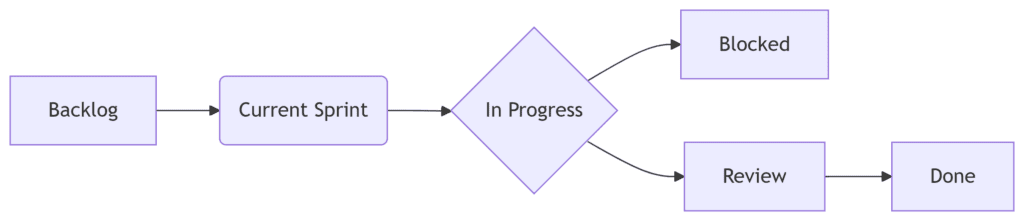
Tools That Mirror Reality Use Jira/ClickUp visually:
Diagram
Scale Without Sacrifice For large portfolios (ERP, SaaS), use Scrum-of-Scrums + shared metrics (e.g., cycle time).
A Client’s Turnaround:
A travel tech firm struggled with “undone” work. We introduced Definition of Done (DoD) checklists—“Tested on iOS/Android”, “Approved by Legal”. Result: 80% fewer post-launch hotfixes in 3 months.
❓ FAQs: Agile Pain Points Solved
Why do most Agile teams fail at best practices in agile development after 6 months?
→ They focus on ceremonies over culture. Fix: Ditch zombie standups. Ask daily: “What’s blocking you?” + “Who can help?” (Sprint Planning + Collaboration).
Can feature-driven development in agile survive stakeholder chaos?
→ Yes, if you spike first. Example: When a fintech client demanded a last-minute fraud feature, we ran a 2-day spike to assess impact before sprint commit (Anti-pattern fix + User Stories).
Why do retrospectives in agile feel like therapy without progress?
Assign owners to actions like backlog items. Tag them: