
My buddy Marcus runs a mid-sized logistics company out of Charlotte, North Carolina. Last spring, he spent roughly $40,000 on a mobile app. Six months after launch, his drivers had uninstalled it. Not because the technology failed — the technology worked fine. The app was just miserable to use. Confusing navigation. Screens that didn’t make sense in a moving truck cab. No thought given to the conditions in which real people would actually open it.
He told me, “The agency showed me beautiful mockups. I should’ve asked them to show me those mockups on a cracked phone screen in a parking lot at 6am.”
That line is the most honest summary of where custom app design in 2026 stands. The gap between what looks impressive in a Figma presentation and what works for a real person living a real life has never been more important to close. And yet so many design processes still start and end in sterile studios rather than in the actual world.
This guide is for startup founders, product leads, and business owners who want to understand what it genuinely takes to build a mobile app worth using in 2026 — without the usual fluff.
Mobile app design templates are sold as shortcuts. And they are — for about the first eight weeks. After that, they become ceilings. Every customization you need, every edge case your users hit, every brand element that makes you different from the competition — the template fights you on all of it.
The businesses that tried to save money in 2024 with templated apps are, in many cases, the ones hiring custom app design agency partners in 2026 to rebuild from scratch. That math rarely favors the shortcut.
Real custom mobile app design means building from a deep understanding of your specific users. The nurse in a Houston hospital using your scheduling app between patient rounds. The field tech in rural Montana using your inspection app on one bar of LTE. The 58-year-old business owner in suburban Ohio who has never called himself a “tech person.” Designing for those real humans — not a theoretical average user — is what custom app design means in 2026.
The app design trends 2026 that matter didn’t come from a conference keynote. They came from real user behavior shifting in ways that forced the industry’s hand. Here is what’s genuinely working.
Hyper-personalization is the phrase being thrown around most in 2026, and unlike most buzzwords, it actually means something useful. Users have been trained by the best apps in the world to expect experiences that feel like they were made for them specifically. A one-size-fits-all interface reads as lazy now in a way it did not five years ago.
AI-native interfaces are what make this possible at scale. Instead of designing one static layout, teams build intelligent systems where the UI adapts based on user behavior, time of day, location, and usage patterns. The app a returning power user opens at 7am on their commute behaves differently than the same app a brand-new user opens on a Tuesday afternoon. Different entry points, different defaults, different visual hierarchy — all assembled dynamically.
This is not just recommendation engines and smart feeds. It is personalized app interface design at the structural level. Building it requires rethinking the design process entirely. You are not designing one screen. You are designing a system of screens that assembles itself differently based on who is there and why.
The AI development team at Asapp Studio builds these adaptive systems into the product architecture from day one. That distinction matters — adaptive UI is much harder to bolt on after the fact.
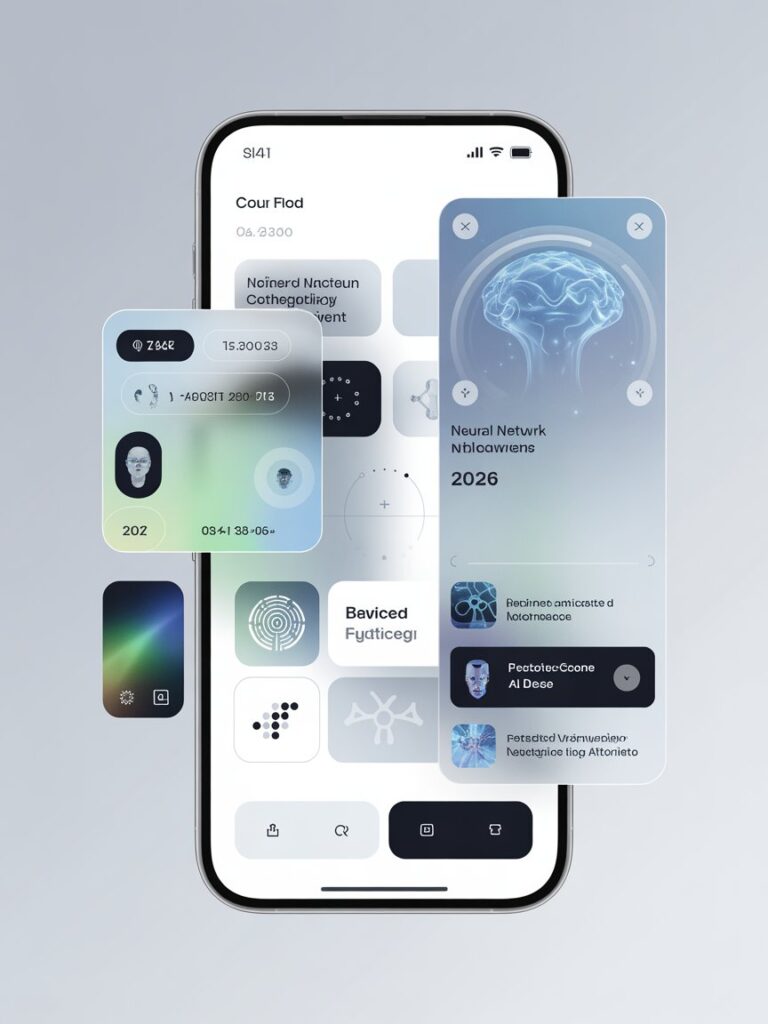
Adaptive UI is often confused with responsive design, but they solve different problems. Responsive design adjusts a layout to different screen sizes. Adaptive UI adjusts an interface to different users, contexts, and intentions.
A legal research platform used by law firms in New York needs to present dense information in a way that experienced attorneys can scan in seconds. The same platform used by a first-year associate who is still learning the workflow needs more guidance, more signposting. Adaptive UI serves both without forcing a product compromise.
Intent-based design takes this further. Instead of designing pages, you design for intentions. What is the user trying to accomplish right now? What do they already know? What is standing in their way? When the interface is built around honest answers to those questions rather than around a predetermined screen structure, everything gets better — usability, retention, task completion rates, the whole thing.
For any serious custom UX design 2026 project, intent-based design principles need to be in the brief before anyone opens a design tool.
Immersive app design is being used to describe a range of things right now, so let’s be specific.
3D immersive elements work when they serve a genuine functional purpose. A real estate app in Los Angeles that lets buyers walk through a property model before scheduling a showing — that is 3D design earning its presence. A banking app in Chicago that adds 3D animation to a confirmation button because it looks impressive — that is decoration that slows the app down and earns nothing except maybe a design award screenshot.
Glassmorphism — the frosted, layered, translucent visual approach — has matured considerably since its early days of being applied to everything without discrimination. The designers using it well in 2026 are the ones using it only where it genuinely helps. Navigation layers. Modal sheets. Places where visual depth communicates hierarchy that flat design cannot.
Tactile design is the dimension most brands underinvest in and most users cannot name but immediately feel. The weight of an animation. The precision of a haptic when you confirm a payment. The small resistance in a toggle before it switches. These physical qualities shape trust more than any color palette decision. A fintech app with precise, confident haptic feedback feels secure. An app where nothing has physical weight feels unfinished and, depending on the category, kind of suspect.
Every app in 2026 has animations. Not every app has micro-animations that communicate something useful.
The difference is purpose. A form field that turns green and checks off when you enter valid data is confirming completion. A loading indicator that changes shape slightly to suggest genuine progress is managing anxiety. A subtle badge bounce that says “look here” is directing attention. These are communication decisions dressed as design decisions.
Motion-driven UI built around communicative intent feels natural — so natural that users would struggle to explain why the app feels smooth. They just know it does. When animations exist for decoration, users develop a low-level awareness that the app is performing for them rather than working for them. That is a subtle feeling but it compounds over weeks of daily use.
Motion specifications should be part of the design deliverable on any UI/UX services project. Not an afterthought. Not left to developers to improvise.
Kinetic typography — animated text that responds to interaction or tells a story through motion — is either used brilliantly or not at all in 2026. Middle-ground executions are rare and usually regrettable.
When it works, it creates emotional impact that static type genuinely cannot. An onboarding screen headline that assembles itself as you scroll. A goal-completion animation where a number counts up dramatically. A brand tagline that fades in word by word during first launch. These are storytelling tools, not decoration.
Lifestyle brands in California, entertainment products in New York, wellness apps targeting younger demographics nationally — these are the categories where kinetic typography earns real dividends in user engagement and brand recall. The test is always the same: does the motion add meaning, or does it just add movement?
If you are building an app for American users in 2026 and accessibility-first design is still not part of your process from day one, you are behind legally, ethically, and commercially.
Legally, the ADA applies to digital products. Companies have faced significant litigation over inaccessible apps. Retrofitting accessibility after launch is almost always more expensive than building it in from the start.
Commercially, roughly 26 percent of US adults live with some form of disability. Designing them out of your product is not a neutral business decision — it is a choice to exclude a quarter of your potential market.
Practically, most accessibility improvements make the product better for everyone. High contrast ratios help colorblind users and also help anyone using their phone in direct sunlight. Large tap targets help users with motor differences and also reduce accidental taps for anyone on a bumpy commute. Voice navigation features built for users with visual impairments also serve any user who needs hands-free operation while driving or cooking.
The best custom app design services partners treat WCAG compliance as a foundation, not a finishing step.
People use phones with their thumbs. One thumb, usually, while doing something else. This sounds obvious until you look at how many apps still put critical actions in the top corners of the screen — a full thumb-stretch away from where anyone’s thumb naturally rests on a modern 6.7-inch device.
Gesture-based design in 2026 starts from anatomy. Where does the thumb sit? What can it reach without shifting grip? What gestures have users already learned from the operating system that you can lean on rather than reinvent?
Beyond ergonomics, gestures communicate. A left swipe means something. A long press means something. A pinch means something. These are learned vocabularies. Gesture-based design uses them intentionally rather than inventing new patterns users have to figure out on their own.
Voice navigation has moved from novelty to genuine use case, driven by improved AI processing and a growing population of users who need or prefer hands-free interaction. For enterprise apps in logistics and manufacturing, voice input has measurable productivity benefits. For healthcare apps, it enables documentation without interrupting care.
For consumer apps, voice is still context-specific — most users don’t want to talk to their phone in a coffee shop. But building voice capability into custom applications where context genuinely supports it creates differentiation that is real, not marketing copy.
Most businesses in 2026 don’t need a spatial computing design strategy today. The hardware market is still small and the adoption curve is still early.
But if you are in architecture, surgical planning, industrial training, or high-end retail, the early movers in this space are building real competitive advantage. And the design principles coming out of spatial computing — depth, context-awareness, multimodal experiences, ambient information surfaces — are influencing flat-screen mobile app design inspiration in ways that make understanding them worthwhile even if you are not building for Vision Pro tomorrow.
Dark mode UX is not “make the background dark and the text light.” That approximation looks poor and often performs worse for readability than a thoughtful light mode.
Real dark mode UX is a separate design system. Different color relationships, different contrast ratios, different shadow and elevation treatments, different handling of imagery. Apps that do it properly feel genuinely premium. Apps that simulate it with a color inversion look like they ran out of time before launch.
Users in 2026 switch between light and dark mode throughout the day as lighting conditions change. If your custom mobile app design does not have a proper dark mode, that mode toggle becomes a moment of disappointment that happens repeatedly to your most engaged users.
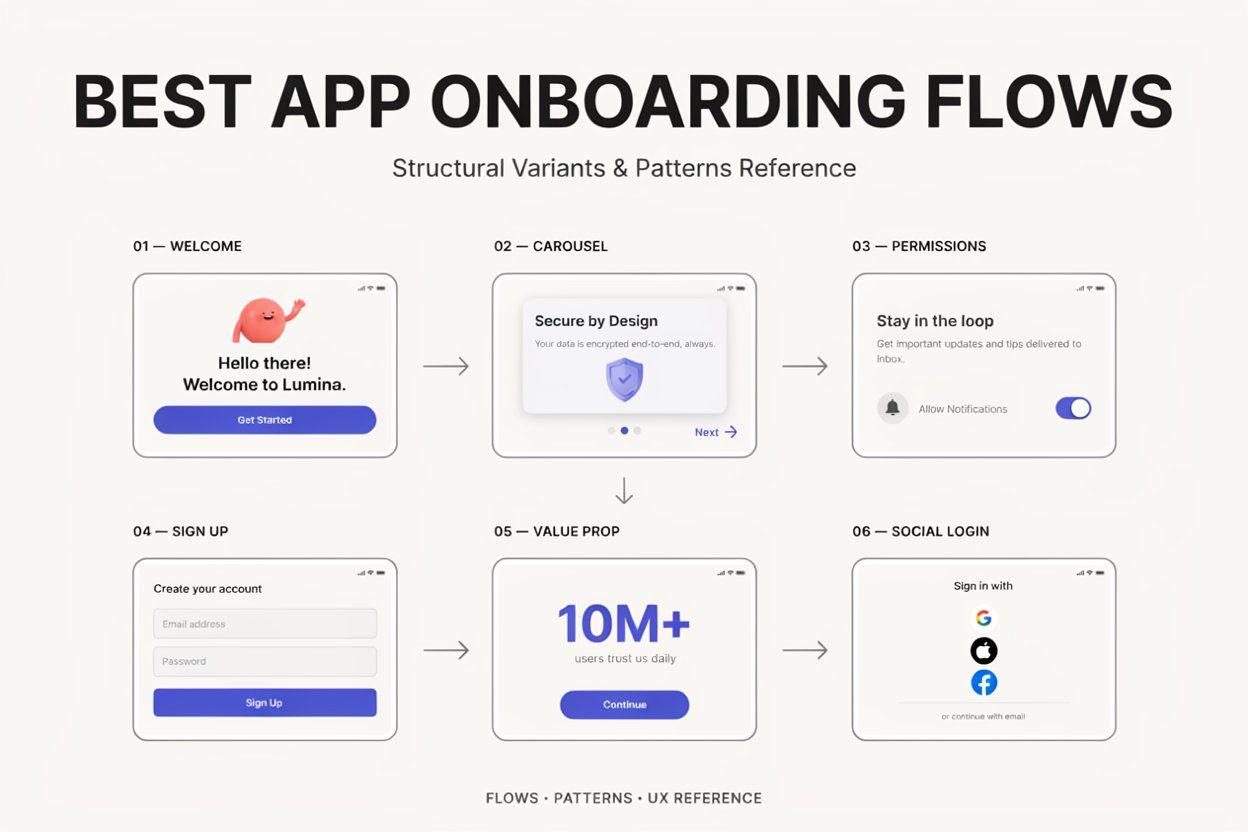
Emotionally intelligent design sounds abstract until you look at what it covers in practice. The phrasing of error messages. The visual language used when a transaction fails. The way an app acknowledges a user who hasn’t opened it in three weeks. The tone of onboarding copy for a user who just went through a frustrating sign-up flow. These are all emotional design decisions, and they have measurable effects on retention.
An error message that says “Something went wrong. Try again.” creates a different emotional response than one that says “We hit a snag — your data is safe and we’re looking into it.” Same technical information. Completely different emotional outcome.
Machine Experience (MX) design is the broader discipline emerging around this — thinking about the total experience created by AI systems and their interfaces together. As AI-powered custom app design becomes standard practice, MX gives design teams a framework for how the intelligence behind the interface should behave and communicate, not just what pixels it should display.
Custom iOS mobile app design and development and custom android mobile app design and development are related but distinct disciplines. Treating them as interchangeable is one of the more common and more expensive mistakes teams make.
iOS users have been trained by Apple’s design language. They expect specific navigation behaviors — the back gesture from the left edge, the bottom sheet with a specific physical spring, the tab bar proportioned a specific way at the bottom of the screen. Break those patterns meaningfully and the app feels wrong, even to users who have never heard of the Human Interface Guidelines and couldn’t tell you why something feels off.
Android presents a different set of challenges. The hardware diversity is the defining characteristic. Customized android mobile app design and development has to account for screens ranging from 5 to 7+ inches, display densities from MDPI to XXXHDPI, and devices from budget-tier hardware to flagship Galaxy phones — all running the same app. A design that looks perfect on a Pixel 9 Pro needs to still be usable on the $180 Android phone that a user in a mid-sized American city is running as their primary device.
Customized mobile app design and development that works across both platforms requires building a design system with platform-appropriate variations from the start — not one design adapted later when problems surface during development.
For products launching on both platforms, Asapp Studio’s cross-platform development team uses Flutter and React Native to maintain a shared codebase while still honoring what each platform’s users actually expect.
There is a particular kind of cruelty in bad enterprise custom app design. When a consumer app is painful, the user deletes it and moves on. When an enterprise app is painful, the user is stuck with it. They open it dozens of times per day. They navigate its broken flows hundreds of times per week. They build up a steady resentment for whoever signed off on this as acceptable.
Enterprise custom app design in 2026 has a fundamentally different success metric than consumer design. It is not about delight or discovery. It is about efficiency and clarity. The warehouse floor manager who opens your logistics app has one goal: get the information they need and get back to work. Every second they spend confused is a real operational cost.
Role-based UI is table stakes now for serious enterprise products. A floor manager and a supply chain director using the same logistics platform have completely different information needs. Serving them from the same screen layout is a design decision that actively hurts both of them.
For US companies in manufacturing, healthcare, financial services, and legal sectors where enterprise tools are used intensively and professionally, Asapp Studio’s software development services bring genuine enterprise design experience alongside the engineering depth to actually build what gets designed.
The conversation around SC custom app design & development — and regional custom app design more broadly — points to a real issue that most trend articles skip: market conditions vary significantly across US states, and good design has to account for that.
What performs well visually and functionally for a fintech app targeting young professionals in San Francisco is not automatically what works for a healthcare management platform serving independent medical practices across rural South Carolina. The users are different. The devices they use are different. The connectivity they have is different. Their comfort and expectations around technology are different.
Regional-aware custom app design means doing actual research on your actual users — their devices, their daily contexts, their expectations — before defaulting to mobile app design inspiration that originates in coastal tech markets and assuming it generalizes nationally.
This is why discovery matters so much. The research done before anyone opens a design tool is what separates a product built for real people from a product built for a polished case study.
The best app design 2026 examples have a set of qualities that go beyond visual style. These are worth naming plainly because they get lost in conversations that focus too heavily on aesthetics.
They load fast and stay fast. Performance is a design decision made before the code is written. Image sizes, animation weight, the number of network calls needed to render a screen — these are all design choices. Apps that feel fast feel trustworthy. Apps that feel slow feel unfinished, regardless of how polished the visuals are.
They do less, better. The apps with the strongest retention rates in 2026 are not the ones with the most features. They are the ones that do a clearly defined job better than anything else. Feature creep is still one of the most reliable ways a well-intentioned product becomes a bad one.
They look and feel like themselves. Custom illustrations, a genuine color system, typography that reflects the brand’s actual character — these are what make an app recognizable as something specific rather than something generic. Mobile app design inspiration 2026 that results in an app that looks like fifty other apps is not inspiration. It is imitation.
They were tested by real people before launch. Not QA testing. Not internal review where everyone is too close to the work to see its problems. Actual user testing with people who match the target audience — people who will find the things your team stopped noticing weeks ago.
Every agency website says essentially the same things. “We build user-centered products.” “We deliver results.” “We’re your trusted partner.” None of that distinguishes anyone from anyone else.
Here is what to actually look for when evaluating a custom mobile app design agency:
Real case studies with real outcomes. Not just screenshots of attractive screens. Descriptions of the actual problem, the design decisions made, and what happened after launch. Retention numbers. Usability findings. Business metrics. Anything that demonstrates a connection between design work and real-world results.
A discovery process you can see evidence of. Any agency ready to show you mockups in the first two weeks without serious discovery work is an agency designing from assumptions. Good custom app design services start with research. Not with Figma.
Design and development under one roof. The handoff between design and engineering is where products get compromised. When the people who design are in daily communication with the people who build — as they are at Asapp Studio — what gets designed actually gets built, without the translation loss that happens between separate teams.
Honest communication about what they don’t know. A partner who has genuine experience will tell you when something is unclear rather than projecting false confidence. If every question gets a confident answer in the first sales conversation, that is a flag, not a green light.
Asapp Studio operates with a US office in Temecula, California and an integrated design-development team. Their case studies cover fintech, healthcare, logistics, and consumer categories — the range that signals a team has solved genuinely different problems rather than applied the same solution to different industries.
Trends age. Platforms shift. These mobile app design principles have held through all of it.
Users do not read — they scan. Design for scanners. Make the most important thing the most visually prominent thing. Put the action users need to take where their eye lands naturally.
Every tap is a promise. When someone taps a button or link, they have an expectation of what happens next. Meeting that expectation builds trust incrementally. Breaking it, even once, creates doubt that takes multiple positive interactions to rebuild.
Consistency is more important than perfection. A design system that is consistently solid across every screen beats a product that is brilliant in three places and broken in twelve others. Consistency is what makes a product feel like a coherent whole rather than a collection of screens that don’t quite belong together.
The best interface is the one users don’t think about. When an app works well, users don’t notice the design — they just accomplish what they came to do. That invisibility is the goal. Celebrated design in consumer apps is nice. Design that is invisible because it works perfectly is better.
Anyone who gives you a specific number without knowing anything about your project is not being straight with you. That said, here are honest ranges based on real projects:
A focused MVP — one platform, clear scope, moderate complexity — typically runs between $25,000 and $60,000 for genuine custom mobile application design and development from a quality partner.
A fully realized product on both iOS and Android with a custom design system, multiple user roles, backend integration, and proper testing runs from $80,000 to $250,000 for most categories.
Enterprise custom app design projects with complex permissions, compliance requirements, integration with existing enterprise systems, and large user bases regularly exceed $300,000.
The number that matters most is not the upfront cost. It is the cost of building the wrong thing and rebuilding. Every dollar saved on discovery and design research tends to cost three to five dollars in rework downstream. Teams that have shipped enough real products know this and build their processes accordingly.
If you have read this far, you are either already building something or seriously considering it. Either way, the next step is the same: have a real conversation with people who have actually shipped real products in your category.
Asapp Studio works with US businesses across every stage — early startup to established enterprise — on custom mobile app design and development that begins with real user understanding and ends with products worth using.
The mobile app development team covers iOS,Android,Flutter, and React Native. The UI/UX services practice handles everything from early concept work through production design systems. The portfolio shows what the finished work looks like.
Book a free call and describe what you are building. The conversation itself is usually worth something regardless of what comes next.
Q1: What is Custom App Design in 2026 and why does it matter for US businesses?
Custom app design in 2026 means building a mobile interface specifically around your users’ real needs — not templates. It combines AI, adaptive UI, and current design trends to create apps users return to.
Q2: How much do custom app design services typically cost in the United States?
Basic custom mobile app design starts at $25K–$60K. Full cross-platform builds with custom UX systems run $80K–$250K. Enterprise custom app design often exceeds $300K depending on complexity and compliance needs.
Q3: What are the most important mobile app design trends 2026 to understand?
Hyper-personalization, AI-native interfaces, micro-animations, accessibility-first design, gesture-based design, dark mode UX, glassmorphism, kinetic typography, and emotionally intelligent design lead the field.
Q4: What is the real difference between custom iOS and custom Android mobile app design?
iOS follows Apple’s HIG with specific navigation and animation expectations. Android requires designs that scale across wide hardware diversity. Both need platform-specific thinking — shared codebases still need separate design decisions.
Q5: How do I choose the right custom mobile app design agency for my project?
Look for honest case studies with real outcomes, a visible discovery process, integrated design and development, and a communication style that matches how you actually work. Avoid agencies that skip to mockups before they understand your users.