
A lot of business owners come to us after they’ve already tried two or three off-the-shelf CRMs. By that point, they’re not confused about what a CRM is. They’re frustrated. They’ve spent money on platforms that almost work. Almost do what they need. Almost fit the way their team operates.
That’s the conversation that leads most people to start asking about custom CRM development.
So — what is custom CRM development in 2026, and why is it getting so much attention? Simply put, it means building a customer relationship management software system that starts with your business, not with a vendor’s pre-built template. You define what modules exist, how data flows, what automation fires when, and how the whole thing looks and behaves for your team.
What does CRM stand for? Customer Relationship Management. The term’s been around since the 1990s. What’s changed in 2026 is how far that concept has stretched. Today a custom CRM platform isn’t just a glorified contacts database — it’s the central operating system for sales, customer service, marketing follow-ups, contract management, reporting, and increasingly, AI-driven decisions happening in the background without anyone clicking anything.
What is customization in CRM? When you use something like HubSpot or Salesforce, customization means adjusting field labels, renaming pipeline stages, or toggling features the vendor built for someone else’s workflow. With bespoke & custom CRM development, customization means the entire system — every module, every rule, every screen — was designed for your specific situation. Nobody else has what you have, because it was never meant for anyone else.
That distinction matters more in 2026 than it did five years ago. Competition across US markets is sharper. Operational efficiency has become a real differentiator, not just a nice-to-have. Businesses running on systems built around their actual workflows move faster than businesses trying to squeeze into a box someone else designed for a different industry.
Whether you’re a mid-sized company in Dallas, a healthcare group in Chicago, or a growing real estate operation in Miami — custom CRM solutions give you something generic software simply cannot: a tool that actually fits.
Here’s a scenario that plays out in businesses across the US every single week. A sales rep has a great call with a prospect on Monday. The prospect says, “follow up Thursday.” Thursday arrives, the rep is deep in something else, misses the window, and the prospect goes quiet. Three months later you find out they signed with a competitor.
That is not a people problem. That’s a systems problem. And it’s the clearest illustration of why CRM is important for sales — the right system catches those gaps before they become losses.
Why is CRM important to businesses today isn’t complicated. Relationships drive revenue. You can’t manage relationships you can’t see. A CRM gives you that visibility — across every rep, every account, every active deal, every open service issue — from one place.
But the way US businesses use CRM has matured significantly. In 2020, a CRM meant logging calls and storing email threads. In 2026, business development CRM and customer development CRM workflows involve behavioral signal tracking, automated touchpoint sequences, lead scoring tied to real conversion patterns, and live pipeline views that give leadership accurate forecasting — not gut-feel guesses.
What is leads in CRM? Leads are potential customers who’ve shown some interest but haven’t yet bought. In a well-built custom CRM app development setup, leads move through defined stages — each with automations, assigned tasks, and full visibility — so nothing falls through and every rep always knows the next action.
Here’s what separates companies that grow steadily from ones that plateau at a certain size: the growing ones have clear visibility into their customer relationships at every stage. The plateauing ones are usually scattered across spreadsheets, disconnected email threads, and a CRM that the team stopped using six months after it launched because it didn’t match how they actually work.
That last part is the real problem. A CRM nobody uses is worse than no CRM at all — it creates the illusion that the process is organized when it isn’t. A custom CRM software built around how your people actually work gets used. Consistent use means clean data. Clean data means real insights. Real insights mean better decisions.
Our team at AsappStudio has watched this play out many times. The businesses that reach out for custom CRM development services aren’t chasing a technology trend. They’re fixing an operational problem that’s been costing them.
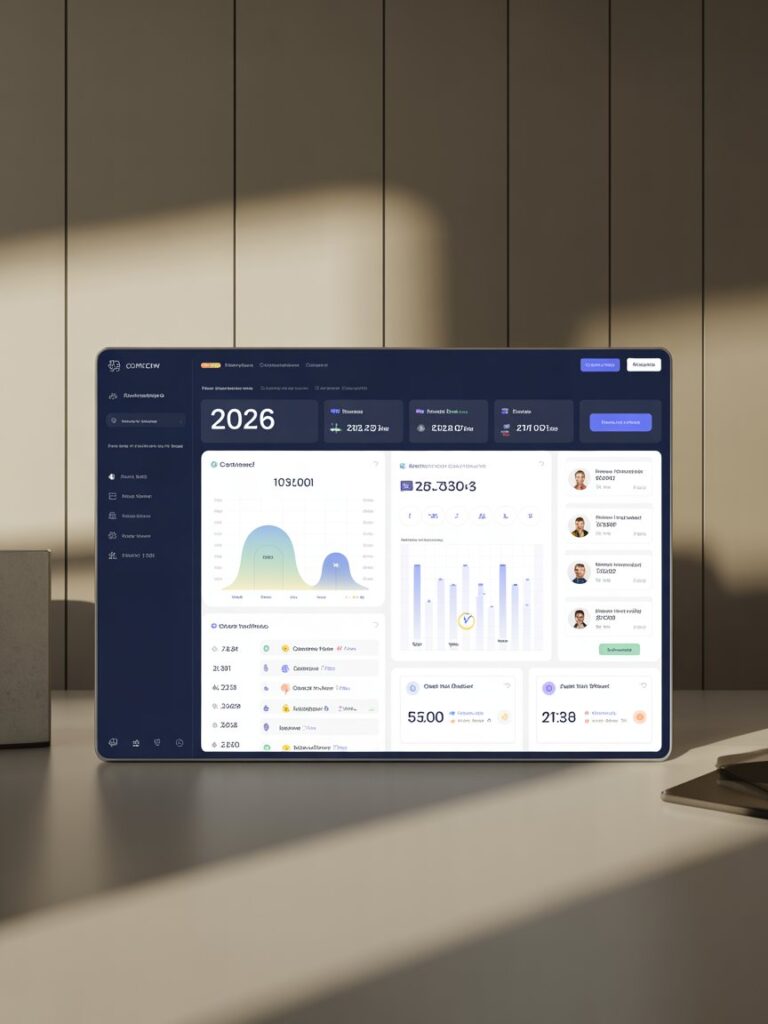
Every year brings another CRM report 2026 heavy on buzzwords and light on practical meaning. Let’s skip the filler and talk about what’s actually changing in CRM software development this year — the things that are influencing real build decisions.
A year ago, AI in CRM meant a basic email suggestion tool or a simple chatbot widget. In 2026, AI-native CRM architecture means the intelligence layer is built into how the system operates from the ground up — not bolted on top of an existing product.
Agentic AI CRM is the term describing systems where AI doesn’t just surface recommendations but takes autonomous action. Draft the response, schedule the follow-up, update the pipeline stage, flag the at-risk account — all based on live signals, without a human triggering each step. For sales teams in competitive US markets, this is already operational at well-funded companies. The gap between businesses running this and those not is widening.
Is AI necessary in custom CRM development 2026? Not for every build. A 12-person sales team with a simple pipeline probably doesn’t need an ML layer. But if your team spends meaningful hours each day on data entry, manual follow-ups, and report pulling — there’s a real ROI case.
Customers in 2026 have low patience for being treated like a number. Hyper-personalization in CRM means your system surfaces, before the call even connects, that this customer bought twice in Q3, always prefers email over phone, asked about a specific feature in their last support ticket, and visited your pricing page twice this week. That context turns an average interaction into a good one.
Building this well requires clean data architecture from day one — which is why it needs to be part of the CRM system design and implementation conversation early, not added as a feature request later.
Composable CRM architecture is a direct response to a practical business reality: your needs change as you grow. The modular CRM system approach lets you build what makes sense now and add components cleanly as requirements evolve — without rebuilding the core or paying for a bloated platform you only use 40% of.
This is why most custom CRM software development from scratch projects at AsappStudio are designed with modular architecture from the beginning, even when the initial build is relatively straightforward.
Customers reach out by text, email, phone, Instagram DM, and web chat — sometimes the same person using different channels in the same day. An omnichannel CRM solution that logs every touchpoint in one place isn’t a premium feature in 2026. For consumer-facing businesses in competitive US markets, it’s baseline expectation.
California’s CCPA has been in force for years. Virginia, Colorado, Texas, and other states have their own frameworks. Privacy-first CRM development means consent tracking, data minimization, role-based access controls, and complete audit logging are part of the architecture from the start — not retrofitted after a compliance question surfaces.
Insurance agents in Georgia, field service reps in Ohio, real estate professionals across Florida — voice-enabled CRM lets them log calls, pull up records, and update deal stages without touching a screen. This isn’t a niche request anymore. It shows up consistently in our project conversations for field-heavy industries.
Low-code CRM customization and no-code CRM platform tools have genuinely improved. For simple use cases they work well. But complex conditional logic, deep third-party integrations, mobile-native applications, AI-native features, and serious compliance controls — all of those hit a ceiling fast. Knowing where that ceiling is before you start building saves significant time and money.
Nobody’s going to argue Salesforce is bad software. It isn’t. How many customers does Salesforce have? Well over 150,000 globally as of 2026. That’s legitimately earned. But “well-built software” and “right for your specific business” are two completely different questions.
Salesforce CRM pricing runs roughly $75 to $300+ per user per month depending on the tier. A 40-person team on a mid-tier plan pays somewhere between $36,000 and $144,000 every year — for software they don’t own and can’t significantly modify without hiring expensive Salesforce-certified consultants to work within Salesforce’s constraints.
Compare HubSpot CRM: genuinely good for inbound-focused marketing operations and businesses with relatively standard pipelines. The moment you need complex role-based permissions, advanced workflow branching, or integrations with industry-specific platforms, you’re either buying Enterprise or accepting the limitation.
Custom CRM vs Salesforce 2026 — which is better? Neither answer is always correct. It depends on timeline, budget structure, team size, complexity, and long-term plans. Here’s the honest breakdown:
| Factor | Custom CRM | Salesforce / HubSpot |
| Ownership | Yours — code and all | Licensed — you rent access |
| Customization | Total | Platform-constrained |
| Long-term cost | One-time build + maintenance | Recurring per-user fees forever |
| Data control | Your infrastructure | Vendor’s cloud |
| Fit to your workflow | Built around yours | You adapt to theirs |
| Scalability | Built to your specific roadmap | Tied to pricing tiers |
| AI integration | Your choice of approach | Vendor-defined features |
Custom CRM ROI tends to shift positive somewhere between years two and three for most US businesses. Before that point, the comparison with subscriptions is closer. After that point, ownership compounds in your favor — especially as headcount grows and per-user costs on subscription platforms balloon.
The most customizable CRM is always the one you own. Competitors paying the same Salesforce subscription you’re paying have access to the same capabilities. A purpose-built system is a structural advantage that’s genuinely difficult for them to replicate.
Our custom CRM software development services exist to give you that ownership without the uncertainty of navigating it alone.
What is CRM design when you’re starting from scratch? It’s the discipline of deciding what actually serves your business — not building every possible feature because the technology allows it. That said, here’s what belongs in a serious custom CRM software build in 2026:
The foundation of everything. Every customer, lead, partner, and vendor — fully searchable, with complete interaction history, linked documents, and relationship mapping. What is a CRM platform without this? Nothing. But in 2026, contact management means more than name and phone number — it means a full timeline of every touchpoint, every document exchanged, every deal linked.
What is leads in CRM in practice? The journey from “might buy” to “paying customer.” Custom pipeline stages that mirror your actual sales motion, automated scoring that flags the leads most likely to convert, and visual deal boards that reps genuinely want to check in the morning — not a chore they avoid.
Rule-based automation that fires on conditions you define: assign a rep when a lead crosses a score threshold, send a follow-up email 48 hours after a demo, escalate an issue if it hasn’t been touched in a day. CRM workflow optimization isn’t the glamorous part of a CRM build. It’s where most of the actual time savings come from.
Dashboards that answer the questions leadership actually asks. Pipeline by stage. Win rate by rep and territory. Revenue by source and period. Churn patterns by customer segment. Predictive analytics CRM that looks forward, not just backward. Not reports you export to Excel on Friday — live views that drive decisions.
Email, SMS, phone, chat — all logged automatically to the contact record, regardless of which channel the customer chose. No more “did anyone talk to this person recently?” because every touchpoint is visible in one place.
Field reps, account managers, and executives are not always at a desk. A proper CRM mobile application — native iOS and Android — gives full access from anywhere. Our mobile app development team builds this as part of the same project, not a separate phase months later.
No CRM lives alone. Connections to your ERP (custom ERP development), accounting tools, ecommerce platform (ecommerce development), marketing automation, support systems — any platform your business depends on. CRM integration iPaaS approaches simplify this for complex multi-tool environments.
Not everyone should see everything. A clean permission structure keeps sensitive data secure, satisfies compliance requirements, and keeps each user’s interface focused on what’s relevant to them.
Most businesses switching to a custom system have years of data in a previous tool. Migration done properly means cleansing, normalizing, mapping, and importing that history without loss or corruption. Done poorly, it damages trust in the new system from week one.
AI-driven CRM features — lead scoring, churn prediction, response drafting, conversation intelligence — layered on top of clean data. Our artificial intelligence team handles ML integration when project scope calls for it.
How to make a CRM software isn’t a quick answer — but the CRM development process has a clear shape when done right. Here’s how we handle custom CRM software development from scratch at AsappStudio:
Before anything is designed or coded, we spend real time understanding your business. What does your sales process actually look like — not the polished version you’d present, the real one with the workarounds your team has built? What systems need to connect? What’s broken about what you’re using now?
This phase produces a requirements document that every subsequent decision references. Skipping it or rushing through it is the single most common reason CRM projects fail or go over budget.
What is CRM design at this stage? Architecture. Database structure. API contracts. User permission hierarchy. UX wireframes for the key screens your different user groups will live in daily. Our UI/UX services team builds interactive prototypes so you can actually click through the experience before any code is written.
Changes at this stage cost almost nothing. Changes during development are expensive. This phase is where you spend time preventing that.
Backend logic, database build, authentication, and core modules — built in two-week sprints with working demos at each checkpoint. You review real, functional software at regular intervals rather than waiting months for a big reveal that might miss the mark.
Connecting cleanly to your existing tool stack. This is where software development services depth shows most clearly — legacy systems, proprietary APIs, and CRM microservices architecture for enterprise-scale builds all handled here.
Our quality assurance team tests every workflow, every permission level, every integration, every edge case — functional testing, performance under load, cross-device behavior, security testing. Nothing moves to production that hasn’t been properly tested.
Cloud-based custom CRM development on AWS, Google Cloud, or Azure depending on your infrastructure preferences. CRM data migration and setup from your current system, live environment configuration, and final checks before going live.
Role-specific user training, admin documentation, and post-launch support from our IT support team. Adoption doesn’t happen automatically — structured onboarding is how you get the team actually using the system from day one rather than reverting to old habits.
How long does it take to develop a custom CRM? Mid-complexity builds typically take 16–26 weeks. Enterprise custom CRM and ERP system development with deep integrations can run 6–12 months. The timeline is determined by scope — not by how fast we push.
What tech stack for custom CRM in 2026 makes sense? It depends on your scale, existing infrastructure, and who manages the system long-term. Here’s what experienced custom CRM developers are actually choosing on real projects:
Backend: Node.js for high-concurrency, real-time-heavy builds. Python with Django or FastAPI for data-intensive applications. .NET Core for enterprise environments that need to fit within Microsoft infrastructure. Java remains the dominant choice for custom banking CRM development — its stability, long-term enterprise support, and large developer talent pool make it the low-risk option for financial institutions.
Frontend: React.js for web interfaces — the component architecture maps naturally to CRM module structures. Vue.js where teams prefer a lower learning curve. For mobile, our Flutter app development and React Native development teams handle both — the right choice depends on the specific mobile requirements of the project.
Database: PostgreSQL for the core relational data — contacts, deals, activities, relationships between records. Redis for caching and session management. Elasticsearch when your user base is large enough that full-text search across millions of records needs to be genuinely fast.
Cloud: AWS is the most common choice across our US client base — mature ecosystem, strong compliance tooling, available in every US region. Google Cloud and Azure both have compelling cases depending on what infrastructure the business already runs on.
CRM Software Architecture: For smaller builds, a well-structured monolith is simpler and faster. For enterprise-scale custom CRM system development, a CRM microservices architecture makes individual components independently deployable and more resilient — the pipeline engine, notification system, reporting layer, and integration layer all operate separately, making the overall system far easier to update and scale.
AI Layer: OpenAI APIs for language tasks — response drafting, summarization, classification. Custom ML pipelines for predictive models trained on proprietary data. For custom medical CRM development and custom banking CRM development, proprietary models on private infrastructure are usually the only acceptable option given data sensitivity requirements.
How much does it cost to build a CRM system in 2026? Straight answer:
| Build Type | Estimated Cost Range |
| Starter / MVP CRM | $15,000 – $35,000 |
| Mid-Complexity (5–10 modules + integrations) | $35,000 – $80,000 |
| Enterprise CRM (full feature set, AI, multi-team) | $80,000 – $200,000+ |
| Combined CRM + ERP System | $100,000 – $300,000+ |
Custom CRM development cost is shaped by module count, integration complexity, AI features, compliance requirements, team size, and timeline. These ranges reflect professional development quality for the US market in 2026.
Now run the comparison. How much does custom software development cost versus an ongoing subscription? A 50-person team on Salesforce’s mid tier pays $45,000 to $90,000 per year — indefinitely, without ever owning the platform. By year three, a custom build has typically crossed into positive ROI territory. Then it keeps compounding.
Best developers for custom CRM software doesn’t mean most expensive. It means a team that has shipped real CRM systems before, understands your industry’s requirements, and delivers something your team will actually use. At AsappStudio, you get competitive pricing and full ownership of everything delivered.
This is where generic CRM platforms hit their sharpest limits. CRM needs look completely different across industries, and off-the-shelf tools are built for the average — which means they fit nobody’s specific situation particularly well.
Healthcare organizations across California, Texas, Florida, and New York operate under HIPAA, state patient privacy laws, and internal compliance requirements that generic CRM tools handle poorly. Custom medical CRM development builds in HIPAA-compliant data storage with full audit trails, patient intake workflows, EHR/EMR system integration, referral tracking between providers, and insurance pre-authorization workflows. A hospital group in Houston shouldn’t be bending a sales CRM to manage patient relationships.
Financial institutions carry compliance obligations that generic platforms create genuine risk around. Custom banking CRM development handles KYC and AML compliance workflows, loan product tracking, relationship manager portfolio assignment, secure document storage, and core banking system integration. Banks and credit unions in New York, Illinois, and North Carolina are choosing custom over off-the-shelf specifically because compliance requirements leave them no practical alternative.
Guest experience is the actual product in hospitality. Custom CRM development for hotels tracks room preferences, dietary restrictions, past stay history, loyalty tier status, and communication preferences — feeding that context into every pre-arrival, in-stay, and post-stay touchpoint. For resort groups in Florida, Las Vegas, and Hawaii, this level of personalization directly influences review scores and repeat booking rates.
Some businesses have existing Zoho investments worth extending rather than replacing. Custom Zoho CRM development builds custom modules, functions, workflows, and third-party connectors within Zoho’s framework — a more tailored experience without ground-up development cost.
For organizations already heavily invested in the Salesforce ecosystem, custom Salesforce CRM development uses Apex, Lightning Web Components, and Salesforce’s API layer to build specific functionality on the platform — keeping existing data and training investments intact while adding the capabilities the platform doesn’t offer natively.
Microsoft-heavy organizations often extend their investment through custom Dynamics CRM development — custom entities, Power Platform workflows, and Azure-connected services that keep everything within the Microsoft infrastructure they already manage and support.
Manufacturers, distributors, and multi-unit operators need customer management and operational management talking to each other in real time. A unified custom CRM and ERP system development project removes the data silos entirely. Our custom ERP development team handles these combined builds regularly.
Custom CRM development 2026 demand varies meaningfully by US market. Here’s what’s actually driving it across key states:
Silicon Valley companies expect AI-powered custom CRM as a baseline — anything less is considered behind. Los Angeles agencies and entertainment businesses need omnichannel client management with complex permission structures. Privacy-first CRM development aligned with CCPA is non-negotiable across the state. Startups often start with no-code custom CRM development MVPs before investing in full custom builds as they scale. Cloud-based custom CRM development is the standard delivery model.
Texas business diversity makes it one of the most interesting US CRM markets. Energy companies in Houston need business development CRM tools built for complex contractor, JV partner, and vendor relationships. Austin’s tech sector wants fast-iteration SaaS CRM development with strong API layers and developer-friendly integrations. Real estate operations across Dallas and Fort Worth drive customer development CRM workflows with deep lead nurturing. Custom crm developers for hire arrangements are common here for businesses that want ongoing platform development with a dedicated team.
Finance dominates New York’s CRM landscape and custom banking CRM development stays in constant demand. Law firms across Manhattan need conflict-checking and matter-tracking built into their system. Healthcare networks in the five boroughs and upstate New York require custom medical CRM development with layered compliance. Media and entertainment companies need omnichannel relationship tracking across clients, talent, brand partnerships, and agency relationships all in one place.
Florida’s hospitality sector is one of the largest custom CRM development for hotels markets in the country. Real estate across Miami, Orlando, and Tampa drives custom CRM app development demand with mobile-first design as a consistent priority. Healthcare’s large retiree population in South Florida and the Tampa Bay area creates specific needs for compliant, patient-relationship-focused CRM systems.
Chicago’s financial services and professional services sectors drive steady enterprise custom CRM development investment. Logistics and supply chain companies concentrated in the Chicago metro area frequently pair CRM builds with ERP projects to unify customer and operational data. Manufacturing operations across downstate Illinois need custom CRM and ERP system development that handles distributor relationship management alongside production workflows.
Atlanta’s emergence as a fintech hub drives custom banking CRM development demand alongside significant healthcare technology investment. The Hartsfield-Jackson corridor’s logistics sector needs CRM tools built for complex multi-party relationship management across carriers, shippers, and brokers. Healthcare systems across Georgia are actively replacing generic tools with custom medical CRM development systems built specifically for their compliance and workflow requirements.
Seattle’s enterprise tech base — cloud companies, software firms, aerospace contractors — consistently demands CRM microservices architecture and cloud-native CRM builds integrated into existing AWS or Azure infrastructure. Businesses here are often technically sophisticated buyers with specific architectural requirements, not businesses exploring CRM for the first time.
Boston’s biotech and life sciences cluster creates genuinely unique CRM needs. Research organizations and biopharma companies manage clinical trial participant relationships, licensing deal pipelines, and regulatory documentation simultaneously — none of which fits a sales-oriented generic CRM. Custom crm software development for life sciences in Massachusetts frequently overlaps with compliance-heavy document management and participant communication requirements.
Phoenix and Scottsdale’s growing tech and real estate sectors have pushed custom CRM solutions investment upward. Insurance companies with major Arizona operations frequently engage custom crm developers for long-term platform builds. Real estate groups in the greater Phoenix area need CRM systems built for high-volume lead management and agent-level pipeline tracking.
Denver’s mix of outdoor lifestyle brands, SaaS companies, and healthcare organizations creates varied CRM demand. The consistent thread across all of them is mobile priority — CRM mobile application development is nearly always in scope for Colorado projects because field teams, outdoor industry reps, and traveling account managers need full CRM access well away from a desk.
There are plenty of companies that call themselves a custom CRM development company. Some genuinely are. Others take a white-labeled template, put your logo on it, and present it as custom work. The difference doesn’t always show up at the sales stage — it shows up three months into the build.
Here’s what actually separates working with AsappStudio:
We build from scratch. When we say develop custom CRM from scratch, we mean every module, every database structure, every API endpoint, and every interface screen is written for your project specifically. There are no recycled templates, no “this is what we built for the last client, let’s adjust it for you.”
We run our own CRM product. AsappStudio CRM is a live product we build, maintain, and evolve. That means when we build your custom system, we’re drawing on real product experience — not theoretical CRM design knowledge. We’ve dealt with the problems that show up in production, and we build to avoid them.
We’re a full-service technology company. Our capabilities go beyond CRM: mobile app development, web development, artificial intelligence, blockchain development, ecommerce development, IoT development, and software development services across the board. Everything that needs to connect to your CRM can be built by the same team that built the CRM itself.
Domain experience across industries. Our custom CRM developers for hire have built for healthcare organizations, financial institutions, hospitality businesses, real estate operations, SaaS platforms, and manufacturing companies. The compliance requirements, integration challenges, and user experience decisions specific to each industry aren’t new territory.
Full project coverage. Discovery through deployment through post-launch support. Our IT support team stays available after the project goes live. You don’t get handed a codebase and a good luck.
No buried costs, no timeline surprises. You know what’s being built, what it costs, and when you’ll have it — before work starts, not after it’s already underway.
Contact our team or book a free consultation — no commitment, just an honest conversation about whether we’re the right fit.
The case for bespoke & custom CRM development comes down to things that compound over time rather than one dramatic advantage:
You own it outright. No subscription fees that compound as you add users. No platform shutdown that takes your entire CRM with it. No vendor deciding to deprecate a feature your team depended on. The code is yours permanently.
People actually use it. CRM adoption failure is well-documented — a significant percentage of CRM implementations underperform because users don’t adopt the tool. When the system was designed around how your team actually works, resistance disappears. High adoption means consistent data, and consistent data is where the real value starts.
Data quality goes up. Teams that aren’t fighting the system enter data accurately and completely. Better data feeds better CRM analytics and reporting, better forecasting, and better decisions at every level of the organization.
Your competitors can’t copy it. An off-the-shelf platform gives your competition access to the exact same capabilities. A purpose-built custom CRM software that matches your operational workflows is a structural advantage with no direct equivalent to imitate.
It grows with you. CRM scalability solutions built into the architecture from the start mean adding users, modules, markets, and AI capabilities happens cleanly — not through painful re-implementations every few years as you outgrow another subscription tier.
A meaningful number of businesses reach us because they’re on platforms that have stopped evolving. Highrise CRM alternatives is a common search from small US businesses that built their process around Highrise and have now outgrown its limited feature set. Highrise CRM replacement conversations usually involve businesses that now need automation, proper reporting, and mobile access the platform simply doesn’t provide.
Vtiger vs Zoho comparisons come up frequently among mid-market businesses — both have genuine strengths, both have real customization ceilings that become frustrating once a business reaches a certain size and operational complexity.
Magento 2 CRM integration is a regular requirement for ecommerce businesses that want purchase history, cart behavior, and customer segmentation from Magento feeding directly into their CRM rather than sitting in a separate system. Our ecommerce development team handles these connections as part of CRM build projects.
Xero CRM integration — pulling financial data from Xero accounting into a shared customer record — shows up consistently for service businesses where the sales team and finance team both need context on the same client relationship.
If you’re migrating from any legacy platform, our CRM data migration and setup process handles the complete transition — historical data, record mapping, and data cleansing included.
Is no-code custom CRM development worth it in 2026? For certain businesses, genuinely yes. A small team with a straightforward pipeline, simple automation needs, and minimal integration requirements can get real value from no-code CRM platform tools. They’ve improved and for simple use cases they deliver.
The honest limitation is that no-code CRM development hits a complexity ceiling quickly. Multi-step conditional workflows, deep API integrations, mobile-native apps, AI-native features, serious compliance controls — all of these either hit a hard wall or require expensive workarounds that cost more than the savings from avoiding custom development.
For those situations, custom CRM software development from scratch with professional custom CRM developers is the more reliable investment. A system built properly from the foundation handles complexity cleanly, instead of fighting platform constraints at every turn.
How to integrate AI into custom CRM development is one of the most consistent questions from US business owners in 2026. Here’s where the investment actually delivers practical value:
Lead Scoring — Train a model on your own historical conversion data and it will score incoming leads based on patterns that actually predicted revenue in your business. Not generic benchmarks from a vendor’s aggregate dataset. Your specific conversion signals.
Churn Prediction — Real-time CRM insights that surface customers showing behavioral patterns associated with leaving before they actually cancel. Even a modest improvement in retention rate compounds significantly over a year.
Response Drafting — Language model integration that drafts email replies and follow-up messages from the full context of the customer record. Human review before sending, but the first draft is handled automatically. For teams managing high volumes, the time savings are genuine.
Sales Forecasting — Predictive analytics CRM trained on your pipeline history gives leadership a reliable revenue view by rep, region, product, and time period. Not gut-feel — actual pattern recognition from your own data.
Conversation Intelligence — Call recording with AI transcription that automatically updates CRM records, flags commitments made on calls, and surfaces at-risk deals based on detected sentiment. The rep finishes the call and the record is already updated.
The foundation for all of this is clean, structured data from the start. Our artificial intelligence team will tell you the same thing regardless of the project: the best model in the world performs poorly on messy data. CRM data migration and setup done right at project start is what makes the AI layer valuable later.
Custom CRM development 2026 isn’t a decision reserved for enterprises with large tech budgets. It’s a practical business decision for any US company that’s genuinely tired of adapting how they operate to fit software that wasn’t designed for them.
The businesses investing in build custom CRM 2026 right now have usually already tried the subscription route. They’ve done the math. They know their sales process well enough to see what a generic tool costs them — in slow deal cycles, in wasted rep time, in reports they can’t trust, in integrations that half-work.
Building a purpose-fit system takes time and upfront investment. What you get back is a competitive asset — not an ongoing expense — that compounds in your favor every year you operate it.
Whether you’re a startup in Austin ready for your first serious CRM, an enterprise in New York replacing a platform your team long ago stopped believing in, or a healthcare organization in Chicago that needs custom medical CRM development with real compliance depth — the path forward starts with a conversation.
See what we’ve built → Explore our own CRM product → Start the conversation →
Q1. What is custom CRM development in 2026?
Building a CRM tailored to your exact workflows, modules, and integrations — not adapting your operations to fit what a generic vendor pre-built for someone else.
Q2. How much does custom CRM development cost in 2026?
Starter builds run $15K–$35K. Mid-complexity projects $35K–$80K. Enterprise systems with AI and deep integrations range $80K–$200K+.
Q3. How long does it take to develop a custom CRM?
Mid-complexity builds typically take 16–26 weeks. Enterprise CRM with full ERP integration can run 6–12 months depending on scope.
Q4. Is AI necessary in custom CRM development 2026?
Not required for every build, but lead scoring, churn prediction, and response automation deliver strong ROI for teams managing large volumes of customer interactions.
Q5. Why choose custom CRM over Salesforce or HubSpot in 2026?
You own the code, pay no per-user fees, get unlimited customization, and have a system built for your workflows — advantages that compound significantly as your business scales.