
A guy I know runs a mid-sized HVAC company out of Columbus, Ohio. About sixty employees, three service vans running routes every single day, a dispatcher managing calls from a whiteboard. Last year he finally invested in a custom mobile app — scheduling, job tracking, client history, invoice generation, the works. His dispatcher’s first words after week one were, “I have my life back.”
That’s it. That’s the whole pitch for custom mobile app development right there.
Not features. Not tech stacks. Not trend reports with shiny charts. A dispatcher in Columbus who stopped dreading Mondays.
I keep coming back to that story because it cuts through the noise around custom mobile app development 2026 better than any statistic I could put in front of you. The industry is full of people talking about what apps can do. Not enough people are talking about what they actually do — for real businesses, with real operational headaches, in real American cities trying to move faster than their competition.
So that’s what this is. A straight look at what custom mobile application development services involve in 2026, what’s actually shifted in the last year, what it costs, and what separates a project that works from one that drains your budget and teaches you nothing except “I should’ve asked better questions.”
There’s a version of this conversation that people were having in 2018 — should we build an app? That conversation is over. The answer is yes. The question now is what kind and built how.
Americans opened their phones somewhere north of 80 times a day on average in 2025. In dense metro markets like Los Angeles, Miami, and New York, that number climbs higher. Every industry that touches consumers — retail, healthcare, food, fitness, finance, real estate — has been reshaped by the expectation that whatever service you offer should be accessible from someone’s pocket while they’re standing in line at a coffee shop.
And this isn’t only a consumer story anymore. Internally, businesses are running on mobile too. Field crews in Texas check job status from trucks. Sales reps in Georgia log calls from parking lots between meetings. Warehouse teams in New Jersey scan inventory from handheld devices instead of walking back to a desktop terminal. The office is everywhere now, and why mobile development matters in 2026 is because your operations already run on mobile whether you’ve formalized that or not.
The companies that built custom mobile applications two or three years ago and maintained them are operating with an efficiency gap over their competitors that is genuinely hard to close. And that gap is growing, not shrinking. Because they’ve had years to learn what their users actually need, and they’ve iterated. Quietly. Consistently. Every month.
Why is mobile app development important right now specifically? 5G coverage has matured past the early-adopter phase. On-device AI processing has improved to where real-time personalization doesn’t require a server round-trip for every interaction. And users — having lived inside polished apps for years — immediately notice when something feels dated, slow, or clunky. The bar has moved, and it keeps moving without waiting for everyone to catch up.
This phrase gets used loosely enough that it’s worth locking down.
Custom mobile app development is not downloading a template, swapping a logo, and changing brand colors. It’s also not using a no code mobile app development platform and calling it a product. Those tools have a legitimate purpose — prototyping, validating an idea before you commit to a real build, building something internal and low-stakes quickly. But they hit a wall predictably fast, and the wall usually shows up exactly when your business starts to grow.
Real custom mobile development means the architecture was designed around your specific data. Your workflows. Your users’ actual behavior, not a developer’s assumption about it. The way your team communicates internally. The third-party systems you already run your business on and can’t replace overnight.
A property management company in Phoenix needs something completely different from a healthcare startup in Boston. The Phoenix company needs tenant communication, maintenance ticket routing, live payment processing, and a landlord-facing dashboard that surfaces the right data without requiring navigation through six screens. The Boston startup needs HIPAA compliance baked into data handling from the first line of code, plus appointment scheduling and telehealth integrations. You can’t buy either of those off a shelf. You build them.
Custom mobile applications built this way produce different outcomes than off-the-shelf alternatives. They have lower abandonment rates because they don’t ask users to do workarounds for things the app should just handle. They hold up under load because they were tested against real usage patterns, not demo conditions. They integrate cleanly with existing systems because the integration was designed in, not bolted on after the fact.
When businesses go looking for custom mobile app development companies, the ones that actually know what they’re doing start by asking what problem you’re solving — not what features you want to list. Features are just tools. The problem is always the point.
Trends get packaged and sold aggressively in this industry. Let me tell you what I’m seeing actually matter — things showing up in real project scopes, real client conversations, and real decisions being made by businesses across US states right now.
Artificial intelligence in mobile apps stopped being a checkbox you add to a proposal around late 2024. In 2026 it’s structural. When a healthcare app in Chicago personalizes content based on a user’s previous interactions, that’s not a “smart recommendation engine” layered on top of an existing product. That’s how the core app works. When a retail app in Los Angeles predicts reorder timing based on purchase history, same deal — it’s baked into the architecture.
AI-powered custom mobile app development in 2026 means on-device processing for speed and privacy, adaptive interfaces that shift based on real user behavior, voice layers that skip four screens of navigation for users who’ve learned to use them, and fraud detection running quietly in the background without adding latency to the primary experience. These aren’t premium add-ons in competitive markets. They’re baseline expectations from users who’ve seen what the best apps do.
If a custom mobile app development company you’re talking to doesn’t bring up AI integration in the first discovery conversation — not to upsell you, but to understand where it actually belongs in your product — that’s worth paying attention to.
Our Artificial Intelligence services at AsappStudio get pulled into mobile projects from the beginning because retrofitting intelligence into an app that wasn’t designed for it is significantly more expensive than building with it in mind from day one.
The Flutter and React Native debate has mostly settled into something practical. For most businesses — especially those launching with budgets under $250,000 — cross-platform mobile app development 2026 makes sense. One codebase, both iOS and Android, faster to market. Performance differences between cross-platform and native have narrowed to the point where most users genuinely can’t feel them.
Native app development still wins in specific situations. Real-time medical monitoring apps where processing latency affects clinical reliability. Finance apps where milliseconds affect transaction outcomes. Anything pushing complex 3D graphics or hardware interactions that cross-platform frameworks handle imperfectly. For those, separate iOS and Android builds are worth the additional budget.
Hybrid app development sits somewhere between the two — leveraging web technologies wrapped in a native shell. It has its place, mostly for businesses with existing web development teams who want to extend a web product to mobile without rebuilding from scratch.
The choice between iOS and Android custom app development done natively versus cross-platform isn’t a philosophical debate. It’s a functional one. What does the app need to do? What are the performance constraints? What’s the timeline and budget? Start there, let the decision follow.
Custom mobile app development 2026 iOS specifically has benefited from Apple’s continued investment in Swift performance and privacy frameworks — two things that matter enormously for healthcare, finance, and enterprise apps operating in states with strong data privacy laws like California and Virginia.
We offer Cross-Platform App Development, dedicated Flutter App Development, and React Native App Development — and the first conversation with any client is always about which one actually fits their situation, not which one we’d prefer to build.
5G mobile applications deserve serious consideration now because the coverage has actually landed where it matters. Major metros — Houston, Dallas, Seattle, Chicago, Atlanta, New York, Los Angeles — have dense enough 5G coverage that you can design around its capabilities rather than planning for the worst-case signal scenario.
Real-time video collaboration without stuttering. Augmented reality overlays that load before a user’s patience runs out. Live data syncing across distributed field teams without the lag that made mobile tools frustrating just a few years ago. These aren’t demos anymore — they’re features being shipped into production apps for clients across the US.
If your use case involves any of those things, 5G coverage in your target markets is worth checking before you finalize the app’s architecture decisions around offline versus online operation.
AR/VR in custom apps has moved from impressive trade show demo to actually deployed product in a surprising number of industries. Furniture retailers in New Jersey letting customers point a phone at their living room and visualize how a sofa would look before buying it. Training platforms for manufacturing companies in Ohio where new employees walk through equipment procedures in a virtual environment before touching real machinery that costs $2 million to replace. Real estate companies in Las Vegas where prospects tour properties remotely through a mobile app before booking an in-person showing.
If your business involves physical products, physical spaces, or hands-on skill training, AR is at least worth a dedicated conversation in your next app planning session. The cost has come down. The tooling has matured. The use case may be more viable than you think.
Blockchain mobile applications are being built for specific problems, not for everything. Supply chain transparency where a buyer needs to verify origin claims. Healthcare record portability where a patient needs proof their records haven’t been altered. Financial transaction verification. Real estate title tracking across multiple parties.
Where data integrity is genuinely critical — where someone needs to be able to prove a record is what it claims to be — a blockchain layer makes technical and business sense. Our Blockchain Development team gets pulled into mobile project conversations more regularly now than two years ago. That shift is real and worth paying attention to if you’re in a regulated industry.
Progressive Web Apps (PWAs) don’t get honest coverage. They get dismissed as “not real apps” by people who build native apps, or oversold as “just as good as native” by people who build websites. The truth is in between and more useful than either extreme.
For certain use cases — content-driven platforms, internal business tools, situations where avoiding App Store approval timelines matters, businesses testing whether mobile demand is real before committing to a full native build — a PWA is smart and fast. It installs to a home screen. It works offline. It sends push notifications. Most users who haven’t thought about it can’t immediately tell the difference.
For businesses in tech-forward states like Washington and Massachusetts where internal tool adoption matters and employees are comfortable with browser-based experiences, PWAs have become a legitimate option worth evaluating before defaulting to a full native build.
No code mobile app development platforms have a legitimate purpose: prototyping, validating an idea cheaply before you commit real money, building something internal and low-stakes fast. For those things, they are genuinely useful.
But the ceiling is real, and businesses hit it at predictable moments. When they need a custom integration that the platform doesn’t support. When their data model outgrows the platform’s structure. When they need the app to handle ten times the users. When a security audit reveals the platform can’t provide the certifications their industry requires.
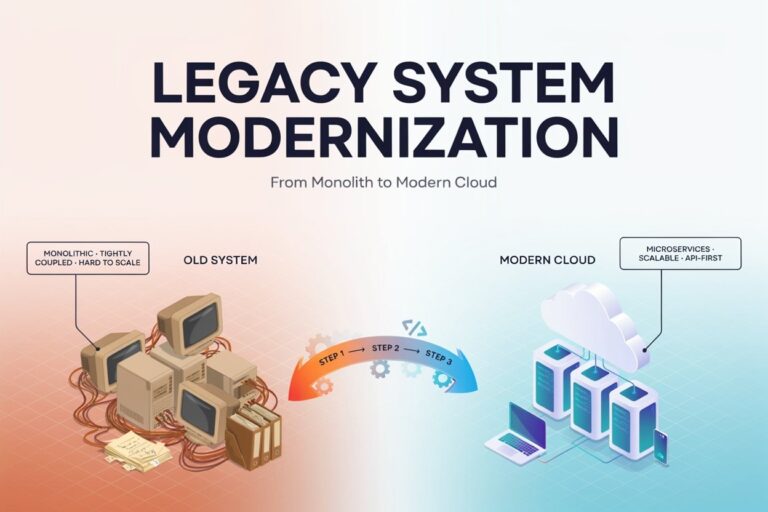
At that point the decision is rebuild from scratch on proper foundations, or stay stuck on infrastructure that was never designed to carry the load you’re putting on it.
Application development trends in 2026 still show no-code growing in usage, but the pattern is increasingly clear: no-code for the idea, custom mobile app development for the business.
Vague range answers frustrate everyone. Let me be as concrete as I can.
Simple apps — one platform, basic features, no complex backend, limited integrations. A booking tool for a local service business, an internal checklist app for a field team, a basic loyalty program for a small retailer. Range: $15,000 to $45,000.
Mid-complexity apps — cross-platform, custom backend, multiple user roles, integrations with CRMs or payment processors, meaningful UI complexity. This is where most startup MVPs and serious small business tools land. Range: $50,000 to $150,000.
Complex and enterprise apps — advanced AI features, large-scale data handling, deep third-party integrations, high security and compliance requirements, sophisticated user management across multiple roles and organizations. Healthcare platforms, fintech tools, enterprise workflow systems. Range: $150,000 to $500,000 and above.
These ranges apply to working with a quality development partner. Businesses from New York to California regularly work with agencies like AsappStudio — US management, senior global engineering — because they get experienced oversight and clean communication at rates that don’t require Series B funding.
Mobile app testing and deployment is not an optional budget line. It’s the phase that determines whether your launch is a celebration or a crisis. Our Quality Assurance process covers functional testing, performance testing under real load conditions, security testing, and device-specific compatibility — before anything goes live.
The cost of custom mobile app development that most people underestimate is the cost of getting it wrong. A botched launch, a security incident, an app that users abandon in the first week — those aren’t just development costs. They’re reputation costs. In some industries they’re compliance costs that come with legal exposure attached.
Engineering can be flawless and the app will still fail if the experience is bad.
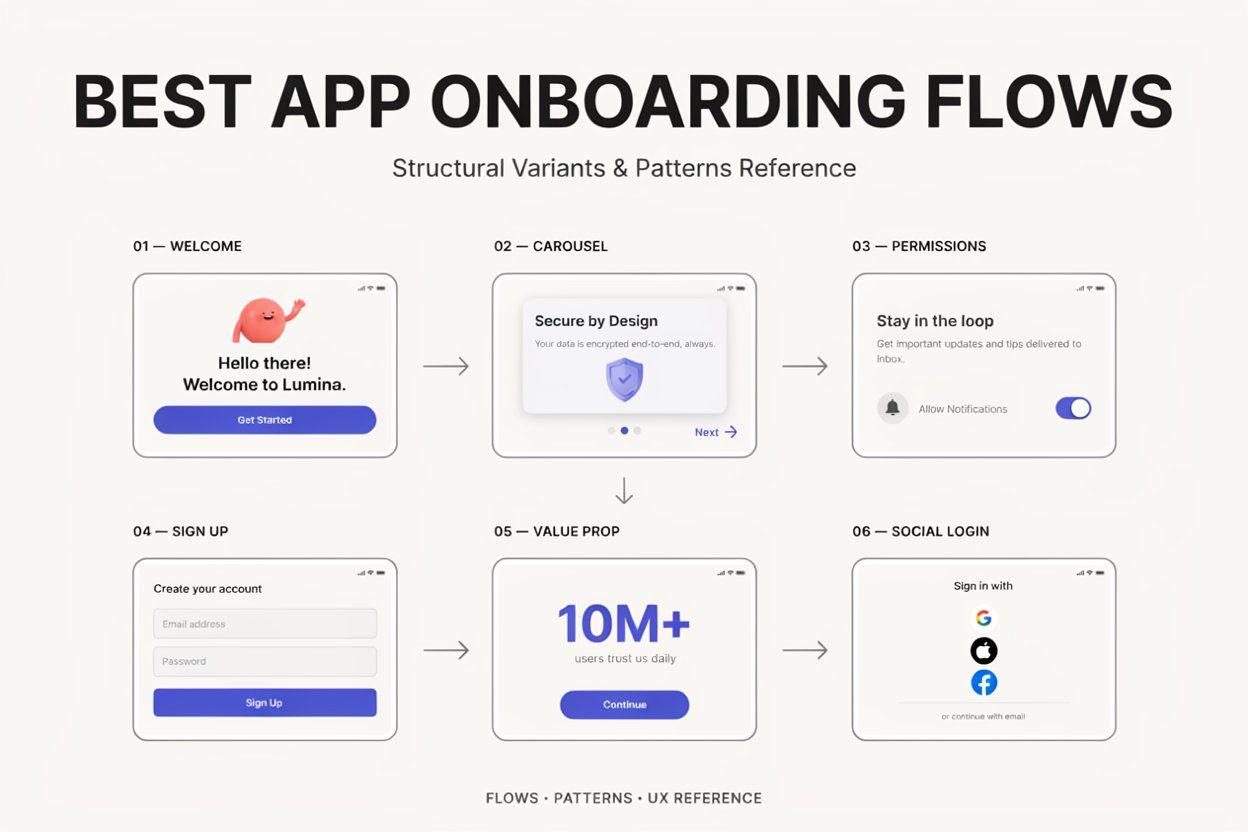
Mobile app UI/UX design in 2026 is not about making things look polished, though polished matters. It’s about removing every unnecessary step between what a user wants to do and actually doing it. Every extra tap is friction. Every screen that requires explanation is a failure of the design. Every load state that makes a user wonder if the app froze is a user with their finger hovering over the uninstall button.
Specific things that matter in US markets right now:
Accessibility by default — not as a compliance checkbox added at the end, but because roughly one in four American adults has some form of disability that affects how they use digital products. In states like California and New York where lawsuits around digital accessibility have become more common, this is both an ethical design priority and a legal one.
Performance on real devices at real signal strengths. Not a flagship phone on WiFi in the office. A mid-range Android at spotty coverage somewhere in rural Georgia or central Florida. That’s a real user. Design for them.
Gesture patterns that match what the platform already taught users. iOS users and Android users have learned different navigation habits over years of device use. Putting iOS-style navigation into an Android app creates friction that’s hard to articulate but immediately noticeable.
Our UI/UX Services team stays involved through development and user testing, not just the design phase. Because design decisions that look exactly right in Figma sometimes break in real production conditions, and finding that out at launch is the expensive version of finding out.
Most of these guides skip this part. Let’s fix that.
Ask for case studies that show problems solved, not screenshots that show screens. Any agency can put beautiful mockups in a deck. What you want to know is: what was broken, how did the team approach it, what got built, and what happened after it shipped. Our Case Studies are structured that way because it’s the only format that tells you anything actionable.
Find out who actually builds the work. A significant number of agencies in this space sell the project with senior people and build it with junior ones behind a wall of project management. Ask directly: who are the engineers assigned to my project, what have they shipped before, can I talk to them during the engagement? A good custom mobile app development company won’t hesitate at that question.
Make sure there’s a real discovery phase. Any team that quotes your project without spending real time understanding your users, your operations, your technical environment, and your constraints is guessing. That’s comfortable for them and expensive for you. Discovery isn’t overhead — it’s how projects avoid going sideways six weeks in.
Ask what post-launch looks like. The app is not finished when it ships. Users find edge cases QA missed. Usage patterns reveal features that need rethinking. A custom mobile app development service that treats launch as the finish line is not set up to help you once you have real users generating real data.
Take app store optimization seriously from the start. App store optimization (ASO) — the keywords in your listing, the screenshots, the review response strategy, the update cadence — affects whether people find your app organically after you launch it. Getting into the store is one thing. Getting found is the other thing.
Mobile app demand is not uniform across the country. The differences are driven by industry concentration as much as geography.
California runs on tech and ambition. Consumer apps, fintech, healthtech, creator tools. The UI bar is highest here because users have seen every design trend before it becomes one. Custom mobile app development 2026 iOS projects are proportionally higher in California than anywhere else — Apple’s presence and a tech-literate demographic both point that direction.
Texas has one of the fastest-growing tech ecosystems in the country right now. Austin’s startup scene, Houston’s energy sector digitizing field operations, Dallas’s logistics and supply chain companies — all of them are investing in custom mobile applications to operate faster than legacy competitors who are still running paper-based workflows.
New York needs apps that handle genuine complexity without showing it on the surface. Finance, media, law, healthcare — industries where one data error has consequences. Custom software development for mobile in New York almost always involves compliance conversations early: SOC 2, HIPAA, FINRA, PCI DSS. A development partner who doesn’t raise these proactively is going to create problems later.
Florida — Miami especially — has become a real tech hub. The startup influx since 2021 created demand for custom mobile app development companies that understand early-stage builds: tight timelines, MVP-first thinking, infrastructure that’s designed to scale without a full rebuild. Tourism, real estate, and healthcare are the other verticals driving mobile investment statewide.
Washington (Seattle) has Amazon and Microsoft setting expectations for what enterprise software feels like. Companies in that ecosystem need scalable mobile solutions that connect cleanly to enterprise-grade cloud infrastructure from the first line of code. Half-built integrations don’t survive in that environment.
Illinois (Chicago) is old industry meeting new digital expectations. Manufacturers, logistics companies, mid-market B2B service providers — they need enterprise mobile app development that can actually talk to legacy systems that weren’t designed to talk to anything modern. The development team that can bridge a 15-year-old ERP platform and a modern mobile frontend is worth a lot in that market.
Georgia (Atlanta) has attracted real fintech and media investment. Startups there build fast and compete nationally from day one. Custom mobile apps development in Atlanta tends to move at startup speed with enterprise ambitions — a combination that tests whether a development team can hold quality under genuine time pressure.
Colorado (Denver) has a strong outdoor, wellness, and B2B software market running alongside each other. Health, fitness, remote work productivity — these verticals prioritize UX more heavily than most. An app that looks good but feels clunky doesn’t last long with a Denver user base that has too many alternatives.
People often don’t fully understand what they’re buying until they’ve already bought it. Here’s what custom mobile app development services should actually include.
Discovery and scoping — real conversations about your business, your users, your constraints, and your competitive landscape. Not a form you fill out. Not a call where someone’s mostly taking notes to justify a quote they’ve already calculated. Genuine understanding of the problem before proposing a solution.
Architecture decisions — what backend does the app need, what third-party APIs does it integrate with, what’s the data model, what happens when usage spikes unexpectedly. Our Software Development Services handles the backend as part of the same engagement because an app built on a poorly designed backend isn’t a finished product.
UI/UX design and prototyping — interactive prototypes tested with actual users before development starts. Problems found at the prototype stage cost hours to fix. The same problems found at the launch stage cost weeks.
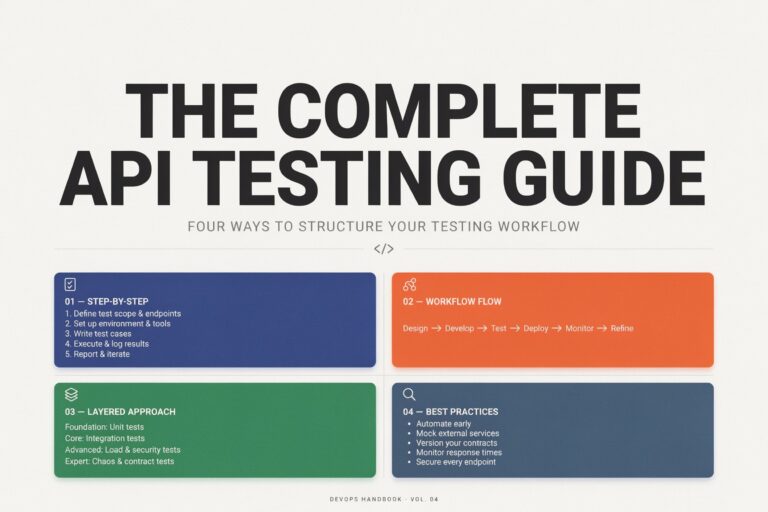
Development in agile sprints with regular working demos. You should see functional software at the end of every two-week sprint, not a finished product delivered after six months of silence. Surprises at launch are almost always traceable to a lack of visibility during development.
QA and testing that covers real-world conditions — devices, operating systems, network quality variations, user behavior edge cases, security vulnerabilities, load scenarios. Our Quality Assurance process is thorough by design because the alternative is learning about problems from real users on launch day.
App Store submission handled by people who’ve done it before. Both Apple and Google have review processes that catch teams who haven’t navigated them. Getting rejected at submission days before a planned marketing push is an avoidable disaster.
Post-launch support and iteration — because the app you ship on day one is not the app your users will need in month six. Usage patterns surface things nobody anticipated. Features need adjustment. New requirements appear. A custom mobile app development service that disappears at launch isn’t a development partner. It’s a project-based vendor.
The future of mobile app development 2026 and beyond is already visible in what’s happening at the edges of current projects.
On-device AI processing is getting fast enough that apps will increasingly make decisions locally — personalizing without sending every data point to a server, running inferences in real time without a network round-trip. That’s both a performance improvement and a privacy improvement, and regulators across multiple US states are going to continue pushing developers in that direction.
The line between Progressive Web Apps (PWAs) and native apps will keep blurring. Some experiences that required native development two years ago work fine as PWAs today. That boundary shifts every 18 months or so, and it consistently shifts in one direction.
5G mobile applications will enable experiences that are currently technically possible but practically unreliable — real-time AR collaboration at scale, high-fidelity remote monitoring for clinical settings, live interactive streaming without drops. As 5G coverage extends past major metros into mid-sized cities across the US, these experiences will reach markets that currently can’t support them.
Voice interfaces will move from novelty to genuine design consideration. Not because every app needs a voice mode — most don’t — but because field workers, drivers, and medical professionals who need hands-free operation represent real demand that most apps still don’t serve properly.
Blockchain mobile applications will appear more frequently in regulated industries as the legal and compliance frameworks around them mature. The infrastructure has been there for a while. Regulatory clarity is the part that’s been catching up.
Businesses that invest in thoughtful custom mobile development now — properly scoped, properly built, not rushed to hit an arbitrary launch date — will be operating on a fundamentally different platform than competitors who wait. That gap compounds quietly and then suddenly.
There are a lot of custom mobile app developers to call. Let me be specific about what’s different here.
We treat Artificial Intelligence as a technical capability that belongs in specific places in your product — not as a marketing angle on a proposal. When we bring it up in a project, it’s because it changes an outcome your users will feel.
We cover the full stack in-house. Blockchain, IoT, eCommerce, web development, mobile app development — no subcontracting the parts that matter. When your app needs to connect to other systems, we’re not coordinating between three different agencies while you wonder why the integration is behind schedule.
We have built real products that real users run on. Go Mobile School APP, Fleet2Share, IMC Women Health, KarmaCRM — these are in our portfolio because they launched, they work, and clients can speak to actual results from them.
Our Staff Augmentation option exists for companies that have an internal team but need to move faster without a full agency engagement. Our full-service model works for companies that want to hand off the entire build and check in on progress at regular sprint demos. Both work.
We’re rated on Clutch, GoodFirms, AppFutura, and TechReviewer by clients who went through actual builds with us. Verifiable. Not curated testimonials we wrote ourselves.
US office in Temecula, California. Clients coast to coast. If you’re ready to build something that actually fits your business, start the conversation here.
The HVAC guy in Columbus called me about three months after his app launched. His dispatcher had flagged something — technicians were marking jobs complete before uploading the required photos, and it was creating documentation gaps that came back to bite them during warranty claims. A real operational issue that nobody thought about during the scoping conversations, because nobody knew it was a problem until real humans used the app in real working conditions.
Three days later the app required photo upload before a job could be marked complete. One workflow change. Documentation gaps stopped.
That’s what custom mobile app development actually is. Not the launch day. The ability to fix the thing you didn’t know was broken until people who aren’t developers started using what you built.
Build something made for your business. Iterate on it. Own it.
That’s 2026.
Q1: What exactly is custom mobile app development?
It’s building a mobile app designed specifically for your business — your workflows, your users, your data — instead of adapting an off-the-shelf template that wasn’t made for you.
Q2: How much does custom mobile app development cost in 2026?
Simple apps run $15K–$45K. Mid-complexity projects land $50K–$150K. Enterprise builds with AI or deep integrations range $150K to $500K+.
Q3: How long does building a custom mobile app take?
Most projects run three to nine months from discovery to App Store launch, depending on scope, complexity, and how many design revision cycles the project requires.
Q4: Should I go native or cross-platform?
Cross-platform suits most budgets and launch timelines. Choose native iOS or Android only when strict performance needs, hardware access, or platform-specific APIs make it worth the extra cost.
Q5: Why not just use a no-code platform?
No-code tools work well for prototypes and simple internal tools. They hit hard limits on custom integrations, scale, and security — usually right when your business actually needs the app to perform.