
You know what’s wild? Three years ago, everyone was convinced we’d all be driving electric by now. Dealerships were preparing for the great EV takeover. Gas stations started panicking about their future. And here we are in 2026, and yeah, there are more electric vehicles on the road—but the revolution looks a whole lot different than what the headlines promised.
Let me walk you through what’s actually happening with electric vehicles in 2026, because the real story is way more interesting than the hype ever was.
Here’s the truth: electric cars aren’t taking over just yet, but they’re not going anywhere either. Right now, EVs make up about 12% of new car sales in America. That’s it. Not the 30% or 40% some analysts were throwing around a few years back. The market’s growing, sure, but it’s more like a steady jog than the sprint everyone expected.
Globally? Different story. Over 18.5 million electric vehicles sold worldwide last year, up 21% from 2024. China’s crushing it with their EV game—19% growth and they’re practically giving these things away at prices we can’t touch in the States. Europe bounced back hard too, with a massive 36% jump after their governments pumped money back into EV incentives.
Meanwhile, North America actually dipped about 1% in EV sales through 2025. Yeah, you read that right. While the rest of the world’s going electric-crazy, Americans hit the brakes a little.
So here’s what nobody saw coming—or maybe they did, but nobody wanted to talk about it. Those sweet federal tax credits? Gone. Dead. Vanished as of September 30, 2025.
Remember when you could get $7,500 knocked off a new electric car, or $4,000 off a used one? That was the Inflation Reduction Act doing its thing. But the One Big Beautiful Bill Act came through and wiped it clean. No more federal money for buying electric vehicles.
I’ve talked to dealerships about this, and man, the panic was real. Imagine building your whole sales strategy around a $7,500 discount, and then suddenly that discount just… disappears. Customers who were this close to buying an EV suddenly couldn’t justify the price. Manufacturers who’d priced their cars expecting that federal help found themselves competing in a completely different game.
Now, there’s one credit still hanging on by its fingernails: the Alternative Fuel Vehicle Refueling Property Tax Credit. That’s the one for installing EV chargers. It runs through June 30, 2026, and it’s actually not bad—homeowners can snag up to $1,000 (that’s 30% of what you spend installing), and businesses can get up to $100,000 (6% of costs). If you’re thinking about getting a home charger, don’t sleep on this one.
States are trying to pick up the slack. California’s still doing its thing with EV incentives—no surprise there. Colorado, Maryland, and a handful of others have state programs. But then you’ve got Texas and Florida, where the charging infrastructure’s actually pretty decent along major highways, but state-level incentives? Not so much. You’re basically hoping your utility company or the car manufacturer throws you a bone with some discount program.
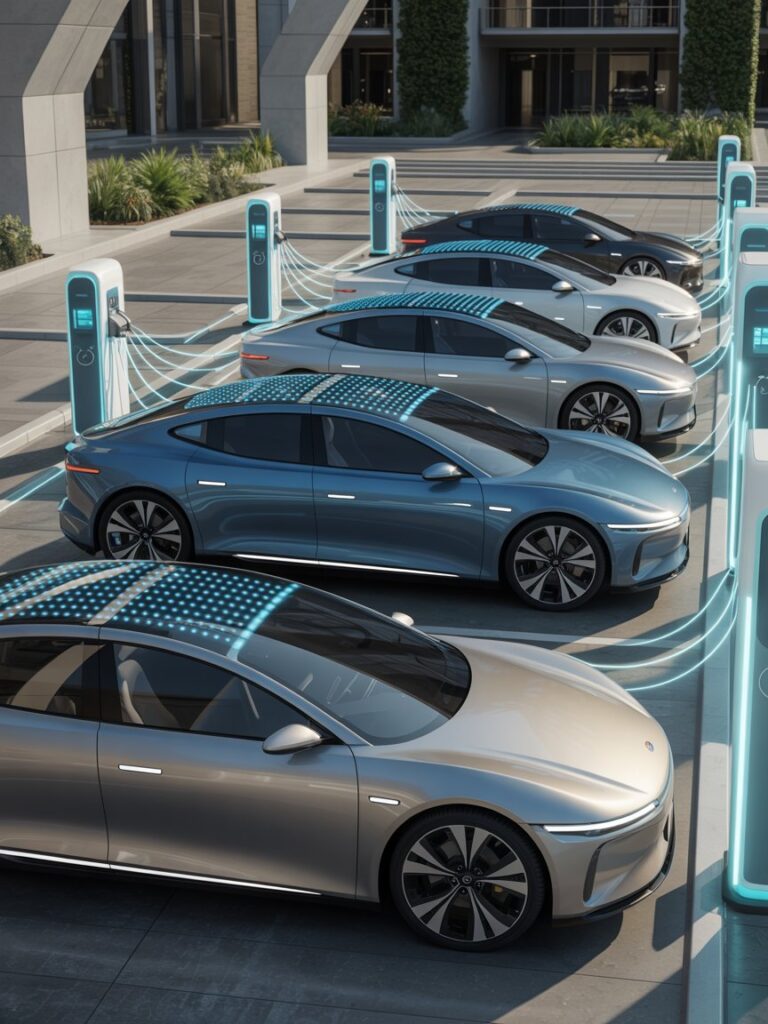
The death of federal tax credits did something interesting—it forced car companies to get serious about price. No more hiding behind government subsidies. If you want people to buy your electric car, it better compete with gas cars on its own merits.
The Chevrolet Bolt is making a comeback, and honestly, it’s about time. Chevy’s bringing it back as a 2027 model year vehicle, but you can start buying it early 2026. They’re keeping it under $30,000, which is huge. About 255 miles of range, which is plenty for most folks. Charges up to 150 kilowatts, so you’re not waiting forever at a fast charger. And here’s the kicker—it comes with Tesla’s charging port (NACS) from the factory. No adapters, no fumbling around. Just plug into any Tesla Supercharger and you’re good.
The Nissan Leaf got a facelift for 2026. It’s been around forever, but Nissan updated the looks and stretched the range options. They’re also launching the Micra EV for people who want something cheap and cheerful. These aren’t going to blow your mind with performance, but they’ll get you around town without draining your wallet.
Here’s something nobody’s talking about enough: a bunch of car companies are quietly backing away from pure electric vehicles. Ford basically said “yeah, we’re good” and shifted focus back to hybrids. They cancelled plans for a next-gen electric truck and redirected that money toward smaller, cheaper EVs and more hybrid options. Stellantis—that’s the company that owns Jeep, Dodge, Chrysler, Ram—they’ve pumped the brakes on EV development for Jeep. They’re sticking with what sells: traditional engines and hybrids.
Let’s cut through the marketing nonsense and talk about which electric cars in 2026 are actually good.
The Chevrolet Equinox EV is probably the smartest buy for families right now. Under $42,000 for a well-equipped model, decent range, plenty of space inside, and all the tech features you’d expect in 2026. It’s not exciting, but it’s practical—and honestly, that’s what most people need.
Hyundai IONIQ 5 got cheaper this year. Hyundai realized nobody’s paying sticker price anymore, so they cut it. Smart shoppers can negotiate even further. The IONIQ 5 still looks like it drove here from the future, and it drives really well. Plus, the charging speed is legitimately fast—we’re talking 10% to 80% in like 18 minutes on the right charger.
The Kia EV9 is hands-down the best electric SUV for families. Three rows, seats seven people, up to 304 miles of range, and it charges stupid fast. Kia nailed this one. Every 2026 model has the Tesla charging port, though they throw in a CCS adapter so you can use older chargers too. It’s not cheap, but if you’ve got kids and gear and all that, this thing’s a beast.
The Acura ZDX and Honda Prologue are basically cousins—they share GM’s Ultium platform. The ZDX is the sporty one with up to 500 horsepower if you go for the Type S trim. The Prologue is the sensible Honda version: less flashy, better value. Both get between 288 and 325 miles depending on which version you pick. Solid choices if you want something from a reliable brand.
The Cadillac Lyriq is gorgeous. Like, seriously beautiful. Up to 314 miles of range with a huge 102-kWh battery. It rides smooth, it’s quiet, and it feels special in a way most EVs don’t. If you’re coming from a traditional luxury car and want to go electric without sacrificing that premium feel, the Lyriq delivers.
And then there’s the Tesla Cybertruck. Look, I get it—you either love it or hate it. No middle ground. But the dual-motor version can tow 11,000 pounds, it’s packed with tech that no other truck has, and yeah, it makes a statement. Tesla adjusted the pricing now that tax credits are gone, so it’s more competitive than you’d think. If you want something radically different and you need serious towing capacity, at least go drive one.
Okay, real talk: charging infrastructure is better than it was, but it’s still the biggest headache with owning an EV. By the end of 2024, we had about 204,000 public chargers across the United States. That’s a 35% jump from mid-2023, and DC fast chargers—the ones that actually matter for road trips—grew by 56%. The network keeps growing at about 25% per year, which sounds impressive until you drive through Wyoming and realize “25% growth” doesn’t mean much when you started from basically nothing.
The federal government threw $5 billion at this problem through the NEVI program—that’s the National Electric Vehicle Infrastructure Formula Program. They’re funding states to build chargers along major highways. The idea is to create this connected national network where you can drive anywhere without worrying about finding a charger. We’re getting there, slowly. Very slowly in some states.
California leads in total number of charging ports, obviously. But Vermont, Massachusetts, and Colorado actually have better per-capita ratios. Here’s what that means: if you live in Vermont, you’re more likely to find a charger near you than if you live in California, even though California has way more total chargers.
On average, there’s about 22 electric vehicles for every public charger in America. But that number’s kind of meaningless because it varies so much by location. In cities where everyone lives in apartments, you need way more public chargers because people can’t just plug in at home. In suburbs where most folks have garages, home charging handles most of the need.
California, Texas, and Florida have built out decent fast-charging corridors along their major highways. These matter. A lot. This is what makes road trips possible in an EV. You can actually drive from Los Angeles to San Francisco, or Dallas to Houston, or Miami to Tampa without stressing about running out of juice.
The biggest news in charging? Tesla’s connector (NACS) is becoming the standard. Ford, GM, Hyundai, Kia—basically everyone except maybe your local startup—committed to using Tesla’s plug. Why does this matter? Because Tesla built the best charging network in America, hands down. Their Superchargers work reliably, they’re in good locations, and there’s enough of them. Now, if you buy a 2026 Ford or Hyundai or whatever, you can use Tesla Superchargers. That’s massive.
Companies have announced plans for about 164,000 new DC fast chargers and 1.5 million Level 2 chargers. That’s retailers like Walmart and Target, charging companies, automakers—everyone’s throwing money at this. Based on what analysts say we’ll need by 2030, that’s roughly 182% of the required fast chargers and 62% of the Level 2 chargers. So fast charging’s actually ahead of schedule. Level 2 (the slower overnight charging) needs more investment.
Walmart figured something out: if you put chargers in their parking lot, people shop while they charge. It’s not rocket science. You’re standing around for 20-30 minutes anyway, might as well grab groceries or browse. Target, convenience stores, rest stops—they’re all doing the same thing. Chargers bring customers, customers spend money. Everybody wins.
Electric companies are getting creative too. They’ll give you cheaper rates if you charge at night when nobody else is using power. Some utilities offer rebates if you install a Level 2 charger at home. It’s worth calling your utility company and asking what programs they’ve got.
Most industry folks think EVs will hit 19-25% of U.S. car sales by 2030. That’s a pretty wide range, which tells you nobody really knows. The timeline keeps shifting because reality’s messier than spreadsheet projections.
Battery technology improves every year—more range, less cost, better longevity. Lithium iron phosphate (LFP) batteries are showing up in cheaper EVs now. They’re safer and last longer than traditional lithium-ion, even if they don’t pack quite as much energy into the same space.
Everyone in the industry is drooling over solid-state batteries. These would be game-changers: dramatically longer range, faster charging, safer. But they’re still years away from production cars. Late 2020s maybe, if everything goes right. Which it usually doesn’t.
Here’s the plot twist nobody predicted: 2026 might be the year of the hybrid, not the pure EV. Plug-in hybrids are crushing it right now. You get electric driving for your daily commute—20, 30, 40 miles on battery alone—plus a gas engine for long trips. Range anxiety? What’s that?
Analysts think plug-in hybrid sales will jump 32% in 2026. That’s huge. Toyota, Honda, Hyundai—they’re all expanding their hybrid lineups like crazy. Turns out, a lot of Americans aren’t ready to go full electric. They want a safety net. Hybrids give them that.
Car companies keep announcing massive investments in American EV and battery factories. We’re talking tens of billions of dollars. These factories won’t hit full production for a few more years, but eventually, this means jobs and less dependence on overseas manufacturing.
The mineral supply chain is still a nightmare though. Lithium, cobalt, nickel—a lot of this stuff comes from places with questionable labor practices or sketchy politics. Mining and processing these materials in America sounds great in theory, but environmental regulations and local opposition make it tough. We want clean cars, but we don’t want the mine in our backyard. It’s a tension nobody’s figured out how to resolve.
While America’s figuring things out, other countries are way ahead. Norway sold 96% electric cars in 2025. Ninety-six percent! Granted, Norway’s a small, wealthy country with cheap electricity and generous incentives, but still. It proves electric vehicles can absolutely dominate if the conditions are right.
Europe’s pushing hard toward electrification with strict emissions rules and strong incentive programs. They’re on track to hit their climate goals largely through transportation electrification.
China’s in a completely different league. BYD—a Chinese company most Americans have never heard of—outsold Tesla globally in 2025. They moved 2.26 million EVs, up 28% year-over-year. China’s approach combines massive infrastructure investment, huge manufacturing capacity, and sustained consumer incentives. They’re not messing around.
The gap between American EV adoption and the rest of the world raises uncomfortable questions about competitiveness. If this really is the future of cars, falling behind technologically could hurt American automakers long-term.
Tesla’s still America’s top EV seller, even with all the controversy around Elon Musk’s recent political adventures. They delivered 1.6 million vehicles globally in 2025, though that was down 8.6%—their first annual decline ever. Tesla’s dealing with increased competition and some self-inflicted brand challenges.
Detroit’s big three—GM, Ford, Stellantis—are all over the map on EVs. GM’s still investing pretty aggressively despite the market challenges. Ford’s backing off and focusing on hybrids and profitable trucks. Stellantis is basically hitting pause on serious EV development, especially for brands like Jeep.
Hyundai Motor Group (including Kia and Genesis) is quietly becoming a major player. Their E-GMP platform is solid, they’ve got EVs at multiple price points, their styling’s distinctive, and their charging infrastructure partnerships are strong. They’re positioned really well for the next few years.
Chinese manufacturers are eyeing the American market, but politics and tariffs make entry complicated. BYD, Nio, and others build impressive EVs at prices that would undercut American and European brands significantly. Whether they can actually sell here is unclear, but their global success is definitely making established automakers nervous.
Transportation is America’s biggest source of greenhouse gas emissions, so electrifying vehicles matters for climate goals. But the environmental benefit of EVs depends heavily on how your electricity gets generated.
In California or Vermont where renewable energy is common, EVs produce way less emissions over their lifetime compared to gas cars. In coal-heavy states, the advantage shrinks, though EVs still usually come out ahead when you factor in manufacturing and the full vehicle lifetime.
The electrical grid faces real challenges as more EVs hit the road. Millions of cars charging simultaneously could strain capacity, especially during peak times. Smart charging systems that shift vehicle charging to off-peak hours help a lot. Eventually, vehicle-to-grid technology could let parked EVs send power back to the grid during high demand—turning them from a burden into a resource.
Range anxiety’s getting better as battery tech improves and charging infrastructure expands, but it’s still holding people back. Many Americans just aren’t convinced EVs work for their specific lifestyle, especially if they drive long distances regularly or can’t charge at home.
Price is probably the biggest barrier. Even with recent price cuts, most EVs still cost more upfront than comparable gas cars. Yeah, you save on fuel and maintenance over time, but people focus on that sticker price. That’s just human nature.
The used EV market is… interesting. Early electric vehicles with first-generation batteries and limited range don’t hold value well. That creates concerns for people worried about depreciation. On the flip side, it means affordable used EVs for budget shoppers who can live with shorter range.
We’re at this weird in-between stage with electric vehicles. The early adopters are already driving EVs. But we haven’t hit mainstream mass adoption yet. The loss of federal tax credits forced the industry to grow up and compete on product merit rather than government handouts.
Going forward, we need continued infrastructure investment, better technology, and honest communication about what EVs can and can’t do. State and local governments matter more now that federal support’s gone, which means EV adoption will look different in California versus Texas versus Wyoming.
If you’re thinking about buying an electric vehicle in 2026, here’s my take: they’ve never been more capable, affordable, or practical. Yes, challenges remain—charging infrastructure in some areas, upfront costs, specific use cases where gas or hybrid makes more sense. But for millions of American drivers, EVs work really well. They’re quiet, smooth, cheap to operate, and technologically advanced in ways gas cars just can’t match.
American transportation’s future runs on electricity. The timeline’s longer than early predictions suggested, and the path’s messier than anyone expected. But we’re getting there. The 2026 electric vehicle market shows an industry maturing, learning to compete without massive subsidies, and building the infrastructure needed for real growth. Still a long road ahead, but the destination’s clearer every year.
Q1: Are electric vehicle tax credits still available in 2026?
Federal EV tax credits ended September 30, 2025. However, the EV charger installation credit continues through June 30, 2026, offering up to $1,000 for homeowners and $100,000 for businesses.
Q2: How many electric cars will be sold in the United States in 2026?
Industry projections estimate EVs will comprise approximately 12% of new U.S. vehicle sales in 2026, representing a more moderate growth trajectory following the elimination of federal incentives.
Q3: What are the best affordable electric vehicles coming in 2026?
The Chevrolet Bolt returns under $30,000, while the Hyundai IONIQ 5, Nissan Leaf, and Chevrolet Equinox EV offer compelling mid-range options under $42,000 with competitive range and features.
Q4: How fast is EV charging infrastructure growing in America?
U.S. charging infrastructure expands at approximately 25% annually. DC fast chargers grew 56% from mid-2023 to end-2024, with over 204,000 public chargers deployed nationwide by late 2024.
Q5: Will electric vehicles become more affordable in 2026?
Yes. Automakers are cutting EV prices by 3-8% in 2026 to maintain sales momentum after losing federal incentives. New budget models under $30,000 make electric vehicles accessible to more buyers.
Looking to develop cutting-edge mobile applications or custom software solutions for your business?Asapp Studiospecializes in transforming innovative ideas into reality. Frommobile app development to blockchain solutions, our expert team delivers technology that drives your success forward.