
You know what’s wild? Five years ago, my friend’s accounting firm had someone manually typing invoice numbers into spreadsheets. Every. Single. Day. Now? Their system reads invoices automatically, catches errors, and even predicts payment delays before they happen.
That’s not magic. That’s what happens when AI enhances robotic process automation.
Look, I’ve been neck-deep in this stuff at Asapp Studio, and honestly? The gap between 2020’s automation and today’s intelligent bots is like comparing a calculator to ChatGPT. Let me break down what’s actually going on.
So here’s the thing about RPA history—it’s basically the story of making computers pretend to be humans clicking buttons. Early 2000s, some clever folks figured out you could script repetitive tasks. Click here, copy there, paste over there. Boom—robotic process automation was born.
Except there was this massive problem: these robots were dumber than a bag of hammers.
Change one button’s position? System crashes. Get an invoice in a slightly different format? Complete meltdown. I watched a client’s entire billing operation grind to a halt because their vendor switched from Arial to Calibri font. I’m not joking.
Traditional RPA robots followed instructions like your GPS—they worked perfectly until you hit one detour, then you’re getting directions to drive into a lake.
Fast forward to 2025. The AI and RPA integration flipped the entire script.
Instead of rigid, brittle automation software that breaks if you look at it wrong, we’ve got cognitive automation that actually understands what it’s looking at. Machine learning taught these systems pattern recognition. They don’t just follow steps—they comprehend context.
Here’s a real example from last month. We built an AI-enhanced RPA system for a logistics company in Karachi. Their old setup would choke on handwritten delivery notes. The new one? Reads doctor-level terrible handwriting, cross-references addresses with Google Maps, and flags suspicious orders. All automatically.
That’s the difference between robotic process automation and artificial intelligence working together versus old-school automation limping along.
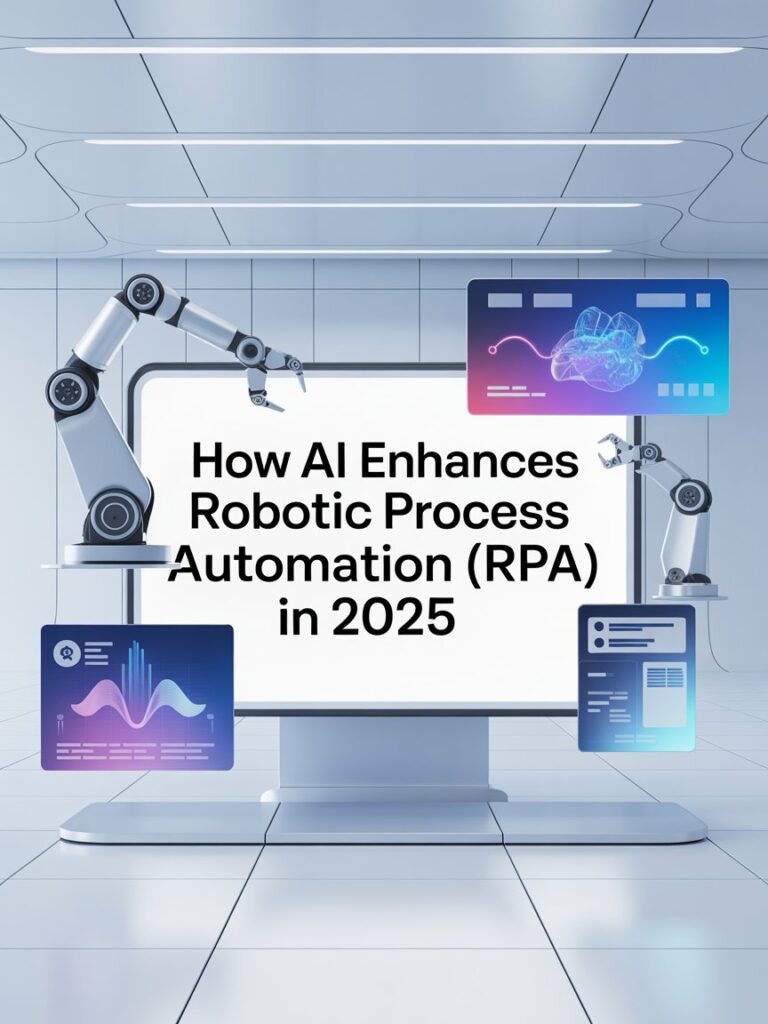
Okay, so what is RPA automation when you pump it full of AI technology? Let me give you the no-BS explanation.
Traditional RPA: “If cell A1 says ‘approved,’ copy to sheet 2.”
AI-driven RPA: “Hey, this looks like an approval, even though someone misspelled it and put it in the wrong column. Also, based on historical patterns, this approval seems fishy—flagging for review.”
See the difference?
The machine learning component means your intelligent automation gets smarter over time. Remember that logistics client? Their system initially flagged 30% of orders as suspicious. After two months of learning, it’s down to 0.3%—and it’s caught three actual fraud attempts the humans missed.
Your RPA robot isn’t just executing tasks anymore. It’s developing judgment.
You know what killed old automation? Exceptions. Anything outside the exact expected pattern would crash everything.
Now? Computer vision and natural language processing let these systems roll with the punches. Invoice came as a scanned PDF instead of typed? No problem. Customer wrote their complaint in Urdu mixed with English? The bot’s got it.
I tested this with intentionally messy data—typos, random formatting, information scattered everywhere—and watched the AI-enhanced RPA sort it out like a seasoned clerk having a slow day.
Here’s where it gets honestly creepy-cool. Modern intelligent bots do their own RPA process analysis.
They monitor everything, spot bottlenecks you didn’t know existed, and suggest fixes. Last quarter, one client’s system noticed their approval process slowed down every Thursday afternoon. Turns out the approval manager was in back-to-back meetings. The bot rerouted Thursday requests to the deputy automatically.
Nobody programmed that. The system figured it out.
Let’s talk robotic process automation benefits without the marketing fluff.
Your Error Rate Drops to Almost Nothing: We’re talking 99.9%+ accuracy. One manufacturing client tracked defects that slipped through quality control. Before AI-enhanced RPA: 1 in 200. After: 1 in 50,000. That’s not improvement—that’s elimination.
Speed Stops Being Your Constraint: Business process automation never sleeps, never takes breaks, never has a bad day. But old RPA only handled simple tasks fast. Anything requiring thought? Back to humans.
AI-driven RPA processes complex decisions at machine speed. Loan application that previously took 3 days for human review? 17 minutes now, with better fraud detection.
The ROI Shows Up Fast: Look, I know everyone promises quick returns. But we’re seeing 6-8 month payback periods on automation trends 2025 implementations. One retail chain cut their invoice processing costs by 82% within 90 days.
That’s not even counting the soft benefits—employees who aren’t brain-dead from data entry actually contribute ideas, spot opportunities, and don’t quit after three months.
Your Team Stops Hating Their Jobs: Controversial take: what is one potential consequence of the rise of automation and artificial intelligence? Your workers might actually enjoy coming to work.
I’m serious. When you eliminate soul-crushing repetition, people rediscover why they chose their career. Your accountants can analyze trends instead of typing numbers. Your customer service folks can solve real problems instead of copying information between systems.
The RPA trends 2025 landscape looks nothing like the predictions from 2022. Here’s what we’re actually seeing:
Companies aren’t automating individual tasks anymore. They’re chaining intelligent bots into complete workflows. Order comes in, bot checks inventory, verifies customer credit, schedules production, books shipping, sends confirmation, and updates forecasts—zero human touches unless something weird happens.
This is what people mean by next-gen automation. It’s not about doing one thing faster. It’s about entire business processes running themselves.
You used to need serious programming skills for workflow automation. Not anymore.
Modern RPA tools look like those no-code app builders—drag boxes, draw connections, done. The AI handles the complicated stuff behind the scenes. I watched a 55-year-old HR manager with zero tech background build an onboarding automation in an afternoon.
That’s democratization in action.
Early automation conversations were brutal—everyone terrified about how robots will replace humans. The mature discussion in 2025 focuses on how robots handle tasks while humans do work.
Progressive companies run retraining programs, create new roles around automation management, and involve workers in deciding what gets automated. At Asapp Studio, we push clients to think “augmentation” not “replacement.”
Cloud processing used to be the only game in town—send everything to servers, wait for AI analysis, get results back.
Edge computing is changing that. Intelligent bots make decisions locally now. In manufacturing, this prevents defects in real-time instead of catching them hours later. The latency difference matters more than you’d think.
Let me show you how robots are being used in different environments right now:
Healthcare Gets Seriously Smarter: Hospital systems using robotic process automation 2025 implementations handle patient records, insurance verification, and appointment scheduling automatically. The AI component catches medication conflicts, flags unusual symptoms, and even predicts which patients might miss appointments.
One clinic we worked with reduced administrative overhead by 60% while improving patient satisfaction scores. Turns out people like when the system remembers their allergies without asking five times.
Banks Move at Lightning Speed: Financial institutions running AI robot 2025 setups process loan applications in hours instead of weeks. Fraud detection improved so much that one bank caught a sophisticated scheme their security team had missed for months.
The AI spotted a pattern in transaction timing that looked normal individually but weird collectively. That’s cognitive automation in action.
Retail Survives Supply Chain Chaos: When global shipping went haywire, retailers with AI-enhanced RPA pivoted distribution strategies in days. The systems analyzed alternate suppliers, recalculated shipping routes, and adjusted inventory positioning—all automatically.
Manual planning would’ve taken weeks, by which time the opportunities would’ve vanished.
Pakistan’s Growing Tech Scene: From Lahore to Islamabad, businesses are adopting intelligent automation. The Pakistan AI robot industry is expanding rapidly, with local companies competing internationally.
We’re seeing robotic process automation in Urdu interfaces now, making the technology accessible to businesses that operate primarily in local languages. That’s opening doors for mid-size companies that couldn’t justify English-only systems.
You don’t need to understand everything under the hood, but here’s the quick version of what makes AI-driven RPA work:
Natural Language Processing: Your bots read emails, understand customer questions, and extract meaning from messy text. This is why they handle typos and slang without melting down.
Computer Vision: Systems “see” information in documents, images, and videos. They read scanned invoices, identify products in photos, and extract data from basically anything visual.
Predictive Analytics: Machine learning models forecast what’s likely to happen next. This turns reactive automation into proactive optimization.
Continuous Improvement: Unlike traditional automation software that stays frozen until someone reprograms it, AI components evolve through exposure. Your system literally gets better at its job over time.
Real talk time. Every technology has pain points. Here’s what actually causes headaches:
People Resist Change Like Crazy: The technology works. Getting your team to trust it? That’s the real battle. I’ve seen perfectly good implementations fail because management didn’t invest in change management.
Employees worry about job security, resist new workflows, and sometimes actively sabotage automation they perceive as threatening. You can’t technology your way around human psychology.
Your Old Systems Fight Back: Legacy infrastructure wasn’t designed for cognitive automation. Integration becomes this messy, expensive project where you’re basically building bridges between the Jetsons and the Flintstones.
Budget double what you think it’ll cost. You’ll still go over.
Data Quality Is Probably Terrible: AI only works with clean data. Most companies discover their data is way messier than they realized. Duplicate records, inconsistent formatting, missing information—garbage in, garbage out remains brutally true.
You’ll spend weeks just cleaning data before automation delivers value.
Security Creates New Nightmares: Intelligent bots accessing sensitive systems create attack surfaces you never had before. A compromised automation can do damage faster than any human.
You need serious security frameworks, constant monitoring, and incident response plans. This isn’t optional.
Based on what we’re building now, here’s the robotic process automation future as I see it:
Bots Find Their Own Work: Next-generation systems will watch humans work, identify automation opportunities automatically, and propose implementations—no consultants needed. The AI does its own process discovery.
Emotional Intelligence Arrives: Natural language processing is getting scary good at detecting tone, urgency, and emotion. Future automated systems will adjust responses based on whether customers sound frustrated, confused, or angry.
Quantum Computing Enters the Chat: When quantum computers mature, the processing power available for AI-enhanced RPA will make today’s capabilities look like a pocket calculator. We’re talking simulation and optimization at scales currently impossible.
Personalization Goes Nuclear: Systems will adapt to individual working styles. Your automation will work differently than your colleague’s, customized to how each person thinks and operates. True workflow automation tailored to the individual.
If you’re thinking about implementation, here’s the reality-based roadmap we use at Asapp Studio:
Pick One Small Thing: Don’t automate your entire business on day one. Find one high-volume, annoying process—maybe expense reports or inventory updates—and prove the concept there.
Success breeds support. Failure on a small scale teaches lessons cheaply.
Choose Tools That Fit Your Reality: RPA tools vary wildly in capabilities, complexity, and cost. Evaluate based on your actual infrastructure and team skills, not vendor promises.
We’ve seen companies waste six months with the “best” platform that their team couldn’t actually use. Better to start simple.
Fix the Process First: Document your current workflow before automating it. You’ll probably discover steps that shouldn’t be automated but eliminated entirely.
Process optimization before automation saves you from perfectly executing a stupid process very efficiently.
Design for Collaboration: The best implementations treat intelligent automation as a teammate, not a replacement. Humans and bots each contribute what they’re good at.
Bots handle volume and consistency. Humans provide judgment and creativity. Design workflows that leverage both.
Actually Prepare Your People: This is where most implementations fail. You need real change management—clear communication, addressed concerns, involvement in planning, and honest discussion about the future.
Skip this and your fancy technology sits unused while employees find workarounds.
Your competitors are implementing this stuff right now. The question isn’t whether to adopt AI-enhanced RPA but how quickly you can do it without screwing up.
At Asapp Studio, we’ve worked with businesses across industries on digital transformation. The pattern is consistent: companies that treat intelligent automation as strategic infrastructure pull ahead. Those that view it as a cost-cutting project struggle.
Whether you’re exploring AI development services or planning comprehensive automation, understanding how AI enhances robotic process automation gives you competitive advantage. The technology is mature, the tools are accessible, and the window for early-mover advantage is closing.
Here’s what the analysts miss: technology alone doesn’t drive successful automation. Culture does.
The organizations seeing dramatic results combine powerful RPA tools with thoughtful change management, continuous learning, and genuine care for their workforce. Automation trends 2025 aren’t just about what the technology can do—they’re about reimagining work when intelligent bots handle the routine stuff.
That reimagining requires leadership with vision and empathy. The tech is the easy part.
How AI enhances robotic process automation in 2025 isn’t a single answer. It’s thousands of specific implementations where cognitive automation transforms how work gets done.
Small businesses in Pakistan to global enterprises—the pattern repeats: strategic automation delivers measurable value when implemented thoughtfully.
The technology will keep advancing faster than you can keep up. What won’t change is the need for implementation that serves both business goals and human wellbeing. That’s the sweet spot we chase—technology that works for people, not the other way around.
Ready to explore what AI-driven RPA could mean for your operation? The next step is simpler than you think. Start with one process, prove the value, then scale intelligently. That’s how digital transformation actually happens.
Not with grand pronouncements and enterprise-wide rollouts, but with small wins that build momentum.
Q1: What is the difference between RPA and AI-enhanced RPA?
Traditional RPA follows fixed rules, while AI-enhanced RPA uses machine learning to adapt, understand context, and handle exceptions intelligently without constant human intervention.
Q2: Will robotic process automation replace human jobs?
AI-enhanced RPA eliminates repetitive tasks, not roles. It frees employees to focus on creative problem-solving, strategy, and work requiring emotional intelligence that machines can’t replicate.
Q3: What are the main benefits of AI-driven RPA in 2025?
Key advantages include 99.9% accuracy, 24/7 operation, 70-80% cost reduction, instant scalability, and continuous process optimization through machine learning that improves performance over time.
Q4: How long does it take to implement RPA solutions?
Simple automation can deploy within 2-4 weeks. Complex AI-enhanced RPA systems typically require 3-6 months for proper process analysis, integration, testing, and workforce training.
Q5: What industries benefit most from AI-enhanced RPA?
Healthcare, finance, retail, manufacturing, and logistics see massive gains. Any industry with high-volume, repetitive digital processes and data-intensive workflows benefits from intelligent automation.