
Ever had one of those mornings? Spilled coffee, lost keys, traffic jam melting your sanity… What if your home could actually help instead of just watching you struggle? That’s the unspoken promise of IoT in Smart Homes and Cities – not flashy robots, but your thermostat, your streetlight, even your trash bin quietly teaming up to make life flow better.
IoT isn’t magic – it’s just giving everyday stuff a secret language. Think tiny Smart Sensors whispering to each other over IoT Networks. Your fridge chatting with your grocery app? A parking meter texting your phone? That’s Internet of Things Applications in action – Smart Devices working backstage so you get the standing ovation.
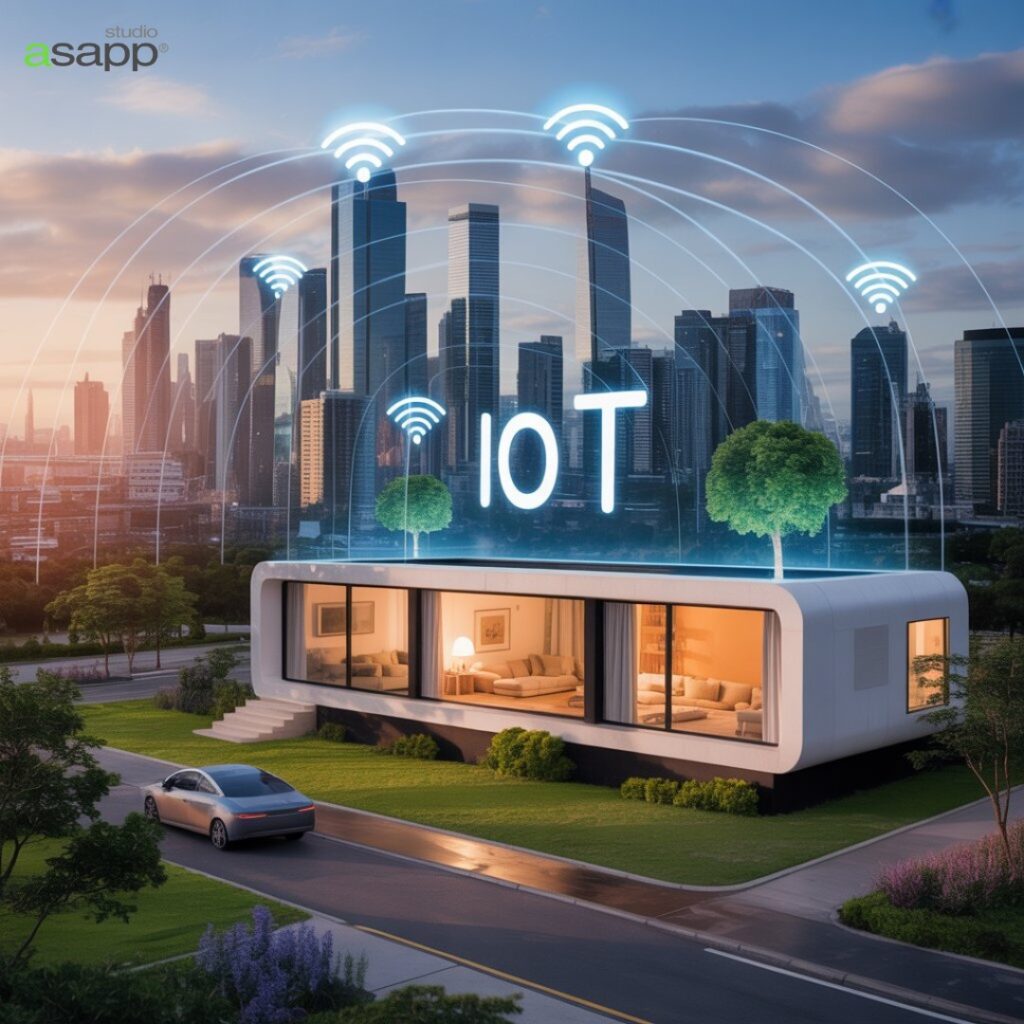
Picture waking to pre-brewed coffee because your Connected Home heard your alarm. Or your porch light greeting you as you pull in, arms full of groceries. That’s what is Smart Home in IoT – less stress, more living.
Imagine streetlights (Smart City Infrastructure) dimming on empty streets at 2 AM. Or getting a pollen alert on your phone before your allergies kick in. Finding curbside parking in seconds downtown? That’s IoT Smart City Examples changing daily life.
The real win? Smart Homes and Cities in IoT connecting. Your EV (Smart Device) charges cheaply when the city grid’s quiet. Your smart sprinkler skips watering because city sensors forecast rain. This teamwork is where IoT in Smart Homes and Cities 2025 gets exciting.
IoT in Smart Homes and Cities isn’t tech for tech’s sake. It’s using IoT Networks, Smart Sensors, and Data Analytics in Smart Cities to claw back time, cut waste, boost safety, and maybe… just maybe… make Mondays feel less like Mondays. The gear’s ready. Now let’s build it smart, secure, and for everyone.
1. Seriously, what makes a house a “Smart Home”?
A Smart Home (what is Smart Home in IoT) uses Internet of Things Applications to link devices (lights/locks/thermostats/appliances) to your Wi-Fi or a hub. Control them remotely, automate routines (like “Goodnight” turning off lights + locking doors), and use data to save energy or boost security. It’s your house, just… helpful.
2. What are dead-simple Smart Home IoT Examples I can try NOW?
Start cheap & easy! Smart Lighting Systems (like Philips Hue bulbs), smart plugs (make any lamp “smart”), a video doorbell, or a smart speaker (Alexa/Google Home) for voice control. A smart thermostat is a game-changer for Energy Efficiency in Homes.
3. How does a regular town become a “Smart City”?
A Smart City (what is Smart Cities in IoT) puts Smart Sensors and wireless links (IoT Networks) into its bones – traffic lights, parking spots, water pipes, streetlights, garbage trucks. This Smart City Infrastructure feeds real-time data. Data Analytics in Smart Cities uses it to optimize stuff like Traffic Management with IoT, Smart Parking Systems, Environmental Monitoring, IoT-based Waste Management, and Smart Water Management. Goal? A city that works for people, not against them.
4. Is all this IoT in Smart Homes and Cities stuff safe? Feels kinda Big Brother…
IoT Security concerns are real. Weak devices can get hacked. Protect yourself: Never keep default passwords (make them tough!), turn on multi-factor logins, update device software religiously, and stick to trusted brands. Privacy-wise, ask: What data does this collect? Who sees it? Demand transparency + control.
5. Where can I see real IoT Smart City Project wins? (Not just hype!)
Search “[Your City] smart city initiative” – many publish plans. Look for Urban IoT Solutions like Barcelona’s smart parking or Singapore’s sensor networks. Groups like the World Economic Forum share case studies (often as IoT based Smart City PDF reports). Focus on projects improving daily life – smoother traffic, cleaner parks, faster emergency response.