
Picture this: Your startup is bleeding money faster than you can raise it. Your team is scattered across time zones, miscommunicating on crucial deliverables. Sound familiar? Here’s the brutal truth – why tech startups fail isn’t always about the product. It’s about using outdated tools that sabotage growth from day one.
With how many tech startups are created each year hitting record highs (over 305 million globally), the competition is ruthless. Yet most founders are still juggling spreadsheets like it’s 2015. Let’s change that.At Asapp Studio, we’ve watched countless tech startups to watch in 2025 rise and fall. The winners? They weaponized the right tools early. Here’s your roadmap to joining them.
Before diving into our top 10 tools 2025 list, let’s address the elephant in the room. What are the 5 types of resources? Every startup needs:
Most founders obsess over funding and talent while neglecting technological resources. Big mistake. The right startup tools 2025 can multiply your team’s effectiveness by 10x.
How many tech companies are there worldwide? Over 50,000 new ones launch monthly. Yet 90% fail within five years. Here’s why:
The pattern? Tool selection isn’t just operational – it’s existential.
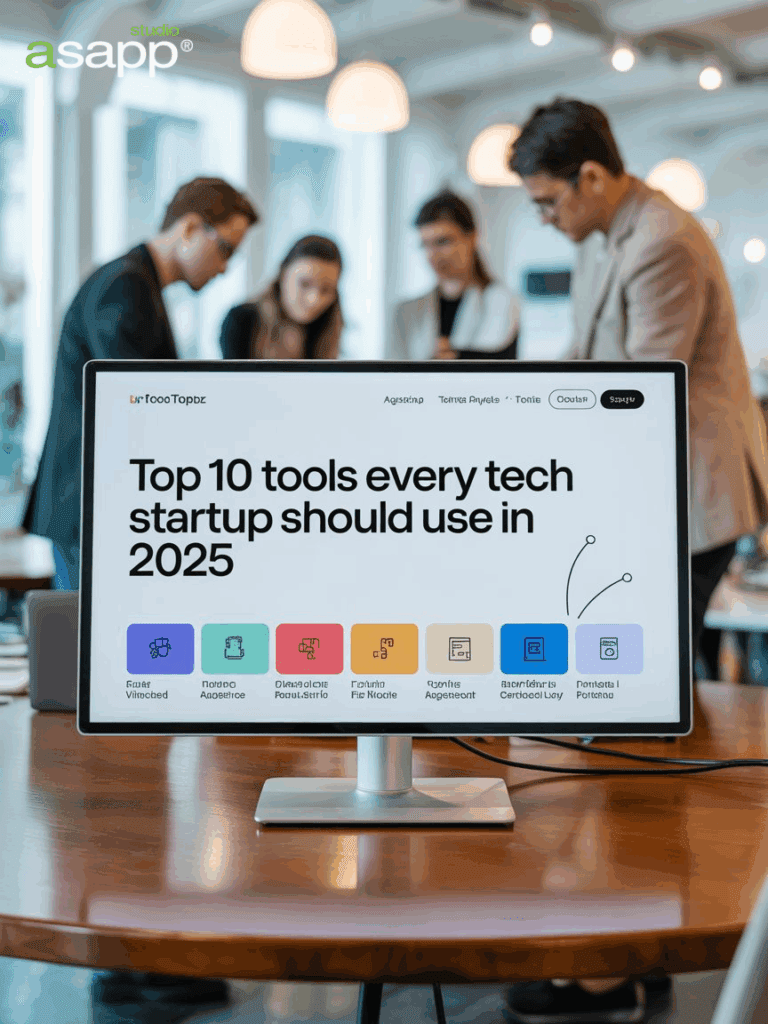
Slack for startups isn’t just messaging – it’s your nervous system. With 77% of best technology startups 2025 using Slack, it’s become the default choice for good reason.
Why it matters:
Pro tip: Use startup slack channels strategically. Create #wins for morale, #random for culture, and specific project channels for focus.
Forget juggling 12 different apps. Notion combines wikis, docs, databases, and project management in one platform. Best ai tools for small businesses often include Notion’s AI features for content generation and data analysis.
Game-changing features:
For tech startups, GitHub isn’t optional – it’s oxygen. How to run a startup company effectively means version control from day one.
Why GitHub dominates:
Design isn’t just pixels – it’s product strategy. Figma transforms how teams create, iterate, and ship designs.
Figma advantages:
Cloud storage tools form your startup’s backbone. Google Workspace offers more than storage – it’s a complete productivity ecosystem.
Essential components:
Business automation tools like Zapier eliminate manual tasks that drain resources. Connect your apps and create workflows that run themselves.
Automation possibilities:
Revenue is startup lifeblood. Stripe handles payments, subscriptions, and marketplace transactions with developer-friendly APIs.
Stripe benefits:
AI assistant for startups features in Intercom automate customer support while maintaining personal touch.
Customer success features:
Spreadsheets on steroids. Airtable combines database power with spreadsheet simplicity, perfect for startup resource management.
Airtable applications:
Bug tracking meets product management. Linear streamlines development workflows with beautiful design and powerful features.
Linear advantages:
How to use ai in your business isn’t futuristic – it’s fundamental. Best ai tools for entrepreneurs in 2025 include:
These ai tools for startups amplify human creativity while handling routine tasks.
Budget tight? These startup free tools deliver enterprise functionality without the price tag:
Free resources for startups can carry you through early stages, but plan migration paths as you scale.
Top 10 tech trends in 2025 directly impact tool selection:
Stay ahead by choosing tools that embrace these trends. Learn more about emerging technologies in our articles on IoT transforming supply chains and PWAs revolutionizing mobile experiences.
Startup efficiency depends on tool synergy, not individual features. Create an integrated ecosystem where:
Analytics platforms inform decision-making
At AsappStudio, we’ve guided top 10 tech startups 2025 through digital transformation. Our approach focuses on:
Which new technological tool are you looking forward to most? We help startups navigate emerging technologies and implement solutions that drive growth.
Track these metrics to ensure your startup software delivers ROI:
Startup resources for entrepreneurs often get wasted on these mistakes:
Ready to transform your startup? Here’s your implementation roadmap:
Week 1-2: Communication Foundation
Week 3-4: Project Management
Week 5-6: Development Tools
Week 7-8: Customer-Facing Tools
Startup scalability solutions aren’t just about choosing the right tools – they’re about creating systems that evolve with your growth. The best tools for startups in 2025 combine human creativity with AI automation, global accessibility with security, and simplicity with power.
Innovation tools will continue evolving, but the principles remain constant: choose solutions that eliminate friction, enhance collaboration, and scale gracefully. Your tool stack isn’t just operational infrastructure – it’s your competitive advantage.
The question isn’t whether you can afford these tools. It’s whether you can afford to operate without them. In a world where how many tech companies in the world grows daily, tool mastery separates survivors from casualties.
Digital transformation 2025 starts with a single decision: commit to building with the best. Your future self will thank you.
Communication (Slack), project management (Notion), code management (GitHub), design collaboration (Figma), and payment processing (Stripe) form the core foundation.
Plan 3-5% of revenue for tool costs. Most essential tools offer free tiers, with paid plans starting around $5-20 per user monthly as you scale.
ChatGPT for content, Jasper for marketing copy, and Grammarly for writing enhancement offer immediate productivity gains with minimal learning curves.
Start with free tiers to validate workflows, then upgrade when you hit limitations. This approach conserves cash while ensuring tools fit your needs.
Focus on integration capabilities, team adoption ease, scalability potential, and total cost of ownership rather than individual features alone.