
My business partner called me at 2 AM last week. Not because of an emergency—because his 14-year-old daughter just bought concert tickets, ordered late-night snacks, AND arranged transportation without leaving TikTok. He wasn’t mad. He was terrified about how fast things are moving.
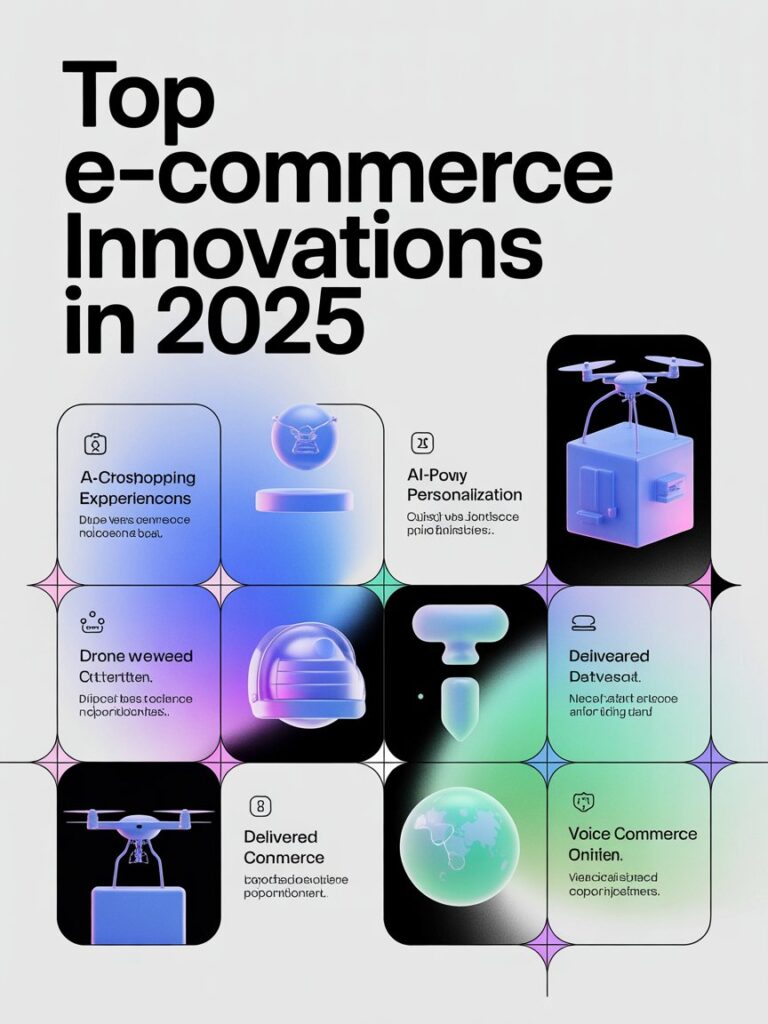
That conversation stuck with me. We’re living through something massive with the top e-commerce innovations in 2025, and most people don’t even notice it’s happening.
I run Asapp Studio, so I’m elbow-deep in this stuff daily. Clients come to us panicking because their competition just implemented something they’ve never heard of. Small shops suddenly competing with giants. Traditional retailers going fully digital overnight. The future of e-commerce in world isn’t coming—it’s already here, and it’s messy and exciting and terrifying all at once.
Here’s something weird: the innovation in ecommerce 2022 everybody hyped about? Most of it flopped. Remember all those VR shopping malls? Ghost towns. But what actually worked snuck in through the back door.
The future of e-commerce in pakistan looks different than in Seattle, which looks different than in Tokyo. But there’s this weird convergence happening where certain innovations just… work everywhere. The top 10 emerging technologies that matter aren’t the flashy ones. They’re the invisible ones making your life easier without you realizing it.
I was reviewing e commerce trends mckinsey data last month, and something jumped out: nobody cares about technology anymore. They care about getting what they want, fast, with zero hassle. Simple as that.
Look, AI-driven personalization in e-commerce 2025 sounds creepy until you experience it. Last Thursday, I was browsing hiking boots. Didn’t buy anything. Three days later, my favorite outdoor store sent me a notification: “Those boots you liked? They’re on sale, plus we found a jacket that matches.”
Coincidence? Nope. Their system knew I was serious because I spent 4 minutes reading reviews, checked the size guide twice, and compared with two other brands. That’s not generic marketing—that’s reading digital body language.
Our team at Asapp Studio’s AI development builds these systems. The scary part? We can predict what you’ll buy before you know you want it. Not through magic—through patterns. Your browsing rhythm, what you skip, what makes you pause. It adds up.
Augmented reality shopping experiences 2025 killed my favorite excuse for avoiding online furniture shopping: “What if it looks weird in my apartment?”
My sister renovated her living room entirely through AR. Never visited a single store. She’d stand in her empty space, point her phone around, and boom—that couch appeared. Real dimensions. Actual colors under her lighting. She bought 6 pieces of furniture and didn’t return a single item.
Compare that to my disaster three years ago when I ordered a “spacious sectional” that barely fit through my door. Yeah, AR’s not a gimmick anymore.
Quick commerce and dark stores trend changed my neighborhood. There’s this building three blocks away that looks like a regular grocery store. Lights on, products visible through windows. But it’s locked. No shoppers allowed.
Turns out, it’s a dark store. Last night I craved ice cream at 10:47 PM. Ordered through an app. It arrived at 10:59 PM. Twelve minutes. The delivery guy said he’d been waiting outside that “store” with six other orders when mine came through.
Cities are filling with these fulfillment hubs disguised as retail spaces. You can’t shop there, but you’re shopping FROM there without knowing it.
Headless commerce architecture 2025 is one of those terms that makes people’s eyes glaze over. But here’s what it actually means for you:
Old way: Your website, mobile app, and social media store are three separate headaches. Change your pricing? Update it three times. Launch a new product? Triple the work.
New way: Everything pulls from one brain. Update once, it changes everywhere instantly. Your Instagram store, your website, your app, even your smart speaker shopping—all connected.
We implement this stuff through our custom software development work, and clients are shocked when they realize they can now sell on TikTok without rebuilding anything. It’s like switching from three remotes to one universal remote. Finally.
Mobile commerce growth 2025 isn’t about responsive websites anymore. My mom—who’s 67 and barely texts—now shops exclusively on her phone. Not because she’s tech-savvy. Because it’s easier than her laptop.
She talks to Siri: “Order my usual coffee pods.” Done. Face ID authenticates payment. No typing passwords. No entering card numbers. She’s back to watching her show in 20 seconds.
When my mom is deep into mobile shopping, you know it’s not a trend—it’s the new default.
Social commerce innovations 2025 basically weaponized impulse buying. My cousin runs a small jewelry business. Six months ago, she was struggling. Then she started doing Instagram Live sessions where she shows new pieces, and people can tap to buy DURING the stream.
Last month she did $14,000 in sales during a 40-minute live video. Nobody left Instagram. No “click link in bio” runaround. Just tap, authenticate, bought. She’s rethinking her entire business model now.
The top e commerce innovations in 2025 in pakistan are catching up fast here too. Local sellers figuring out that social media isn’t for marketing—it IS the store.
Sustainable e-commerce practices 2025 moved from “nice to have” to “deal-breaker” faster than anyone predicted. My niece—19 years old—abandoned a $200 cart last week because the company’s packaging wasn’t recyclable. Two hundred dollars. Over packaging.
Top ecommerce companies 2025 aren’t just slapping “eco-friendly” on their sites anymore. They’re proving it: carbon-neutral shipping tracked in real-time, packaging made from mushrooms (yes, really), transparency about supply chains.
Gen Z will ghost your brand over this stuff. Not as a statement—it’s just how they shop.
Seamless payment solutions online retail 2025 means I haven’t typed a credit card number in months. Apple Pay, Google Pay, biometric authentication—whatever. The point is checkout became this one-tap thing.
But here’s the crazy part: some stores don’t even have checkout now. Amazon’s “Just Walk Out” technology spread to regular grocery stores. You scan your phone entering, grab what you need, and leave. Your account gets charged automatically.
First time I did this, I felt like a shoplifter. Now? I get annoyed when stores make me go through regular checkout. We’re spoiled.
Subscription commerce models 2025 went from “Netflix and Spotify” to literally everything. My dog’s food arrives automatically. My vitamins show up before I run out. My car’s maintenance is subscription-based.
But the smart subscriptions track usage. My coffee subscription learned I drink less in summer and adjusted deliveries automatically. Nobody asked me—it just figured it out and saved me from wasted bags piling up.
Supply chain optimization e-commerce 2025 is invisible until it’s not. Ever wonder why that “2-day delivery” actually arrives in 2 days now? It didn’t five years ago.
Our IoT development work tracks products through the entire journey. When weather delays a shipment, alternative routes activate instantly. When demand spikes for a product, restocking happens automatically before the item goes out of stock.
You never see this working. You just notice that things arrive when promised. That’s thousands of micro-optimizations working in the background.
People always ask what the most profitable products to sell online are. I dug through sales data from clients, and here’s the truth:
The top 3 most sold products in the world in 2025 are smart home gadgets, sustainable fashion, and health wearables. But volume isn’t profit.
The high demand products to sell that actually make serious money:
Generic products = price wars. Niche products with passionate buyers = actual profit.
Feeling overwhelmed? Here are the 5 trends in ecommerce that matter most:
Choosing between top ecommerce platforms 2025? Here’s what actually matters:
Shopify Plus works for most growing businesses. It’s expensive but scales well. Our e-commerce development team uses it when clients need quick launches.
WooCommerce if you’re already deep in WordPress. Flexible but requires more technical knowledge.
BigCommerce handles complex catalogs well—great if you’re selling thousands of SKUs.
Custom builds when you’ve outgrown everything else. That’s when businesses come to our team to build exactly what they need.
Top ecommerce startups 2025 aren’t competing on price—they’re competing on experience. Your platform needs to deliver that or you’re fighting uphill.
Everyone asks how to start ecommerce business in 2025 or how to innovate ecommerce business in 2025 if they’re already running one. Here’s what works:
Build for phones first. Your desktop site is secondary now. Period. More than 70% of shopping happens on mobile devices.
Use AI where it solves real problems. Don’t add chatbots because they’re trendy. Add them if they actually help customers faster than email support.
Voice search matters. People saying “order dog food” to Alexa is real commerce happening right now at scale.
Speed kills (conversions). One extra second of load time costs 7% in conversions. We’ve tested this repeatedly—it’s not theory.
Get expert help early. Whether you need blockchain for secure transactions or mobile apps, trying to DIY everything wastes months.
The new ecommerce technology creating waves isn’t replacing shopping. It’s removing friction from shopping.
That’s the whole game right now with online retail innovations 2025 and retail e-commerce developments 2025. Make things easier, faster, more personal, more trustworthy. Everything else is noise.
The future of e-commerce 2025 isn’t about robots delivering packages via drone (though that’s cool). It’s about that moment when you realize you haven’t thought about the mechanics of buying something in weeks. You just… get what you want when you need it.
Recent trends in e commerce show three massive shifts in 2025:
Voice shopping exploded. Over half of households shop by voice at least weekly now. “Alexa, reorder laundry detergent” is normal conversation.
Virtual fitting rooms went mainstream. Fashion retailers using AR sizing saw return rates drop by 60%+. Customers know what fits before ordering.
Ethics matter immediately. Brands without legitimate sustainability practices lost significant market share. Fast.
Every e-commerce innovations 2025 and e-commerce technology trends 2025 we covered removes friction. Faster. Easier. More personal. More trustworthy.
Whether you’re launching a new marketplace or improving your family business’s online presence, these innovations aren’t optional extras anymore. They’re baseline expectations for staying competitive.
At Asapp Studio, we’ve watched businesses transform from “we need a website” to “we need an intelligent shopping ecosystem” in three years. The innovations in online shopping 2025 landscape rewards action and punishes hesitation.
The top innovations 2025 are moving fast. Waiting means losing ground. But you don’t have to figure this out solo.
Whether you need custom apps, AI integration, or complete e-commerce solutions, we’ve built these systems hundreds of times across different industries.
The question isn’t whether to adopt these innovations. It’s how quickly you can implement them before competitors do.
Want to discuss your e-commerce transformation? Let’s build something that stands out.
Q1: What are the top e-commerce innovations in 2025?
AI personalization, AR shopping, quick commerce, headless systems, mobile-first design, social commerce, seamless payments, and sustainability practices dominate 2025’s innovation landscape.
Q2: How is AI transforming online shopping in 2025?
AI creates personalized recommendations, predicts inventory needs, powers chatbots, enables visual search, adjusts pricing dynamically, and analyzes behavior patterns for individual shopping experiences.
Q3: What are the most profitable products to sell online in 2025?
Smart home devices, sustainable fashion, health wearables, gaming accessories, niche fitness tools, digital courses, subscription boxes, and specialized pet products generate highest margins.
Q4: How can I start an e-commerce business in 2025?
Prioritize mobile-first design, select scalable platforms like Shopify or custom solutions, integrate AI strategically, optimize for voice search, ensure fast speeds, and collaborate with specialists.
Q5: What is quick commerce and why does it matter?
Quick commerce delivers orders in 10-30 minutes using dark stores (warehouse-only spaces) with optimized logistics, satisfying consumer demand for immediate gratification and convenience.