
Last week, I watched my nephew try on sneakers using his phone’s camera—virtually. Meanwhile, my colleague spent three hours in a VR headset training for a surgery he’ll never physically perform until he’s ready. This got me thinking: we’re living through the AR vs. VR revolution, and honestly? Most of us are still confused about which one actually matters.Here’s what I’ve learned after working with both technologies for the past few years, and why the AR vs. VR 2025 landscape might surprise you.
Everyone keeps asking about Augmented Reality vs. Virtual Reality like it’s a boxing match. But after building solutions in both spaces, I can tell you the real story is messier and way more interesting.
AR technology snuck into our lives while we weren’t looking. You’ve probably used it dozens of times this month without realizing it. That Instagram filter? AR. Google Maps showing you which direction to walk? AR. Your phone’s camera measuring furniture? Yep, AR again.VR technology, on the other hand, is still figuring out its place. And that’s not necessarily bad news.
The future of AR technology looks solid because it solved the biggest problem in tech: friction. You don’t need to buy anything new, learn anything complicated, or change your routine.
I was skeptical about AR trends 2025 until I saw a mechanic fix a jet engine using AR instructions overlaid directly onto the parts. No manual, no guesswork, no mistakes. That’s when it clicked—AR works because it makes hard things easier.
AR applications in 2025 are everywhere:
The AR industry growth makes sense when you see it solving real problems instead of just being cool tech demos.
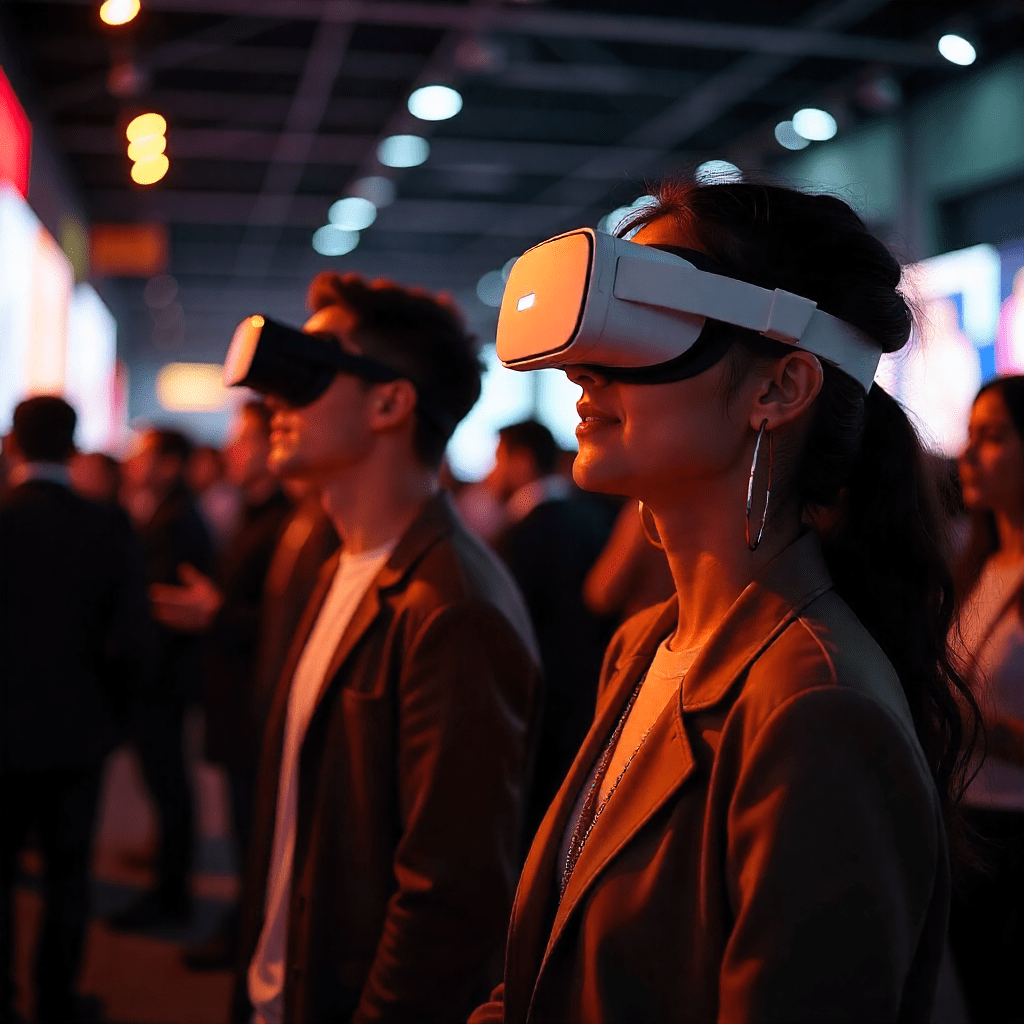
Now, VR adoption in 2025 tells a completely different story. Remember those clunky headsets from 2016 that made everyone nauseous? Those days are over.
I spent last month testing the latest VR systems, and the experience blew me away. The future of VR technology isn’t about escaping reality—it’s about practicing for it.
Virtual Reality development has gotten scary good at specific things:
VR applications in 2025 focus on high-stakes training where mistakes are expensive or dangerous. Smart move.
5G and AR/VR changed everything. Seriously. I remember trying AR apps that took forever to load and crashed constantly. Now? Everything is instant.
Cloud processing means your phone can run AR experiences that would have needed a supercomputer five years ago. AR and VR devices are finally fast enough to feel natural.
AR/VR hardware improvements are insane:
The AR VR market size numbers reveal something interesting. AR is projected to hit $198 billion by 2025, while VR reaches $87 billion. But here’s the kicker—VR’s revenue comes from fewer, higher-value applications.
Immersive technologies adoption breaks down like this:
XR (Extended Reality) represents where this is all heading—one platform that does everything.
Augmented Reality trends show practical wins across industries. At a manufacturing plant I visited, workers reduced assembly errors by 90% using AR guidance. That’s not hype—that’s measurable business value.
Augmented Reality in business works because it enhances existing processes instead of replacing them. The maintenance team at a power plant showed me how AR helps them identify problems instantly instead of searching through manuals for hours.
Meanwhile, virtual experiences through VR excel when you need complete focus. A trauma therapy clinic uses VR to help patients confront fears in controlled environments. The results speak for themselves.AR vs. VR in healthcare shows both technologies finding their lanes. AR helps during live procedures, while VR excels in training and therapy.
Let’s be honest about what challenges does VR still face:
When will VR take off for everyone? Probably when the hardware gets as simple as putting on sunglasses.
AR has different problems:
After working with both technologies extensively, here’s my prediction: AR technology will dominate market size, but VR technology will create the most dramatic transformations.
AR and VR technology success depends entirely on use case:
What is the future of VR and AR? They’ll stop competing and start collaborating. The future of AR and VR lies in seamless integration rather than either-or decisions.
What is the future of augmented reality for practical applications? It’s already here. The future of augmented reality in our everyday life involves invisible enhancement—AR that works so well you forget it’s there.
What is the future of augmented reality in business specifically? Cost reduction through fewer errors, faster training, and improved decision-making.Future of virtual reality in education looks promising for complex subjects that benefit from immersive visualization. VR trends suggest continued growth in specialized training applications.
The AR vs. VR question in 2025 misses the point. Both technologies have matured past the experimental phase into practical tools.
Augmented Reality future involves seamless integration into existing workflows. Is VR a new technology? Not anymore—VR technology today represents mature solutions for specific challenges.
VR technology future and ar technology 2023 development shows both technologies solving real problems rather than chasing science fiction dreams.
The winner? Anyone who chooses the right tool for their specific needs instead of getting caught up in tech trends.
At AsappStudio, we’ve built solutions in both AR and VR because we learned that the technology should serve the goal, not the other way around. Whether you need AR to enhance your current processes or VR to create transformative training experiences, the key is matching the technology to your actual business needs.
Want to explore how AR or VR could work for your specific situation? Let’s have a real conversation about your challenges and see which immersive technology makes sense for your goals.
It depends on your needs. AR enhances existing workflows and has broader adoption. VR excels for immersive training and entertainment experiences.
No. VR creates virtual worlds while AR enhances reality. They solve different problems and will continue coexisting in the market.
Cost remains high, motion sickness affects 25% of users, privacy concerns exist, and extended use can cause social isolation.
AR market projected at $198 billion, VR at $87 billion by 2025. AR has broader applications while VR focuses on specialized markets.
AR works well in manufacturing, healthcare, and retail. VR excels in gaming, education, training simulations, and therapeutic applications.