
You know what happened to me last Tuesday? I spent three hours hunting down a client’s contact info. Three. Whole. Hours. It was buried somewhere between my colleague’s personal notebook and an Excel file from 2019 that nobody wanted to touch. That’s when it hit me—we’re living in 2025, yet many of us are still managing customers like it’s 1995.
This whole CRM VS Datasheet debate isn’t just some tech buzzword battle. It’s literally about whether your business thrives or just… survives. I’ve watched companies double their sales overnight by making the right choice here. Others? Well, they’re still manually typing customer details into spreadsheets while their competitors automate everything.
So here’s the deal: I’m going to walk you through exactly what separates CRM software from those traditional datasheets you’ve been clinging to. No sugar-coating, no tech jargon that makes your head spin. Just real talk about what actually works in today’s market.
CRM software isn’t just a fancy contact list—though I’ll admit, that’s what I thought when I first heard about it five years ago. It’s more like having a really smart assistant who tracks every single interaction with your customers, predicts what they might want next, and handles the boring stuff so you can focus on actually building relationships.
What is an online CRM? Picture all that power living in the cloud, accessible whether you’re in your office, at a coffee shop, or honestly, anywhere with internet. I’ve closed deals from my kitchen table at 6 AM because everything I needed was right there.
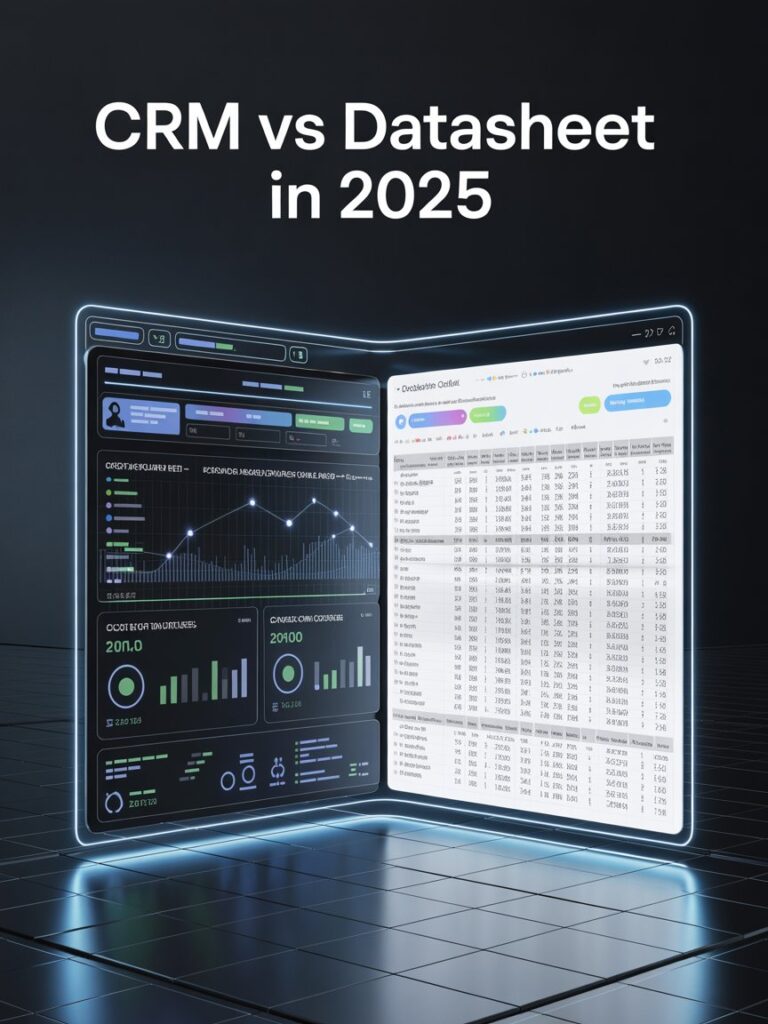
The types of CRM landscape has gotten pretty wild lately. Here’s what’s actually worth your attention:
Operational CRM handles the day-to-day stuff—salesforce automation, lead management, all that nitty-gritty customer engagement work that used to eat up entire afternoons.
Analytical CRM is where things get interesting. This one digs into your data and serves up customer insights that’ll make you feel like you can read minds. I had a client who discovered their best customers all shopped on Thursday afternoons. Game changer.
Collaborative CRM keeps everyone on the same page. No more “I thought you were handling that client” moments. Strategic CRM planning becomes actually possible when everyone has access to the same information.
And here’s the newest kid on the block—AI-powered CRM. This thing predicts customer behavior so accurately it’s almost scary. In a good way.
When people ask what is CRM software examples, I point them to the big players: Salesforce (the heavyweight), HubSpot (user-friendly favorite), Pipedrive (sales team’s dream). Each one has its quirks, but they all beat the heck out of spreadsheets.
What is a datasheet? Look, we’ve all been there. It’s that Excel file (or Google Sheet if you’re feeling modern) where you dump customer information, product details, maybe some notes about who likes their coffee black and who’s impossible to reach on Mondays.
A typical product datasheet includes the basics: technical specifications, product features, contact details, maybe some product specifications if you’re being thorough. Product information sheets have been the backbone of business for decades, and honestly? They’re not terrible for what they are.
The problem is what they’re not. They don’t think, they don’t learn, they definitely don’t integrate with anything else you’re using. They just… sit there. Waiting for someone to remember to update them.
Here’s where I get a bit passionate, because I’ve seen too many businesses struggle with this choice. The gap between CRM data management best practices and traditional datasheet methods has become a canyon in 2025.
CRM tools talk to everything. Your email, social media, accounting software, marketing automation platforms—it’s like having a universal translator for all your business systems. Data integration happens automatically.
Product data sheets? They’re like that friend who never responds to group chats. They exist in isolation, requiring you to manually copy and paste information between systems. In 2025, that’s just painful.
I remember helping a client set up marketing automation through their CRM. Within a month, they were nurturing leads while sleeping. Try doing that with a spreadsheet—I dare you.
Real talk: customer data management in 2025 requires speed and intelligence that spreadsheets simply can’t provide. CRM systems give you live sales pipeline tracking, detailed customer engagement analytics, predictive customer insights, and automated lead management.
Meanwhile, traditional datasheets show you yesterday’s news—assuming someone actually updated them yesterday and didn’t forget like they did last week.
CRM data protection keeps me up at night (in a good way). Modern CRM platforms offer bank-level security, automatic backups, proper CRM data governance. Your product catalogs in Excel? One wrong click, one crashed computer, one disgruntled employee, and everything’s gone.
I’ve seen it happen. It’s not pretty.
The CRM trends 2025 aren’t just predictions anymore—they’re reality. AI and CRM integration has moved from “cool concept” to “absolutely necessary.” The latest trends in CRM are reshaping how we think about customer relationships.
Trends in CRM show artificial intelligence predicting customer behavior with accuracy that would’ve seemed impossible just two years ago. I watched a CRM correctly predict which leads would convert three weeks before they even knew they were ready to buy. Mind-blowing stuff.
CRM 2025 features voice activation that actually works. “Show me my hottest leads for this week”—boom, done. No clicking through seventeen screens. It sounds gimmicky until you try it, then you wonder how you lived without it.
The future of CRM systems create individual customer journeys automatically, but they do it in a way that feels helpful rather than invasive. It’s like having a really attentive salesperson who remembers what you like without being weird about it.
Development of CRM has finally caught up to how we actually work. Your CRM data manager capabilities now work better on your phone than most desktop applications did five years ago.
CRM data quality can make or break everything else. I’ve learned this the hard way. Here’s what actually works for CRM data strategy:
CRM data governance starts with setting standards from day one. “Garbage in, garbage out” isn’t just a saying—it’s expensive reality. I watched a company lose $50K in potential sales because their lead scoring was based on dirty data.
CRM data science research shows that dirty data costs businesses about 20% of their revenue annually. Twenty percent! Schedule monthly cleanups, assign responsibility, make it someone’s actual job.
Your CRM data manager capabilities are only as good as your team’s understanding. Don’t just throw software at people and hope for the best. Invest in proper training, create simple guides, make it easy for them to succeed.
CRM marketing automation reduces human error while increasing efficiency dramatically. Let the robots handle data entry and routine tasks. Your people should be building relationships, not typing the same information into multiple systems.
Top CRM tools in 2025 each have their strengths:
Salesforce remains the 800-pound gorilla—incredibly powerful but requires serious commitment and budget. HubSpot wins on user-friendliness and offers a genuinely useful free tier. Pipedrive excels for sales-focused teams who want simplicity without sacrificing power. Zoho provides impressive features at budget-friendly prices. Microsoft Dynamics integrates seamlessly if you’re already living in the Office 365 ecosystem.
Each offers different product variants and product lifecycle management features, so the “best” choice depends entirely on your specific needs.
The CRM VS Datasheet in 2025 decision isn’t always obvious. Here’s my honest take:
You’ve got more than 50 regular customers, multiple team members need access to customer data, you want marketing automation that actually works, customer engagement tracking matters to your bottom line, or you need real sales pipeline visibility.
You’re flying solo with fewer than 20 customers, budget is genuinely tight (not just “we don’t want to spend money” tight), your business model is purely transactional, or you honestly don’t need automation.
The future of CRM systems will blend with IoT devices, use blockchain for CRM data protection, and leverage quantum computing for instant customer insights. Collaborative CRM will enable global teams to function as single entities regardless of geography.
Product comparison between different CRM systems increasingly focuses on AI integration, user experience, and data integration capabilities rather than just feature lists.
CRM 2025 isn’t just about buying software—it’s about fundamentally changing how you approach customer relationships. While product updates in traditional datasheets require manual work and hoping someone remembers to do it, CRM platforms evolve automatically and get smarter over time.
The real question isn’t whether you need better customer data management—it’s whether you’ll choose tools that grow with your ambitions or ones that limit them.
Look, I’ve helped dozens of businesses through this transition at Asapp Studio. The ones who made the jump? They’re not just surviving—they’re thriving. Better sales numbers, happier customers, teams that actually enjoy coming to work.
Your CRM VS Datasheet in 2025 decision will define your competitive position for years to come. Choose the future, not the past.
CRM offers automation, real-time insights, and seamless integration while datasheets require manual updates and exist in isolation.
AI integration, voice commands, mobile-first design, and intelligent personalization are revolutionizing customer management.
Absolutely, if you have 50+ customers or multiple team members. Modern CRM tools offer affordable plans with enterprise features.
AI predicts customer behavior, automates routine tasks, personalizes interactions, and provides actionable insights automatically.
Set clean data entry standards, conduct regular audits, train your team thoroughly, and automate repetitive processes.