
You know what’s wild? Last Tuesday, I watched my neighbor—a 50-year-old accountant who still uses a flip phone case—buy a $300 blender during an Instagram Live session. She never impulse-buys anything. Ever. But there she was, credit card out, caught up in a live shopping event like it was the most natural thing in the world.
That moment? That’s shopping in 2025.
We’re not talking about a slight shift here. The entire game changed while most people were still figuring out TikTok. Live shopping events 2025 aren’t some Silicon Valley fantasy anymore—they’re Wednesday afternoon for millions of people scrolling through their phones.
Live commerce growth exploded faster than anyone predicted. Remember when video calls felt awkward in 2020? Fast forward to now, and livestream shopping feels as normal as texting. The stats coming out of shopping in USA 2023 already showed momentum, but what we’re seeing in shopping 2025 makes those numbers look quaint.
Here’s what nobody tells you about live shopping statistics 2025: conversion rates during these events destroy traditional e-commerce numbers. We’re talking 10x, sometimes 20x higher than regular product pages. Why? Because watching someone actually use a product beats a thousand five-star reviews.
What is live commerce at its core? Strip away the buzzwords, and it’s just humans selling to humans again. Except now, one human can sell to 100,000 others simultaneously. E-commerce livestreaming brought back the personal touch that online shopping murdered in the early 2000s.
Social commerce 2025 became a bloodbath of companies trying to grab market share. Not everyone survived.
TikTok Shop basically said “hold my coffee” and built an empire. Those short videos you scroll past? Half of them are now shoppable. Gen Z and Millennial shopping habits molded perfectly to TikTok’s format—short, snappy, “shut up and take my money” content.
Instagram Live shopping took a different route. They already had the influencer relationships, so they just weaponized them. Now when your favorite fitness guru goes live, those yoga pants she’s wearing have a price tag floating next to her face. One tap, and they’re in your cart.
Facebook Live commerce surprised everyone by not dying. Turns out, Boomers with disposable income love live shopping events. Who knew? Facebook doubled down on community groups doing live sales, and it worked.
Then there’s Whatnot live auctions, which turned collectibles into a spectator sport. Watching rare sneakers or vintage toys get bid up in real-time hits different than eBay ever did. The auctioneer energy, the chat going crazy, the countdown timer—it’s addictive.
But here’s where it gets interesting for anyone building in this space: relying entirely on social media shopping platforms is risky. Algorithm changes tank your reach overnight. That’s why at Asapp Studio, we push clients toward owning their own livestream shopping platforms. Yeah, use social media for discovery, but capture your audience somewhere you control.
Building interactive shopping experiences that don’t crash takes serious engineering. I’ve seen platforms buckle under 5,000 concurrent viewers. Embarrassing doesn’t cover it when you’re mid-pitch and your stream freezes.
Mobile-first shopping experiences aren’t optional—they’re survival. Pull out your phone right now. That’s where 80% of live shopping happens. If your platform doesn’t load in under two seconds on 4G, you’re toast.
Augmented reality in shopping went from gimmick to expectation faster than anyone predicted. Furniture companies cracked the code first. Point your camera at your living room during a live event, and that couch appears right there, full-scale. Suddenly, “will it fit?” isn’t a question anymore.
AI-powered shopping assistants handle the repetitive questions that used to bog down live events. “Does this come in blue?” “What’s the return policy?” The AI handles those instantly while the human host focuses on demonstrating products and building energy.
Our mobile app development team spent months optimizing video compression algorithms. Sounds boring until you realize a choppy stream during flash sales means literal money evaporating. We obsess over milliseconds because in live commerce, milliseconds matter.
You can’t fake authenticity when the camera’s rolling live. That’s the secret sauce of influencer-led live events. When something doesn’t work, everyone sees it. When an influencer genuinely loves a product, that emotion translates instantly.
I watched a makeup artist’s concealer run during a summer live event. She laughed, grabbed a different product, kept going. Her sales actually increased because people trusted her more after seeing the honest moment. That’s user-generated content in shopping meeting real-time customer engagement, and it’s marketing gold you can’t script.
Flash sales and limited-time offers during these events trigger something primal in our brains. “Only 15 left” hits different when you’re watching the number tick down in real-time. That’s not manipulation—that’s just honest scarcity being visible.
Gen Z and Millennial shopping habits dominate the headlines, but the demographics spread wider than people think. My aunt in Nebraska—60 years old, never bought anything online until 2019—now watches her church friend’s craft supply live sales every Thursday.
Creator-driven marketing became the default because traditional ads feel dead by comparison. Why watch a 30-second commercial when you can watch a 30-minute deep dive into a product by someone you actually follow?
Influencer marketing in e-commerce evolved past sponsored posts into full-blown business partnerships. Top creators aren’t just promoting products anymore—they’re co-designing them, launching them exclusively during their live events, and taking substantial revenue shares.
The mobile commerce trends data shows something fascinating: people watch live shopping events in moments you’d think they’d be busy. Morning commutes, lunch breaks, even during other meetings (we’ve all been there). The phone in your pocket became a portal to infinite shopping events running 24/7.
What technology could change shopping in the coming decade? Most of it’s already here, just not evenly distributed yet.
Livestream e-commerce platforms built on solid infrastructure separate winners from failures. At Asapp Studio, we architect systems expecting viral moments. If an influencer with 10 million followers suddenly shouts out your brand, your platform needs to absorb that traffic spike without melting.
The backend tech gets complicated fast. Payment processing during livestream sales requires redundancy. If your payment gateway hiccups for 30 seconds during a limited drop, you’ve lost thousands in sales and damaged trust permanently.
Real-time customer engagement means databases updating instantly for thousands of users simultaneously. Chat messages, inventory counts, order confirmations—all of this happening in real-time while streaming HD video. The coordination required is actually impressive when you dig into it.
Our blockchain development work ties into the emerging ethical and sustainable live shopping trend. Brands want to prove authenticity and ethical sourcing during live events. Blockchain provides immutable records that can be displayed in real-time. “This diamond’s journey from mine to your screen” becomes verifiable, not just marketing copy.
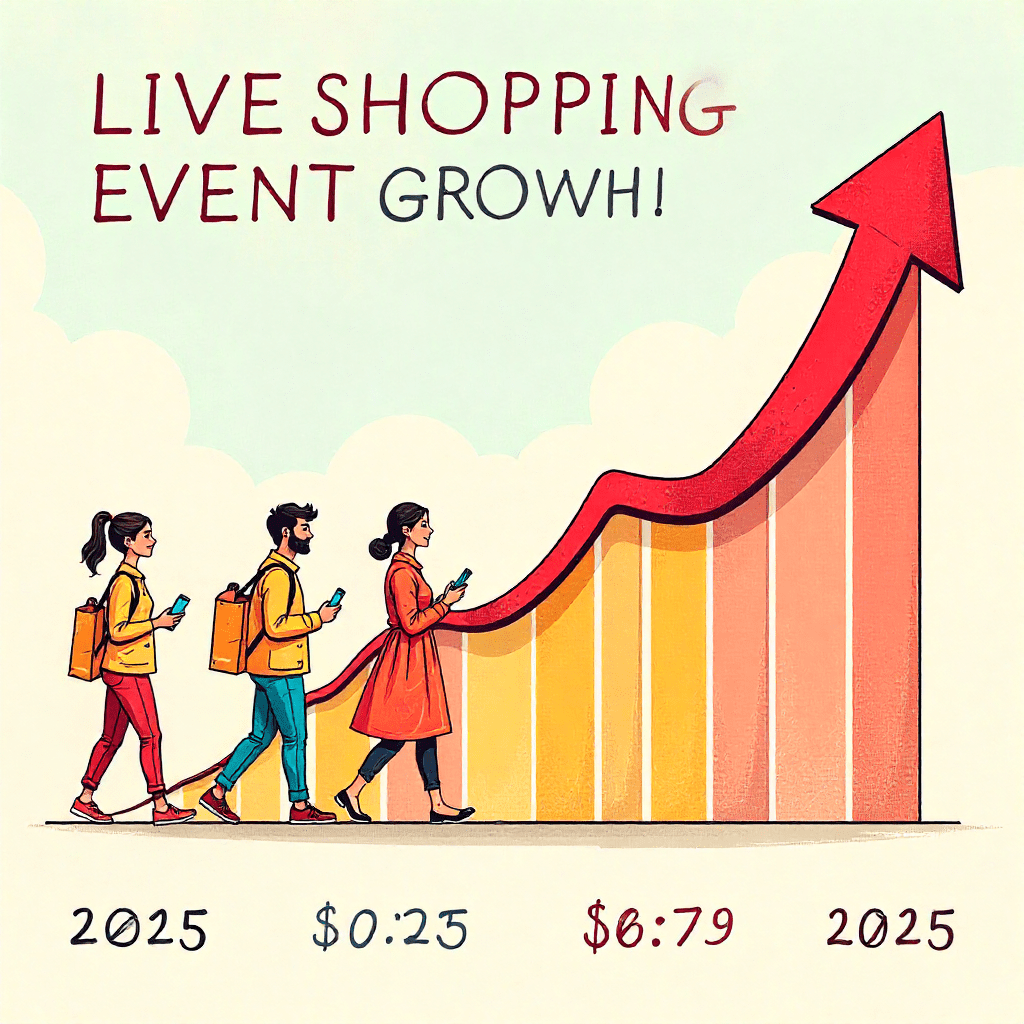
The contrast is jarring when you actually map it out. Shopping in 2005 meant browsing product listings with three pixelated photos and hoping for the best. Shopping in 2015 added reviews and better images. Shopping in 2025? You’re in a virtual event with thousands of other people, watching products demonstrated live, asking questions, making decisions in minutes instead of days.
How has shopping changed in the last two decades beyond just technology? The social component came back. Shopping used to be a social activity—markets, malls, chatting with salespeople. E-commerce isolated us. Live shopping events brought the social aspect back while keeping all the convenience.
Trends shopping online now favor experience over transaction. People don’t just want to buy things—they want to feel part of something. Limited drops during live events create shared moments. You’re not just buying a product; you’re buying the memory of being there when it dropped.
Fair question. Is live shopping the future of ecommerce, or will it fade like so many trends before it?
The retail trends 2025 data suggests staying power. Unlike fidget spinners or Clubhouse, live shopping solves real problems. It builds trust faster than traditional e-commerce. It creates urgency organically. It combines entertainment with utility.
But here’s my honest take: live shopping won’t replace everything. Sometimes you just need to reorder toothpaste at 2 AM without talking to anyone. The future is hybrid—live shopping for discovery and launches, traditional e-commerce for repeat purchases and convenience.
Trends online shopping show integration, not replacement. Smart brands use live events to launch products and build excitement, then funnel customers into traditional e-commerce for subsequent purchases. It’s marketing, community building, and sales channel rolled into one.
Not every social media shopping platform succeeded. Remember when Twitter tried live shopping? Or when LinkedIn briefly flirted with it? Some attempts bombed spectacularly.
The failures teach important lessons. Platform matters less than audience fit. LinkedIn users weren’t there to impulse-buy sneakers during their job search. Twitter’s format fought against the sustained attention live shopping requires.
Instagram and TikTok succeeded because their users were already there for discovery and entertainment. Adding commerce was natural. Facebook succeeded because its groups already functioned as communities. Whatnot found a niche—collectibles and auctions—and owned it completely.
For anyone building custom livestream shopping platforms, studying these failures matters as much as analyzing successes. At Asapp Studio, we guide clients away from attempting “Whatnot for LinkedIn” ideas that sound innovative but ignore user behavior.
Seriously though, why is everyone shopping today during live events when they could browse anytime? Three psychological triggers working together:
Scarcity is visible. When the host says “47 left,” you see that number. When it hits 32 three minutes later, your brain screams “act now.” Limited-time offers become tangible instead of abstract.
Social proof happens live. Watching the order count climb in real-time—”Sarah from Texas just bought two,” “Mike from California grabbed the blue one”—triggers FOMO faster than any review section ever could.
Decision fatigue disappears. Traditional online shopping involves comparing dozens of options across multiple tabs. Live events narrow focus. This product, right now, explained thoroughly. Decision made. Cognitive load reduced.
Want to launch live shopping for your brand? Here’s what actually matters:
Own your infrastructure. Don’t rely exclusively on TikTok Shop or Instagram Live shopping. Those platforms are powerful for reach, but you need a home base you control. When algorithm changes tank your visibility, having your own livestream shopping platform saves you.
Mobile obsession required. Mobile commerce trends show 80%+ of viewers watch on phones. If you optimize for desktop first, you’ve already lost. Our mobile app development focuses on vertical video, thumb-friendly interfaces, and one-tap checkout.
Test relentlessly. Run small events before big launches. Work out technical kinks with 500 viewers, not 50,000. Test payment flows, chat moderation, video quality across different connection speeds.
Authenticity beats production value. You know what performs better than a $50,000 studio setup? A genuine person demonstrating products they actually care about. Some of the highest-converting live shopping events we’ve tracked happened in someone’s living room with an iPhone.
Influencer-led live events fundamentally changed how products reach customers. Traditional advertising’s interruption model died. Creator-driven marketing built on trust and relationship replaced it.
Top creators became vertically integrated businesses. They’re not just promoting products—they’re handling sourcing, design, logistics, customer service, and live demonstrations. The most successful ones treat their live events like must-watch TV episodes, building anticipation and delivering entertainment alongside product pitches.
User-generated content in shopping feeds this ecosystem. Customers post about products they bought during live events, creating organic marketing that fuels the next event. The cycle perpetuates itself.
At Asapp Studio, we’ve built platforms specifically for creator businesses scaling past what social platforms can handle. When you’re processing thousands of orders per live event, you need enterprise-grade infrastructure with consumer-friendly interfaces.
Shopping in USA 2023 showed early adoption, but Asian markets—particularly China—have been doing this longer and bigger. Taobao Live in China processes billions in sales monthly. Western markets are basically replicating what worked there, adapted for local preferences.
The online shopping trends globally show convergence. Mobile-first, live-first, community-driven commerce isn’t a Western or Eastern phenomenon anymore—it’s everywhere smartphones exist. Different platforms dominate different regions, but the core mechanics stay consistent.
What events are happening in 2025 that showcase this global scale? Singles’ Day in China still dwarfs Black Friday, with live shopping events running 24/7 for days. Western brands are learning from this, creating their own tentpole shopping events centered around livestreams.
Building livestream e-commerce platforms sounds straightforward until you hit real-world complexity. Here’s what keeps our engineering team up at night:
Latency kills engagement. A five-second delay between question and answer breaks the “live” feeling. We optimize every part of the stack—CDN selection, video encoding, database queries—to minimize lag.
Inventory sync during live sales. Imagine 10,000 people trying to buy 100 items simultaneously. Your database needs transactional integrity while updating in real-time for everyone watching. Mess this up, and you oversell or, worse, undersell due to phantom inventory locks.
Payment security at scale. Processing thousands of transactions in minutes requires redundant payment systems. We implement fallback processors because if your primary payment gateway chokes, those lost sales never come back.
Cross-platform consistency. Your iOS app, Android app, and web interface need feature parity. A viewer shouldn’t experience different checkout flows depending on their device. Our custom software development ensures consistent experiences across platforms.
Crystal balls are foggy, but current trajectories suggest directions. What will shopping look like in 10 years based on today’s live shopping trends?
VR integration seems inevitable. When VR headsets reach smartphone-level adoption, live shopping events will happen in immersive 3D spaces. You’ll virtually stand in a showroom with hundreds of other avatars while a host demonstrates products in 3D.
AI personalization within group settings. Future livestream shopping platforms will show personalized product highlights to each viewer during the same broadcast. You’ll see products matched to your history while someone else sees different items—all within the shared live experience.
Blockchain for everything provable. Ethical and sustainable live shopping will demand proof. Blockchain enables real-time verification of supply chains, sustainability claims, and authenticity during demonstrations.
Ambient commerce. Shopping will integrate into content so seamlessly you won’t distinguish between entertainment and commerce. That couch in your favorite streamer’s background? Tappable and shoppable without interrupting the content.
What events will happen in 2025 that shape live shopping? Several annual tentpoles already established themselves:
Product launch marathons where brands host multi-hour events featuring dozens of creators. These mega-events generate as much revenue as traditional Black Friday campaigns.
Category-specific shopping holidays. Beauty brands created “Glow Days,” fashion brands have “Style Weeks”—all centered around consecutive live shopping events from different creators.
Collaborative drops where multiple brands partner for single live events. The cross-promotion introduces audiences to new brands while creating unique product bundles only available during the livestream.
At Asapp Studio, we help brands architect these large-scale events. The technical planning for a multi-hour, multi-creator event rivals coordinating a music festival. Failover systems, bandwidth allocation, coordinated inventory management—it’s complex work.
What time is 2025 for implementing live shopping? Now. Yesterday, actually, but now works too.
The early adopter advantage already passed. But the “smart implementation” window is wide open. Brands succeeding in live shopping trends 2025 aren’t necessarily those who started first—they’re those who executed best.
Half-baked attempts using only Instagram Live without strategy won’t cut it. Success requires infrastructure, creator relationships, consistent scheduling, and platforms capable of scaling when things go viral.
Let’s address what everyone worries about but few discuss openly:
Burnout is real. Hosting regular live shopping events is exhausting. Brands that treat this as “just turn on the camera” fail. Successful ones build teams, rotate hosts, and plan content calendars meticulously.
ROI isn’t immediate. Your first live event might flop. Your tenth might break even. Your twentieth might hit big. Like any channel, live shopping requires patience and optimization.
Technology fails. Streams crash. Payment processors glitch. Chat moderation fails and things get weird. Having backup plans and technical support prevents disasters from becoming catastrophes.
Competition intensified. Everyone’s doing live shopping now. Standing out requires genuinely interesting content, not just product pitches. Entertainment value matters as much as product value.
Live shopping events are rising in 2025 because they solve problems traditional e-commerce created. They rebuild trust. They create urgency organically. They make shopping social again.
E-commerce livestreaming isn’t replacing traditional online shopping—it’s augmenting it. Smart brands use live events for launches, community building, and discovery while maintaining traditional storefronts for convenience purchases.
Interactive shopping experiences, real-time product demonstrations, and influencer-led live events became baseline expectations, not differentiators. The question isn’t whether to adopt live shopping but how to implement it effectively.
Whether you need custom livestream shopping platforms, integration with existing social media shopping platforms, or strategic guidance on creator partnerships, the infrastructure exists. The audience is ready. The only variable is execution.
Shopping 2025 looks nothing like shopping a decade ago. And live shopping events sit at the center of this transformation. Brands adapting to this reality will thrive. Those ignoring it will wonder what happened when their competitors pull ahead.
Ready to build a live shopping strategy that actually works? Asapp Studio turns these trends into systems that scale, platforms that don’t crash, and strategies that drive real revenue.
What are live shopping events?
Live shopping events stream products in real-time where hosts demonstrate items, answer viewer questions instantly, and enable immediate purchases through integrated checkout, blending entertainment with instant commerce.
Is live shopping the future of e-commerce?
Live shopping is a significant piece of e-commerce’s future, excelling at product launches and community building, but traditional shopping remains important for convenience purchases and repeat orders in a hybrid model.
What platforms dominate live commerce in 2025?
TikTok Shop leads with younger audiences, Instagram Live captures mainstream users, Facebook serves older demographics effectively, and Whatnot dominates collectibles auctions. Many brands also build proprietary platforms for control.
How has live shopping changed consumer behavior?
Live shopping created expectation for instant answers, introduced visible scarcity driving urgency, rebuilt social aspects of shopping, and increased impulse purchases through real-time community engagement and trust-building.
What technology enables successful live shopping?
Essential tech includes scalable video streaming infrastructure, mobile-optimized interfaces, secure instant payment processing, AI chat assistants, augmented reality product visualization, and elastic cloud systems handling traffic surges.