
Let me be straight with you — most “trends” articles are a waste of time. They recycle the same buzzwords, slap a new year on top, and call it a day. This isn’t that. What I want to walk you through are the backend shifts that are genuinely affecting how development teams across the United States are writing code, picking their stacks, and architecting systems in 2026.
I’ve been watching these patterns across projects in states from Texas to New York, and the signal-to-noise ratio is actually pretty good this year. A few things are quietly becoming the new normal, and if you’re building software — or paying someone to build it for you — you should know about them.
So here’s the real rundown on the top 5 backend trends 2026 — no filler, no recycled talking points.
People throw around what is web development like everyone already knows. Most don’t, or they have a fuzzy picture. So here’s the short version:
Web development is the work that goes into building things that run on the internet — websites, web apps, APIs, internal tools. It has two sides. The frontend is the visual layer — buttons, layouts, what you see and click. The backend is everything underneath. Databases, servers, business logic, authentication, data processing — that’s all backend territory.
Why web development is important isn’t a philosophical question. It’s practical: every business that operates online depends on its backend being reliable, fast, and secure. A slow backend is a broken product. A poorly secured backend is a liability. A rigid backend slows your team down every time they try to ship something new.
That’s the context. Now here’s what’s actually changing.
Here’s the thing about AI in 2026 — the conversation has completely shifted. A year or two ago, “adding AI” meant putting a chatbot on your website. Now it means your backend is making intelligent decisions autonomously, in real time, as part of the core product logic.
Think about what that actually looks like in practice. A fintech company in New York uses backend-embedded fraud detection that scores transactions in under 50 milliseconds — not by calling some external API, but by running an inference model directly in the service layer. A healthcare platform in Massachusetts uses predictive pipelines that flag patient risk factors before a clinician opens a chart. These aren’t demo features. They’re production systems.
AI integration in backend architecture is changing what tech stacks look like, too. Python backend development is in high demand specifically because Python’s tooling — FastAPI, PyTorch, LangChain, vector databases like Pinecone and Weaviate — makes it the most practical language for teams that need AI embedded at the server level. That doesn’t mean Python is winning everything. But for AI-heavy backend work, it’s hard to beat right now.
The catch is that AI integration done wrong is painful. If you just drop a model into an existing monolith without thinking about latency, caching, failure handling, and data governance, you’re going to have a bad time. The teams doing this well are thinking about AI as an architectural concern from day one — not a feature they’ll figure out later.
At AsappStudio, we’ve had this exact conversation with clients across the country. The ones who plan for AI at the infrastructure level from the start consistently ship better products than the ones who try to retrofit it.
I remember when serverless computing felt like something only large engineering teams at big tech companies could responsibly use. That’s not true anymore. In 2026, if you’re spinning up a new backend without at least evaluating a cloud-native architecture, you’re working harder than you need to.
Here’s what serverless actually means for a business in practice. You don’t manage servers. You write functions that execute when triggered — an API call, a file upload, a scheduled job — and the cloud platform handles everything else. Scaling, availability, patching. You pay for execution time, not idle capacity. A startup in Austin with three backend engineers can have the same infrastructure resilience as a team ten times its size because the platform handles the heavy lifting.
Serverless computing combined with Kubernetes and Docker containers is where most modern stacks live right now. Kubernetes handles container orchestration — making sure the right workloads are running, replicated correctly, and recovering from failures. Docker containers make environments consistent across development, staging, and production. Together, they’re the foundation of cloud-native development that teams in California, Georgia, and Illinois are running in production every day.
The real-world benefit isn’t just technical. It’s organizational. When your backend infrastructure scales automatically and your deployments are containerized and repeatable, your engineers spend more time building product and less time babysitting servers. For teams trying to move fast, that matters a lot.
Our web development services team at AsappStudio has helped companies migrate off legacy server setups into cloud-native architectures. The pattern we see consistently: the migration is harder than expected, and the results are better than expected.
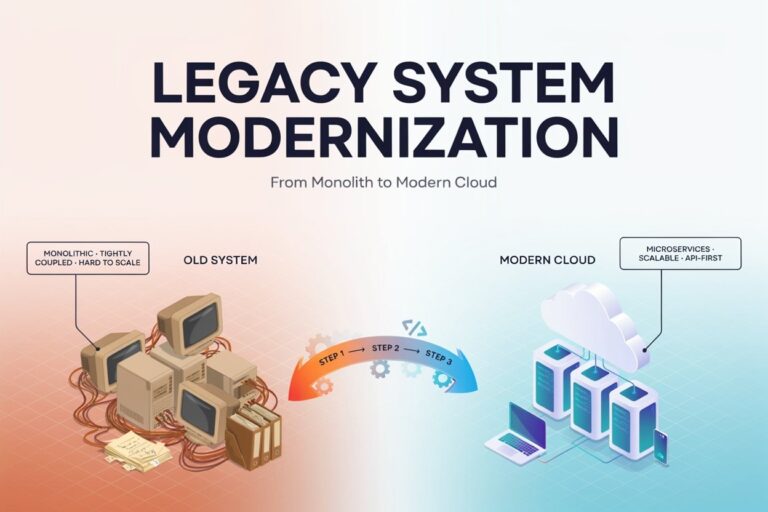
Microservices architecture had a rough adolescence. The idea is solid — break your backend into small, independently deployable services rather than one giant monolith. But a lot of teams took it too far, breaking things into dozens of tiny services that talked to each other constantly, creating distributed systems that were harder to debug than the monolith they replaced.
In 2026, the pendulum has swung back to a more sensible place. Teams are choosing service boundaries more carefully. You don’t need a separate service for every function — you need services that map to distinct business domains that have genuinely different scaling or deployment requirements. Authentication, payments, notifications, data pipelines — these make sense as separate services. Your user profile update function probably doesn’t need its own service.
What’s actually changed is how services communicate. Event-driven architecture has become the dominant pattern for microservices communication, and for good reason. Instead of Service A calling Service B directly (synchronous, tightly coupled), services publish events to a message broker like Apache Kafka or RabbitMQ. Other services consume those events when relevant. The result is a system where services are genuinely independent — if one goes down, others keep running. Adding a new service doesn’t require touching existing ones.
For mid-size companies in states like Ohio, Pennsylvania, and Michigan — where a lot of solid software businesses operate — this architecture is becoming a real competitive advantage. Smaller teams can ship features more safely because changes are isolated. They can scale individual services under load without scaling everything. And they can onboard new engineers faster because the codebase is naturally broken into digestible chunks.
Want to see what this looks like in real projects? Take a look at our services page to understand how we approach backend architecture for clients at different scales.
A few years back, you couldn’t walk into a tech meetup in San Francisco or Chicago without someone trying to convince you to throw out REST and go all-in on GraphQL. The debate has cooled significantly, and the industry has landed on something more nuanced and useful.
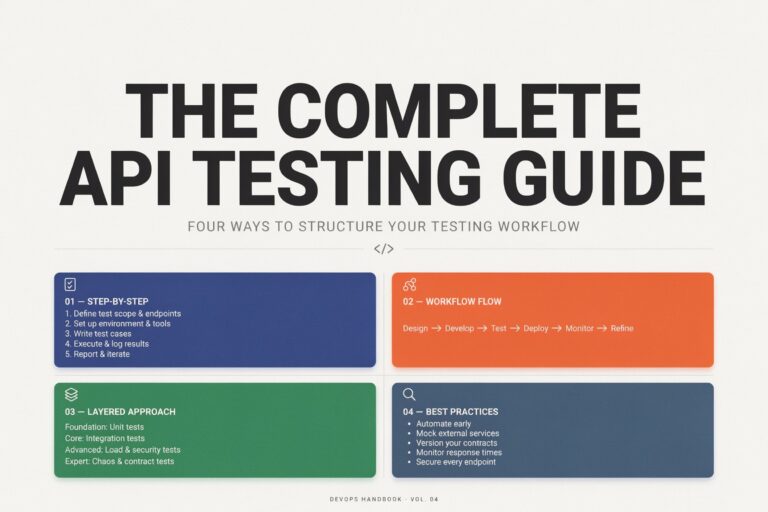
API-first development means you design your API contracts before writing the backend logic. You think through what data your clients need, how endpoints should be versioned, how errors should surface, and how auth flows work — before a single function is written. This discipline makes everything easier downstream. Frontend teams aren’t blocked waiting for backend work. Third-party integrations have a clear contract to build against. Versioning becomes manageable.
REST APIs are still the workhorse of the internet. Simple, predictable, cacheable — REST works well for the vast majority of use cases, and every developer on the planet understands it. Nothing’s changing there.
GraphQL has found its real niche, which turns out to be pretty narrow but genuinely valuable. Complex, relationship-heavy data models — think social graphs, content management systems, multi-entity dashboards — benefit from GraphQL’s ability to fetch exactly what’s needed in a single request. Teams building these specific types of products often find that GraphQL reduces API complexity significantly. For simpler CRUD services, it’s probably overkill.
The language conversation is inseparable from the API conversation. Golang backend development has surged for teams building high-throughput, latency-sensitive API services. Go’s performance characteristics, concurrency model, and simplicity make it genuinely excellent for services that process a lot of requests fast. Rust for backend is picking up in scenarios where memory safety and raw performance are both requirements — systems infrastructure, WebAssembly workloads, high-frequency processing.
Node.js isn’t going anywhere. For JavaScript-native teams, it’s still an extremely practical choice for API backends — the ecosystem is enormous, the developer experience is solid, and the performance is more than adequate for most applications.
The honest answer to “what is the top back end language in 2026″ is: it depends entirely on what you’re building. Our software development team spends a lot of time helping clients make these decisions based on actual requirements rather than what’s trending on social media.
This one hits differently when you’ve watched a client deal with a breach. Security has always mattered, but in 2026 it’s being treated as an architectural discipline rather than a layer you add before launch.
The old model was perimeter security. Build a wall, trust what’s inside it, guard the gate. That model is simply incompatible with how modern backends are built. When your services are distributed across cloud providers, your teams are remote, your CI/CD pipelines are automated, and your backend integrates with dozens of third-party services — there is no perimeter. Everything is potentially exposed. The question isn’t whether, but when.
Zero-trust architecture is the framework that makes sense in this environment. Every request is authenticated and authorized regardless of origin. Credentials are short-lived and scoped to minimum necessary access. Internal service-to-service communication is encrypted and verified. The assumption is that any part of the system can be compromised at any point — so no single compromise becomes a full breach.
For businesses in regulated industries — healthcare in Minnesota, finance in New York, government contracting in Virginia — zero-trust is increasingly a compliance requirement, not just a recommendation. But even outside regulated spaces, the number of breaches that could have been contained by better internal access controls is sobering.
CI/CD pipelines are where a lot of modern security work is actually happening. Security scanning, dependency auditing, container image hardening, and secret management are all being embedded directly into deployment pipelines. You catch vulnerabilities before they reach production, automatically, every single time you ship. This “shift left” approach to security — catching problems earlier in the development process — is reducing the cost and frequency of production incidents.
WebAssembly is worth mentioning here too, especially for teams building edge computing applications or plugin systems that execute untrusted code. Wasm’s sandboxed execution model makes it possible to run arbitrary code safely — a capability that’s opening up interesting architectural options at the edge computing layer.
Our team at AsappStudio treats security as a first-class architectural concern on every backend engagement. If you’re building something new or modernizing an existing system, it’s the right conversation to have at the beginning — not at the end.
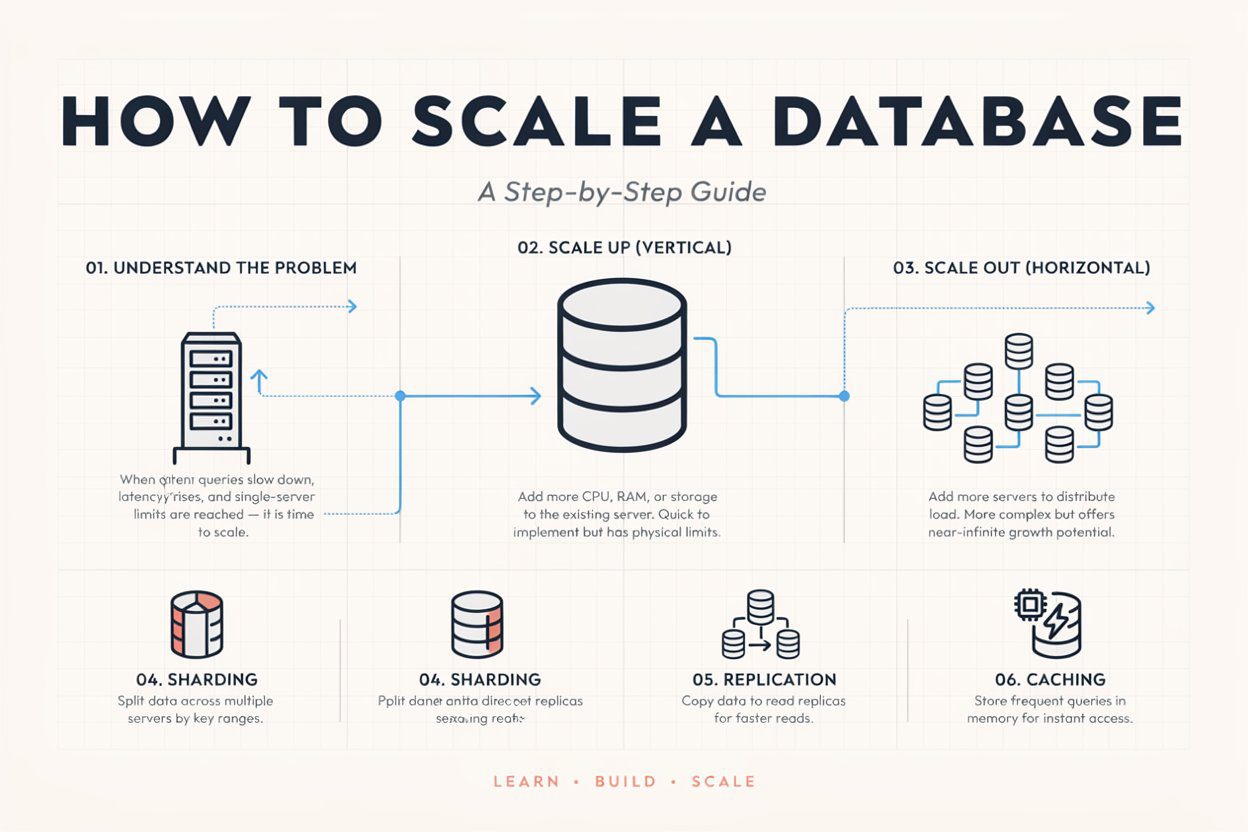
No discussion of backend technologies is complete without talking about data. The database scalability question looks different in 2026 than it did five years ago.
PostgreSQL continues to be a workhorse that earns its reputation. For relational data with complex queries and strong consistency requirements, Postgres is genuinely excellent — and its ecosystem has expanded significantly. Extensions like pgvector are even making it viable for AI workload use cases that previously required specialized vector databases.
NoSQL databases — MongoDB, DynamoDB, Cassandra — are still the right answer for specific use cases: high-write workloads, flexible schemas, massive scale with predictable access patterns. The key word is “specific.” NoSQL picked up a bad habit a few years ago of being the reflexive choice for everything. The teams doing this well in 2026 are choosing their database based on their actual data model and access patterns, not a blanket preference.
The newer category is vector and AI-optimized databases — purpose-built for the embeddings and similarity search that underpin most AI features. If you’re building anything with AI integration at the backend level, this is a category worth understanding.
Here’s the summary that actually matters:
Backend technology stack 2026 is converging around a set of patterns that share a common thread — they’re all designed for systems that need to scale without breaking, integrate AI without slowing down, and defend against threats without slowing developers down.
The backend developer skills 2026 that make engineers valuable aren’t just about knowing a specific language. They’re about understanding distributed systems, thinking in terms of events and contracts, having a security-first mindset, and being able to work across cloud platforms. Engineers who combine strong fundamentals with experience in cloud-native tooling, AI/ML pipelines, and modern API design are commanding serious attention in hiring markets across the United States right now.
For business owners and CTOs, the implication is straightforward: the backend decisions you make in 2026 are strategic decisions. The companies building on solid, modern backend architecture today will ship faster, scale cheaper, and be more resilient to security threats than the ones planning to modernize “someday.”
Latest web development trends tell us clearly — the gap between teams on modern backend infrastructure and teams still running legacy setups is widening every quarter.
If you’ve read this far, you’re probably thinking through a real decision — a new product, a migration, a stack evaluation, or a scaling problem. That’s exactly where we work best.
AsappStudio partners with businesses across the United States to build backend systems that are designed for how software actually needs to work in 2026. We have hands-on experience with Node.js, Python, Go, Rust, microservices, serverless, Kubernetes, zero-trust security, GraphQL, and AI integration — not as talking points, but as technologies we’ve shipped production systems with.
We’re not going to tell you what stack to use before we understand your product. That’s not how good engineering decisions work. What we will do is sit down with you, understand what you’re building and where you’re trying to go, and help you make choices that serve your actual goals.
See what we build — or just reach out directly. We’re happy to talk through whatever you’re working on.
Q1: What are the Top 5 Backend Trends 2026?
AI integration in backend systems, serverless/cloud-native infrastructure, mature microservices with event-driven architecture, API-first development, and zero-trust security are the top 5 backend trends in 2026.
Q2: Which backend language should I use in 2026?
Python suits AI workloads. Go is best for high-performance APIs. Node.js fits JavaScript teams well. Rust is ideal for systems needing memory safety and maximum speed.
Q3: Is serverless computing right for every backend?
Not always. Serverless works best for event-driven, variable-load workloads. Long-running processes or latency-sensitive systems may still benefit from traditional containerized deployments.
Q4: What is zero-trust architecture in backend development?
Zero-trust means every request is verified regardless of origin. It assumes breach is possible anywhere, so access is always authenticated, scoped, and time-limited across all services.
Q5: How does AsappStudio help with backend development?
AsappStudio builds scalable, secure backend systems for US businesses using modern stacks — Node.js, Python, Go, microservices, cloud-native infra, and AI integration tailored per project.