
How IoT is Transforming Supply Chain Management in 2025

Content

When Your Shipping Container Sends Text Messages

Imagine this:

You’re sipping morning coffee when your phone buzzes. Not a client email. Not a calendar alert. It’s a shipping container in the mid-Atlantic whispering: *”Internal temp rising – 3.2°C above threshold. Diverting to nearest port.”* This is today’s IoT-powered supply chain – where pallets have voices, warehouses have instincts, and logistics teams breathe easier.

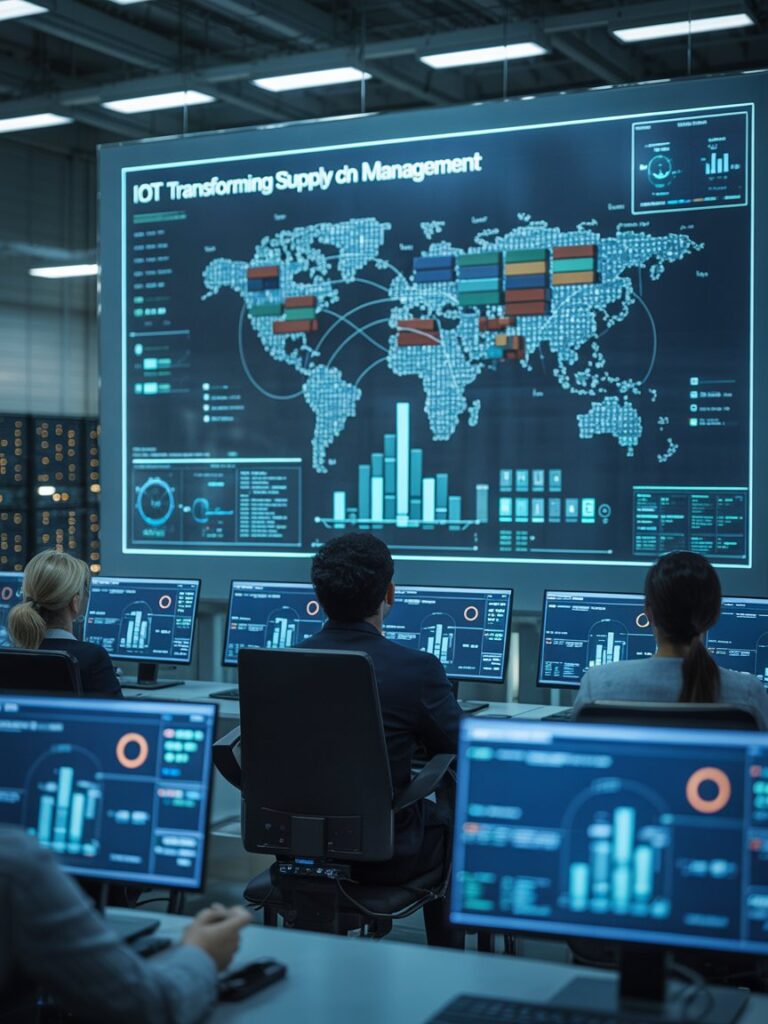
The Nuts and Bolts: How IoT Actually Works

Let’s demystify the magic. How does IoT work? Picture three layers working together:

Sensory Skin :

  • IoT sensors in crates, trucks, shelves
  • RFID tags whispering location secrets
  • Warehouse IoT devices monitoring humidity

Nervous System:

5G networks, Bluetooth mesh, satellite links

Digital Brain:

  • Cloud platforms analyzing patterns
  • AI predicting tomorrow’s bottlenecks

Real talk from a logistics manager: “We went from frantic phone-tag with drivers to seeing every shipment’s heartbeat on one dashboard. Game changer.”
5 Real-World Revolutions Happening Now

1. The End of “Where’s My Stuff?!” Panic

  • Real-time tracking via GPS/Bluetooth tags
  • Pharmaceutical companies monitoring vaccine shipments
  • Human impact: Customer service calls dropped 65% at MedPharm Inc.

2. Warehouse Jedi Mind Tricks

  • IoT-enabled warehouses with weight-sensing shelves
  • Drones doing midnight inventory checks
  • Human impact: “We reclaimed 300 weekly labor hours,” – Sara K., Logistics Director

3. Cold Chain Guardianship

  • Cold chain monitoring for perishables
  • Auto-rerouting during temperature spikes
  • Human impact: 40% less wasted produce at FreshGoods Market

4. Truck Whispering 101

  • Fleet management IoT predicting engine failures
  • Dynamic rerouting around traffic nightmares
  • Human impact: DHL drivers report 25% less stress

5. The Crystal Ball Effect

  • Predictive analytics IoT forecasting demand
  • Self-replenishing inventory systems
  • Human impact: “No more holiday season stockout emergencies,” – Retail ops team

The Tangible Payoff: Why Real Businesses Bet on IoT

Pain PointIoT SolutionReal-Life Result
Inventory guessworkInventory visibility sensors99.2% accuracy at ToolTech Co.
Shipping delaysReal-time shipment monitoring92% on-time deliveries
Equipment breakdownsPredictive analytics IoT$200K saved on crane repairs
Food spoilageCold chain monitoring53% less waste

“Our IoT investment paid for itself in 11 months. The ROI stunned even our CFO.”
– Logistics Lead, AutoPart Manufacturing

BMW’s IoT Transformation: A Human Story

The Parts That Phone Home

  • Challenge: $22,000/minute losses during assembly line stoppages
  • IoT Magic:
    • Embedded RFID and IoT tags in 50,000+ components
    • Real-time tracking from Vietnam factory to Munich floor
    • Predictive analytics flagging delivery risks
  • Human Win:
    • Teams sip coffee instead of frantically calling suppliers
    • 98.7% parts availability during 2023 production crunch

The Bumps in the Road (Let’s Be Honest)

While IoT in supply chain management dazzles, we must acknowledge:

The “Uh Oh” Moments

  • Security Scares: Hackers targeting refrigerated trucks
    Our Fix: Blockchain-secured data pipelines
  • Data Overload: 10,000+ daily sensor alerts
    Our Fix: AI triage systems (like a logistics ER nurse)
  • Cost Anxiety: $20K-$500K implementation fears
    Our Fix: Start small – single warehouse monitoring IoT rollout

“We thought IoT meant robot overlords. Turns out? It’s just giving our team superpowers.”

What’s Next? Your 2025 Supply Chain Will…

  • Self-Heal: Autonomous rerouting around port strikes
  • Empower People: Warehouse staff using AR glasses with IoT data
  • Think Greener: Blockchain and IoT tracing sustainable sourcing
  • Predict Pandemics: IoT for demand forecasting during crises

Gartner’s crystal ball says: 65% of enterprises will adopt IoT logistics by 2026. Will you lead or follow?

Your No-Sweat IoT Starter Plan

  1. Find Your Pain Peak (What keeps you up at 2 AM?)
  2. Pilot Small: Try warehouse monitoring IoT in one section
  3. Choose Partners: Look for IoT logistics companies with manufacturing experience
  4. Train Humans: Run “Data Decoder” workshops for teams
  5. Measure: Track OTIF rates, waste reduction, stress levels

The Heart of the Matter

This isn’t about tech. It’s about:

  • Truck drivers home for birthdays
  • Nurses having life-saving medicines
  • Small shops competing with giants
    IoT in the supply chain gives us resilient, human-centered logistics – where technology serves people, not the reverse.

Ready to humanize your supply chain? [Let’s talk] about your first IoT step.